• Skip to main content

Rachael Herron

(R.H. Herron)

  • Blog
  • Books
  • Bio/Faq
  • Subscribe
  • For Writers
  • Podcast
  • Patreon essays

Rachael

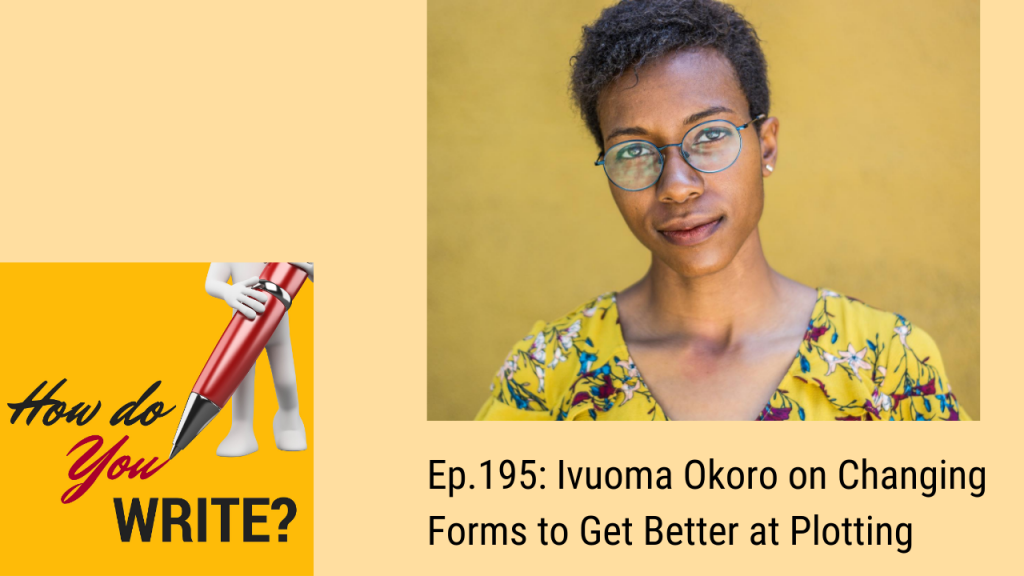
Ep.195: Ivuoma Okoro on Changing Forms to Get Better at Plotting

October 10, 2020

Ivuoma Okoro is the writer, producer, and performer of the narrative fiction podcast Vega: A Sci-Fi Adventure!. The show is stylized storytelling, where she, as a colorful narrator, talks to listeners directly as she leads them through the tale of a bounty huntress of the fantasy future. After launching the show in late 2018, Vega won “Best Writing of a New Spoken Word Production” and “Best Performance of a New Spoken Word” in the 2019 Audioverse Awards. In addition to that, Ivuoma was invited to speak on Film Independent’s 2019 panel for narrative podcasts “Narrative Podcasts: Stories & Sound” in the spring of that year. While most of her writing efforts are focused on the podcast, Ivuoma practices prose fiction through a bi-weekly newsletter and ultimate dreams on making her way into television animation.

How Do You Write Podcast: Explore the processes of working writers with bestselling author Rachael Herron. Want tips on how to write the book you long to finish? Here you’ll gain insight from other writers on how to get in the chair, tricks to stay in it, and inspiration to get your own words flowing. 

Join Rachael’s Slack channel, Onward Writers!
Transcript

Rachael Herron: [00:00:00] Welcome to “How do you Write?” I’m your host, Rachael Herron. On this podcast, I talk to authors about how they write, what their process is and how their lives fit together. I’ll keep each episode short so you can get back to writing.

Well, Hello writers! Welcome to episode #195 of “How do you Write?” I’m Rachael Herron.

[00:00:21] So thrilled that you’re here with me today. Fantastic interview lined up for you from Ivuoma Okoro and it was just a thrill to talk to her about something that we normally don’t talk about on this podcast. She’s writing and producing and putting on like a drama podcast. And it’s going to be so exciting for you to listen to, because she reminded me as I always need reminding. There are so many different paths to doing what we’re doing and the creative talent and energy and inspiration that is out there is incredible. So please enjoy, she talks a little bit about, changing forms in order to get better at plotting, which is something that I had never even thought about doing. We really bonded over the difficulty in plotting. Some of you don’t have that difficulty. She and I do. So that was really great. I know that you’re going to enjoy that interview. 

[00:00:25] What’s going on around here. I am actually really enjoying this tiny bit of down time. I am working on this big idea, taking the collection of essays that I was working on and making it kind of skewing it a little bit to a new angle which has me completely fired up. I am just a light with ideas for this in a way that feels magnificent. So I’m just really enjoying going down that rabbit hole, letting my brain play with it, letting myself have time to think about what the best course of action for this particular book will be and what I want to make sure that I don’t miss in this revision. It’s a massive revision. Yay. Yay. So I’m very excited about that. In technical. Interesting news. So I think I mentioned that I got an iPad mini because I had enjoyed doing the very, very last cleanup of Hush Little Baby before I sent it to my editor on my wife’s iPad. I loved it so much that I think I was only like maybe half an hour into the experience. And I asked my wife to buy me an iPad mini because she enjoys buying Apple products. So she got me one and I have been addicted to it since I got it. And it’s in a very professional and what’s the word organizational way. I loaded Good Notes onto it. After researching what is the best kind of note taking application for this. What I really, really wanted was to be able to use the Apple pencil on it and take notes, right? Because we all writers tend to like taking handwritten notes. My handwriting’s not that beautiful. It’s a little bit hard to read, but I can read it. I love it. I have books everywhere, planners everywhere. They’re coming out my ears. And I always loved to try the next new greatest thing. So I learned that with Good Notes, this app, you could go onto Etsy of all places and download Good Notes configurations. So I looked at all of their daily planners, Bo Joe’s journals, and I found out one I really liked, bought it for like $9 and uploaded it onto Good Notes. I’m using that right now as my planner, even though I have like two paper planners on my desk as well. I am addicted to planners, but I’m loving the ability to write by hand on the planner, but have it look really good. I got a matte. A screen protector for it. And using the Apple pencil with the matte screen protector really feels great. It almost feels like you’re writing on paper. I’m keeping my journal in there now. I am reading a friend’s book and making marks all over it. I am currently actively going in and updating all of these ideas I’m having for this revision of this collection of essays for this memoir. And it feels really, really good.

[00:04:31] It is so fun. It feels very, very productive. And I have to tell you I’m a little bit scared because I had already downloaded the post-its app for my phone. I know don’t stop laughing and I hadn’t ever used it, but I thought, Oh, it might be a little bit more usable on an iPad. So I just, this afternoon downloaded the posted app. It’s free by 3m, right. And I downloaded it onto the iPad and I have all of these post-its. My beloved post-it’s for the book I’m working on and it let me hold the iPad over them. Take pictures of the pages of post-its it automatically separates the post-its. Your handwriting is right there and you can still move them all over on the screen into whatever formats you want them. You can change the color of the post-it, this is the post-it that I wrote by hand. Now it’s inside my post-it app. I can move around with my finger to go wherever I wanted to go in. I can change the color. I can write new ones. I actually have an important post-it on my desk, which is kind of like my mission statement, my purpose. And I held up the iPad and took a picture of that post-it and now it’s a post-it inside the app. I don’t think it will take away my love for paper post-its and God knows I hope it doesn’t because I just got into composting those. 

[00:05:57] But it has been really, really exciting. I don’t know if I’m the only person to get this excited about post-it notes but I bet I’m not, I bet one of you really loves post-it notes as much as I do. So anyway, I’m loving the iPad. I got a stand for it to sit on, on the desk and it’s kind of working as a second screen sometimes. I do absolutely everything for my entire business. And I always have on a tiny 11-inch MacBook air. This one is actually like six years old and keeps crashing. So at some point I’m going to have to upgrade. But and having the tiny laptop, I love having the tiny screen. It works for me, but having the second screen is pretty nice too. So in terms of enjoying production and tech, this iPad mini is really treating me right. I very much like it. Plus, I got an incredibly cute comp book cover for it, which matches the comp book cover I have on my Kindle and I have a theme, because we love notebooks. I am passionate about notebooks. I’m not losing my notebooks. I’m not losing those other planners. This is in addition to, and it’s really working for my process.

[00:07:11] So, in terms of business stuff I would love to thank new patron. I’m going to guess that your first name Lane, Lane Anderson? or Leanne Anderson. Thank you. Thank you so much for your patronage. I really, really appreciate it. It means that I get to sit in this chair. And write those essays for you all and answer those questions that are for the mini episodes. It’s like the one that came out, I believe it was yesterday or the day before as this episode goes out. So thank you all patrons. You can always go look at my Patron levels, over  patreon.com/rachael and all else is well here. I’m just, I’m moving through my days and getting a lot of writing down as much as I can. And I hope that you are getting some writing done. If you’re not, go over to, HowDoYouWrite.net and tell me why, if you are go over there and tell me why I never get comments over there on my show with Jay, The Writer’s Well, we get so many comments, sometimes almost a hundred on a post on my show. I never asked for them and that’s fine. You don’t have to come over there, reach me anywhere that I am online. I am often on Twitter. I’m always in my email. So hit me up. Tell me how you are doing, because people don’t believe this, but I am actually very, very interested to know how you are doing with your writing. That is important to me. 

So yeah. Follow me on Twitter. Follow me on Instagram. I love Instagram. I’m just, I think I’m just RachaelHerron over there. So come follow me over there. Let’s connect. Tell me how you’re doing. Happy writing and enjoy this awesome interview. 

[00:08:52] Do you wonder why you’re not getting your creative work done? Do you make a plan to write and then fail to follow through? Again? Well, my sweet friend, maybe you’d get a lot out of my Patreon. Each month, I write an essay on living your creative life as a creative person, which is way different than living as a person who’ve been just Netflix 20 hours a week and I have lived both of those ways, so I know. You can get each essay and access to the whole back catalog of them for just a dollar a month. Which is an amount that really truly helps support me at this here writing desk. If you pledge the $3 level, you’ll get motivating texts for me that you can respond to. And if you pledge at the $5 a month level, you get to ask me questions about your creative life, that I’ll answer in the mini episodes. So basically I’m your mini coach. Go to patreon.com/Rachael (R A C H A E L) to get these perks and more. And thank you so much. 

Rachael Herron: [00:09:52] Well, I could not be more pleased today to welcome to the show, Ivuoma Okoro.  How- Hi Ivuoma. I don’t know why I said it. How, how are you Ivuoma? 

Ivuoma Okoro: [00:10:01] I’m doing well, Rachael, thank you so much for having me. 

Rachael Herron: [00:10:03] Of course. You’ll notice with this podcast, if we make mistakes, I don’t worry about it because life happens. I rarely edit the show. Let me give a little introduction for you so people know who you are. Ivuoma Okoro is the writer, producer and performer of the narrative fiction podcast, Vega: A Sci-Fi Adventure! The show is stylized storytelling, where she, as a colorful narrator, talks to listeners directly as she leads them through the tail of a bounty huntress of the fantasy future. After launching the show in late 2018, they go won “Best Writing of a New Spoken Word Production” and “Best Performance of a New Spoken Word” in the 2019 Audioverse Awards. Congratulations on that! In addition to that, Ivuoma was invited to speak on Film Independent’s 2019 panel for narrative podcasts called “Narrative Podcasts: Stories & Sound” in the spring of that year. While most of her writing efforts are focused on the podcast, Ivuoma practices prose fiction through a bi-weekly newsletter and ultimately dreams of making her way into television animation. That is such a cool bio. And when we were introduced, I was like, yes, I have to talk to you because you are like, no one else I have talked to on this whole show. I’ve talked to writers and poets and some artists, I think one graphic novelist, but what you’re doing in terms of writing, production and dissemination is like this new frontier, you’re really, I know, and I know people are doing it, but not very many people are doing it and not many people are doing it really well and winning awards for it. So I would love to know just before we jump into your process, how did I get into this?

Ivuoma Okoro: [00:11:42] How did I get into this? So I, I did kind of start off more so what I feel like is what many people move to LA doing? So, I wanted to write features and then I heard all the jobs are in TV. So I thought, okay, I need to write violets and write a spec thing and try to get a job in TV. And very quickly, I don’t know. I just don’t have the stamina for asking people to for permission to make things, or even just read my things? You know, like I would finish the script. I’m so excited about it. And then I could find one person to read in that and that person’s like, “Wow, you’re really talented.” And then they like, they’re ghosts, they just disappear, you know? And so I, I got to a place where I was like, I, you know, I think the story, this whole story that my podcast is about, it’s, it’s a really big world. So I’m like kind of like, I hope to be like an epic sort of like fantasy sci-fi sort of thing. So I just realized a better medium might’ve been a novel anyway. So I thought, great do it by myself, you know. Don’t have to worry about many things for a while. In terms of getting people to read it, I can just focus on craft. So that’s what I did. And then I heard a really awesome show, audio fiction called a Bubble. 

Rachael Herron: [00:12:58] Never heard of that one

Ivuoma Okoro: [00:12:59] And then Yeah, it’s, it’s, it was one of those ones that it had like a big cast. Like I had heard of a couple of the actors they’d been in, like, one of them was like in parks and rec, like it just had a cast that I was like oh, I’m gonna check this out. And so I did, and I really enjoyed it. I think I had heard a couple of audio fiction things before or audio plays and I had trouble following it along because they, the ones that I had heard really depended on sound design to like take you through

Rachael Herron: [00:13:29] Yes. 

Ivuoma Okoro: [00:13:30] So I’m like, I don’t know where I am anymore, like the sound design in, I dunno, who’s speaking, a lot of these characters’ sound kind of similar, but this show, Bubble was really great cause it had a narrator and it kind of to read the scene directions. And so I thought, Oh, maybe my story can be that. And so I recorded a couple of test episodes, and I really enjoyed it. It brought together a lot of skills that I already have. I studied it as a, a performer in theater in college. And so I thought, Oh, well this kind of melds a lot of things that I already really like to do. And it’s been awesome. I am so glad, like getting to connect with people, people like connecting with the audience directly, like not needing anybody to tell me I can make things like it’s been, it’s been awesome.

Rachael Herron: [00:14:15] This is one that I’m going to listen to with my wife, because she’s really, really good at listening to audio drama and I kind of get caught up sometimes in what you were reading, like where’s the, where’s the, where’s the sound, what is it doing? What is happening? And she’s kind of translating that for me. And she gets super into that audio dramas. So what is your writing process? What does it look like? Where do you get it done? How do you do it? 

Ivuoma Okoro: [00:14:41] Pretty much it. So my writing process, I would say I’m not a coffee shop girl, though I wish I could be. I like the community atmosphere, but I kind of need to be alone.

Rachael Herron: [00:14:52] Oh that’s kind of perfect. Right?

Ivuoma Okoro: [00:14:54] Yeah

Rachael Herron: [00:14:55] Coffee shop writers are dying and I have been practicing with this.

Ivuoma Okoro: [00:14:58] Yeah. Exactly. Yeah. So it kind of works out, but so what that ends up looking like, is me getting up really early when it feels like nobody else exists and writing and hopefully, I mean, I would say like, I like to write like in an ideal world where I didn’t have a schedule for other things, like get up at like 4:30-5, right. Till like, like 9, have breakfast, right, again, till lunch have lunch and then write a little bit. So maybe like total of like six or so hours a day. And when I, when I write, when I’m really into it, like when I’m in a draft, so right now, I’ve been focusing on getting the podcast out and relaunching that soon, but when I’m in a draft, I, I need to work every day or at least every weekday. And then I like to take the weekends off. 

Rachael Herron: [00:15:43] Yeah.  So when you say you like on like a perfect day, you’d get up at like 4:30 or 5, is that when your eyes pop open or is this something that you set like an alarm for, to do?

Ivuoma Okoro: [00:15:51] Oh I’m definitely 

Rachael Herron: [00:15:53] Okay

Ivuoma Okoro: [00:15:55] That makes me feel so much fun. Yeah but like once you’re, I feel like once you’re like two weeks in, it does feel like your eyes will pop open on that first alarm ring. As opposed to being like dragging yourself out of bed. Yeah. 

Rachael Herron: [00:16:07] I used to get up routinely at like 4 or 4:30 just cause I had to write before I went to work and I remember like that feeling of the alarm going off and you just don’t think. You put your feet on the floor and you stand up and then by the time you’re at your desk, you’re in the mood.

Ivuoma Okoro: [00:16:19] Yeah, 

Rachael Herron: [00:16:20] But if you have one thought- I don’t know if you have this, but if I had one thought like could I stay in bed? then you’re doomed. You just have to put the feet on the floor first.

Ivuoma Okoro: [00:16:28] Yeah. That, that happens to me. So that’s why I say I get up at 4:30 or 5 because I’m okay with a snooze, and I’m like, if I, if I have the time, if it’s, if it’s before work, then I’m like, I, I have to get my three hours done, you know. But. Yeah, I’m with you there. 

Rachael Herron: [00:16:44] So what is your biggest challenge when it comes to writing? 

Ivuoma Okoro: [00:16:47] My biggest challenge? It’s kind of funny to say this as a fiction writer, but I think it’s plot. I think it’s plotting. I feel like- 

Rachael Herron: [00:16:53] Me too! I am the exact same. I hate pot. 

Ivuoma Okoro: [00:16:56] Yeah. 

Rachael Herron: [00:16:58] It’s terrible. 

Ivuoma Okoro: [00:16:59] Yeah, for me, like emotional journeys and, themes, really get my mind going like that like I could tell you what the theme is, you know, like if her character starts out like dutiful and loyal and they’re going to need to learn to be you know, more spontaneous so that I can tell you, like how they’ll feel when they’re challenged with these new circumstances. And I can even like, see their faces. Like it’s really clear to me the inner journey, but when it comes to answering the question, like what happens, it’s really hard for me to just like, come up with like, a sequential logical plot that gets them there. So yeah, I find that really challenging and I feel like I come to this place where I’m like throwing things out and I’ll have people read it. And I’m like, is this work is, is this good enough? Is this passing enough plot wise for you to understand the emotions? Like it almost doesn’t matter to me what happens as long as they feel a certain way 

Rachael Herron: [00:17:52] That you can move them through their emotions, right. So, how do you generate, how do you generate plot ideas? And I’m really asking for myself, cause I’ve always, I have a, I have a good friend, Adrienne Bell who wrote The Plot MD. She’s like the plot doctor and she’ll sit down and like, you’ll say, I have a story about a man who feels this way. And she goes, well, he could be working here. And then this happens. And then like, like plot just pours out of her. And I get so jealous. Like, so how do you generate your ideas? 

Ivuoma Okoro: [00:18:23] Gosh, I wish I kind of, I’m going to read that book. You say that she had a book?

Rachael Herron: [00:18:27] Yeah. The Plot MD. Yeah 

Ivuoma Okoro: [00:18:28] The Plot MD. Yeah, I’m going to read that because I need that. I feel like I’m still trying to work it out. I feel like something that’s really helped me. So I, I did mention it in the, in the bio that you mentioned at the beginning of the episode, these like short stories

Rachael Herron: [00:18:44] Yeah

Ivuoma Okoro: [00:18:45] As a, as a bi-weekly newsletter, which I haven’t been so diligent about lately 

Rachael Herron: [00:18:48] Wow with all short story, but like, even

Ivuoma Okoro: [00:18:52] Yeah. So I saw it, so I want, I was trying to get into this habit of writing just plot for these stories. Cause you don’t have time to really get into like

Rachael Herron: [00:19:00] Great idea

Ivuoma Okoro: [00:19:01] the whole journey. Yeah. So it was just like, okay, this happens, that happens. Cause what I started realizing when, when, so my podcast is called Vega. And so like when Vega was doing well, I was hearing from a couple people and they’re like, Hey, can you pitch us things? And I just couldn’t, I don’t know. Like, it was really hard to like, they’re like what happens? I’m like, okay. So like, this is the theme, you know, so I, I thought maybe doing short stories will really helped me just like focus on this happens, that happens. And that happens and I can create a little bit of emotion out of that, but mostly about like things happening. But I think probably the biggest book that was helpful for me was this book called The Art of Dramatic Writing. Have you heard of that one by-

Rachael Herron: [00:19:40] Ooh. But I’m gonna write it down. 

Ivuoma Okoro: [00:19:42] Yeah, it’s, it’s a great one. It’s by this guy named Lajos Egri (E G R I) and it’s really about playwriting but it’s applicable for all kinds of writing. Cause all kinds of writing, like the basis of it is drama. So that one was really good and he was all about having a premise, which is a thing like, you know poverty leads to ruin or whatever you’re thinking, be anything, whatever you believe, and then having each thing that happens in your narrative, justify or prove that premise.

Rachael Herron: [00:20:16] I love that. I’m always trying to tell that to students and I’ve never managed to say it that succinctly before. That makes total sense. Yeah, I’ve been, the listeners will know that I’ve been struggling a lot with that. I wrote this thriller that is, that really turned out to be an emotional novel. And my editor just kept saying, okay, but can you make it a thriller? Because you know you need the dramatic tension. You need that motion. So let me ask you about these short stories. Do you think that it has helped? With your, your plot to help your plot?

Ivuoma Okoro: [00:20:46] I- I do. I think now that I know, I think it was pitching that really made me realize my plotting was weak as a, as a muscle, and I, and I’ve always known, like I would get, I would have a really strong idea of the beginning, have a very strong notion about the big exact ending moment, but everything in between, I don’t know. So I think that’s what led me to get that book, The Art Dramatic Writing because I would get so lost. And so I, I do think it is helpful, or that it has been helpful for me to think about what happens. And I think too, every time that I’ve switched mediums, so I started off, you know, writing features and then I, I was like, okay, I’ll write pilots. And then I started writing this, this pilot as a novel, and now I’m in audio fiction, like understanding what each medium needs and understanding in audio, if you’re writing an adventure people want to know what happens. They’re, they’re listening to see like what happens. Though audio is a great space too for just like talking to a person, you know, like hearing thoughts. But I do want it to feel like, Oh, this is moving along. So I think, I think all those things, you know, and the short stories are different medium. I think each of those things have taught me, yeah, like how do I move the story along? And what are the kind of beats I need to hit? I do think it’s helpful. So I need to be consistent with it. 

Rachael Herron: [00:22:10] That’s the hardest part. I send a weekly letter of encouragement to writers and I don’t think I’ve sent it in like eight weeks, so you know that’s, the times are strange. I’m sorry. I’m so stuck on these, these short stories. How long are they normally? 

Ivuoma Okoro: [00:22:22] I would say I, my goal is 400 to 500 words. 

Rachael Herron: [00:22:27] That, how do you do that? That’s so short

Ivuoma Okoro: [00:22:30] I know. Well, so, so the, so the premise for it is like it’s I call it the short story machine and it’s like give me a Facebook comment or like a headline and I’ll like, make a short story about it. So like the first one, the, the Facebook comment was like, if I say Candyman three times, will he appear and like keep me company during quarantine basically. So, I wrote a little story about that. So it starts off with a very like small premise. And so I think that’s what helps me keep them come shorter 

Rachael Herron: [00:23:07] That’s so cool

Ivuoma Okoro: [00:23:08] And just like expounding a little bit on that, on that little word. Yeah. 

Rachael Herron: [00:23:10] I am immediately subscribing to your newsletter. So, no, no, no pressure. What is your biggest joy when it comes to writing?

Ivuoma Okoro: [00:23:18] My biggest joy, I would say I am a huge fan of that quote. I forget who says it. I think most people have been accredited, but the quote that goes “No tears in the writer, no tears in the reader.” Have you heard that?

Rachael Herron: [00:23:30] No, I, I’ve heard it, but I, I, it sounds vaguely familiar. So let me think about it. “No tears in the writer. No tears in the reader.” Yeah, that makes sense. 

Ivuoma Okoro: [00:23:37] Yeah. So it’s this idea of, if you’re writing something and it’s boring to you, it’s going to be boring for everybody else. And if you’re writing something and you’re moved by it, or you’re like, man, this really captures what I was trying to say, or you know, I, I feel like anytime. And it doesn’t happen often, but anytime I’m able to write something and I feel like, this is what I wanted to say. Or it makes me feel emotional or I’m going over and over because I’m like, I feel so bad for this character right, I feel so good for this character. Those are times where I feel like, I feel like man I’m meant to do this. Whereas in other times I feel like, you know, kind of like what I was saying with plotting. Is this working, I’m throwing it out, hoping people like it. But I feel like those moments where I, it, it moves me when I, when I write something or times where I feel like, okay. This is, I feel purposeful. I’m supposed to be doing this. I know that if I feel this way, other people will feel something. And so I feel like those are pretty joyous moments for me. 

Rachael Herron: [00:24:39] Oh, that’s delicious. I love that feeling. I love that. What can you share a craft tip of any sort with us? 

Ivuoma Okoro: [00:24:46] Craft tip. I would say the biggest thing that I’ve learned, especially doing sci-fi fantasy world building all this kind of stuff, is do research. I did, I under miss- I underestimated the power of research, for a long time. And then I 

Rachael Herron: [00:25:01] I am still underestimating it. Like, I just don’t like research. Tell, tell me more about this. How did you, how did you learn, you did this, especially for something that you’re really, you know, you’re making up

Ivuoma Okoro: [00:25:12] Yeah. You’re making up. Yeah. Everybody thinks, oh, you can just make your own rules or whatever, but the best science fiction and yet, I mean, you can go ahead, you can see this in examples, countless classic examples, whether it’s fantasy or science fiction. It’s based on something real, like it’s based on no world war one, or you just like something like. So I think I really started to understand this when I was first crafting Vega as a novel and I’m sure, you know, novels take a lot of- like a lot, there’s a lot that goes into them. 

Rachael Herron: [00:25:42] So much!

Ivuoma Okoro: [00:25:43] You have to think about everything about this world. Yeah. And so I was having a lot of trouble, like even visualizing, what do they wear? Like what did they eat and why? What’s, what, what are the rules of their religion and all this kind of stuff. And so I started, you know, doing research on like science, I think like all of like one of the gods are the ones that, the one that my main character believes in is like based off of like electricity and the rules of like thermodynamics and all this kind of stuff. So it’s like, once you are able to, you know, like there’s like whole fields of research about these things, you know? So if you’re like, it will to do that, it becomes this creative springboard for you. Like, okay, well, if the electrons are moving in this way, maybe when they’re doing their ritual, they move in that same way, you know,

Rachael Herron: [00:26:28] That’s so cool

Ivuoma Okoro: [00:26:29] You can just base these things off of other things and do less work for yourself and just pulling things out of thin air. So I feel like once I realized that I was, or like once I was able to do a certain level of research, it basically wrote itself like 70% of the world was kind of there.

Rachael Herron: [00:26:44] Wow. So how do you, how do you restrict yourself to not getting lost down the rabbit hole of research? And I know a lot of writers have that problem. 

Ivuoma Okoro: [00:26:52] Yeah. So, I mean, I’ve, I’ve heard a lot of writers talk about this idea of, yeah, I think, I don’t know if there’s two kinds of writers, but two things can happen. Like you can get so into building the world and doing the research that you neglect the plot or you, or you can just like see the plot and then do as much research as you need to continue writing. I kind of fall into the second one. I was telling you earlier, like themes and characters are really what drive me. And I, I think I’m like this in general, once I know enough about it, I’m good. I can like leave that and go back to the story and kind of fill in the cracks that I know are showing. And then kind of move on from there. So I think it’s really about, like, I think research for research’s sake is fun, but that’s not writing. And so yeah, if you want to get back to your novel, knowing what the plot is and knowing okay, they’re going to move through this area and this area is based off of this country and then do research on that country and just enough for you to keep on writing. 

Rachael Herron: [00:27:51] To inspire you to- to get new ideas to, to fill in. Let me ask you quickly about theme too, because I know that it’s a word that sometimes panics right? New writers. What is, what is your theme? Do you mind me asking for a Vega? 

Ivuoma Okoro: [00:28:03] Yeah. So my, so my premise, according to, Mr. Egri in our dramatic writing is that, active doubt leads to deeper understanding.

Rachael Herron: [00:28:14] That’s gorgeous. 

Ivuoma Okoro: [00:28:15] Yeah. So it’s just this idea that, so it’s like a, it’s like a faith-based world that they live in. Like they have these beliefs that are really extreme. And so as I, as, as you mentioned at the beginning my character is a bounty huntress, but she, her, her nation and they, they employ her to go kill off like the world’s biggest criminals, but like, she, she kills them, you know? And like, they’re like trying to purify the earth, but she’s a killer, you know? And so it’s this idea of, she comes to a point where she’s like, is this right?

Rachael Herron: [00:28:45] Right

Ivuoma Okoro: [00:28:46] Is this what I do? You know, so she has doubts and that those doubts as painful as they are lead her to question things and those questions lead to a deeper understanding as she gets more answers. So, yeah, that’s kind of like the overarching theme of the whole narrative. And so every, every conversation, every fight every, hopefully plot point leads to further developing, like, okay, if she’s the only one who’s actively doubting things, she’s the one who will grow in her understanding 

Rachael Herron: [00:29:16] and then perhaps to see other people starting to doubt or learning how to doubt almost in this faith-based society. The thing I love about this theme is that it is not a common one. How some themes repeat and, you know, we pull from them a lot and you know, like a lot of my books are written around the same theme. Cause I go back to my core story over and over again, but that is a really unique and beautiful one. Right.

Ivuoma Okoro: [00:29:37] Thank you. 

Rachael Herron: [00:29:38] Thank you for sharing. 

Ivuoma Okoro: [00:29:39] What is your core story? 

Rachael Herron: [00:29:41] My core theme is that; true family is chosen. 

Ivuoma Okoro: [00:29:46] I want that. 

Rachael Herron: [00:29:48] it’s good. Isn’t it? But even, even when I set out to write a story with a different theme, by the end of the first draft, god damn it. I’m back at it again. But that’s okay, right? Because I believe and I prove with my own life. And I’m attracted to those kinds of books and stories and movies. So 

Ivuoma Okoro: [00:30:05] and there’s so many ways to tell that story. 

Rachael Herron: [00:30:07] Exactly, you and I could tell- anybody watching, sorry, I have a hair in my eye. We could have the same premise and you would write, we could have the same plot premise and have two separate themes. Your theme versus my theme and we will come up with completely different books, completely different stories. And that’s, what’s really exciting to me about theme.

Ivuoma Okoro: [00:30:28] Yeah

Rachael Herron: [00:30:29] Especially when we go into revision. I think we have to have to have it first draft, I think can play but into revision. I love theme. It was delicious. What thing in your life affects your writing in a surprising way? 

Ivuoma Okoro: [00:30:42] This one’s a hard one. I don’t know if it’s surprising, but I definitely like if there’s any relational disharmony, any, anything going on, like, even if it’s like somebody didn’t text me back and I’m like, are they mad? Like I just, yeah. I feel like that’s not surprising. Cause it’s, it’s just like how we are, you know, like, writing happens in your head, and all this other thing happen in your head. And so it’s hard to separate those things. So when everything is smooth, it’s very easy for me to focus on, on what I need to do in terms of getting stuff down on paper.

Rachael Herron: [00:31:16] But I wonder also if that is something to do with your emotional intelligence, which you bring to the book, you know, you’ve already said that you understand the emotions of your characters and perhaps when you are in a place of limited understanding about the emotions of the people that you care about that throws you off a little bit.

Ivuoma Okoro: [00:31:32] Yeah 

Rachael Herron: [00:31:33] Because I don’t, I don’t care. Like she’s mad at me, she needs to tell me later and I’m going to write, you know,

Ivuoma Okoro: [00:31:38] Yeah. That- I wish I had that power, but I think you have a point about that. Yeah, cause I do, I, I love talking about emotional behavior. I love understanding how people click. I said, I was, I said earlier I was an actress. I think that was a large part of it. Like, why does this character act this way? If I find out, then I can understand them and act like them, you know, like I think, I think there’s something to that 

Rachael Herron: [00:32:01] and that’s, there’s an undercurrent of empathy that you probably bring to everything. 

Ivuoma Okoro: [00:32:05] Yeah. I like the thought though.

Rachael Herron: [00:32:10] What is the best book that you’ve read recently? And why did you love it?

Ivuoma Okoro: [00:32:13] In the same vein, my, the book that I think I’ve read recently that was really powerful, it was called Adult Children of Emotionally Immature Parents. Yeah. 

Rachael Herron: [00:32:26] Because I’m in recovery and I was already thinking adult children of alcoholics often have this kind of emotional response to other people’s emotional responses. So there’s probably similar. Tell us again, The Children of Emotionally, what?

Ivuoma Okoro: [00:32:38] Immature Parents. Yeah. It’s, it’s probably similar. It’s this, it’s this kind of thing, I read it and it told me my entire emotional experience in my childhood and I was like, this is why, like all these other you know, personality tests and all these things that kind of get, get at it? But I think this book really got to the core of things. And I think the reason I loved it so much again, is I love understanding behavior. There, there many things I do that I don’t understand why I did that or why I feel this way. So growing in my knowledge of like why people behave the way they do anything that can open up that field of mystery for me is something that I want to read. So I read a lot of like nonfiction, social behavior, sociology, behavioral science books, and yeah, that was one personally for me that, yeah, it was like five years of therapy. Yeah. 

Rachael Herron: [00:33:30] That’s awesome. Also, I love these books because the, and you know, it can be seen as naval gazing. And I always feel like I’m naval gazing, but the more I understand myself, and the more I figured this stuff out, the better we are at understanding our characters, right. This is part of our job. 

Ivuoma Okoro: [00:33:45] A 100% agree. Yeah. 

Rachael Herron: [00:33:46] That’s so cool. Okay, so tell us now where we can find you out in the world and especially where we can find Vega and where we can subscribe to your newsletter list.

Ivuoma Okoro: [00:33:55] Yes. Okay. So you can find Vega on any pod-catcher. Well not any, but most of the big ones, iTunes, Spotify, Google, Vega podcast. Oh, sorry, Vega: A Sci-Fi Adventure Podcast, exclamation point. 

Rachael Herron: [00:34:09] I like the exclamation point.

Ivuoma Okoro: [00:34:11] Yeah. Cause it’s an adventure! And then you can find that show on Twitter @VegaPodcast and you can also find it on Instagram. There you can find me on Instagram(IvuomaOkoro) and Twitter @IvuomaOkoro. I’ll be there and you can find the newsletter at Ivuomatellsstories.com 

Rachael Herron: [00:34:35] Awesome. And Ivuoma spelled I-V-U-O-M-A 

Ivuoma Okoro: [00:34:38] That’s it. Yeah.

Rachael Herron: [00:34:40] Thank you Ivuoma it has been such a treat and a delight to find you. And now, you know, this is why I do the show is because now I can go out and suck you and follow everything you do. So, you know,

Ivuoma Okoro: [00:34:50] I will do the same. 

Rachael Herron: [00:34:54] You’re, you’re more interesting than I am. I can guarantee you that. Thank you Ivuoma, so much. 

Ivuoma Okoro: [00:34:59] Thank you, Rachael. 

Thanks so much for joining me on this episode of “How do you Write?” You can reach me on Twitter, twitter.com/RachaelHerron, or at my website, www.rachaelherron.com, you can also support me on Patreon and get essays on living your creative life for as little as a buck an essay at www.patreon.com/rachael spelled R, A, C, H, A, E, L and do sign up for my free weekly newsletter of encouragement to writers rachaelherron.com/write/

Now, go to your desk and create your own process and get to writing my friends.
Posted by Rachael Leave a Comment

Ep. 194: Should You Hire an Editor Before Submitting Queries to Agents?

October 10, 2020


In this bonus episode, Rachael answers your questions, including: 

  • Should you hire an editor before sending out agent queries? 
  • What are some great memoirs and why should writers read them? 
  • Do I need specialized tax help as a writer? 

Don’t miss Ines Johnson’s writer’s channel: https://www.youtube.com/channel/UClivO7XAP2GCRRz-7Bm3Nhw

How Do You Write Podcast: Explore the processes of working writers with bestselling author Rachael Herron. Want tips on how to write the book you long to finish? Here you’ll gain insight from other writers on how to get in the chair, tricks to stay in it, and inspiration to get your own words flowing.

Join Rachael’s Slack channel, Onward Writers!

 Transcript

Rachael Herron: Welcome to “How do you Write?” I’m your host, Rachael Herron. On this podcast, I talk to authors about how they write, what their process is and how their lives fit together. I’ll keep each episode short so you can get back to writing.

[00:00:15] Well, Hello writers! Welcome to episode #194 of “How do you Write?” I’m Rachael Herron. This is a mini-sode! This is brought to you by Patreon subscribers who get to ask me any questions that they want, and I get to answer them for the benefit of all of you. So it’s really kind of a cool system. So thank you to those Patreon supporters who are supporting me at the $5 and up level a month. And I’ve got a collection of some questions here, so let’s get to them. I actually have heard from a couple of you, I will just say in an aside, that you really like the mini episodes. It is possible that one of you, just tunes in for those and not for the interviews, which is kind of really nice. It means that you like listening to these answers from me. And I like having the time and the space and the ability to do so. So thanks for listening. Okay. Let’s jump in. 

[00:01:13] This is from May. Hello, May! She says, okay, I have another question. So I’m doing my first round of edits on my first novel. Still cannot believe I wrote a whole novel. Yes, you did. And I can’t help, but think about the next steps. I know I want to at least attempt getting an agent and do traditional publishing. Should I hire an editor to go over my manuscript before I start sending it out? Should I just polish it as much as I can and then send it? I know most publishers will have their own editor before publishing. How do I go from cleaned and polished draft to a draft that is ready for an agent to fall in love with?

[00:01:48] I’m so glad you asked this because I get asked this in every single class I teach, it comes up all the time. How do you know if this manuscript that you’ve spent so much time now revising and revising again, and then doing passes on and then doing cleanups on and then proofreading, and then maybe getting beta readers? Although VBR, very careful with that as I’ve spoken about in the past, be careful with who you ask to beta read any of your work. How do you know if it’s good enough to go out to agents yet? The simple answer is you don’t and that’s okay. The truth is agents know that the submissions they get are not perfect manuscripts, that’s just necessarily so. The most agents, I would say most agents I’ve ever met I know there are some who don’t do this, but most agents guys are willing to work with writers or want to write work with our writers on edits before taking them out and attempting to sell them to the traditional publishing world. My agent did that. And in fact, I was one of those people that her picking me up as a client was contingent upon my agreeing to do the edits that she suggested.

[00:03:09] Should you do that? Absolutely. You should do that if, and only if you agree with the changes that the agent wants you to make, if you don’t, if she’s trying to turn your book into a book that is not your book, then you run away and you don’t have to worry about this at all. But I loved the suggestions that Susanna gave me and I took them and we have been in business together for almost 13 years now. So that is absolutely fine. You can send out a not quite perfect manuscript to an agent. And when I say not quite perfect, it is as perfect as you can make it by yourself. You don’t look at it and say, this is not quite perfect. You look at it and you say, this is the best I can do. This is the best it’s ever going to be. The last sentence is a lie. It will be better because you will have editing. Feel free to send out at this stage, if you can’t figure out what else to do to make this book stronger, you’re ready to send it to agents. There is however, an optional route you can take, between your book being done, to the best of your ability and sending it to an agent, you can hire a developmental editor to make sure that your story structure, that your character arcs, that everything developed mental in the book is the best it can be.

[00:04:25] This is not the time you’d ever hire a copy editor. A copy editor is a much lower level of editor. And they’re just looking for typos and sentences that are confusing. The developmental editor is the one you’re really worried about. An agent understand that your work is going to have copy yet. It’s going to have errors in it because it hasn’t been copyedited yet. But choosing to hire a developmental editor to help you at that high 30,000-foot level, before you send to an agent, can be useful, especially if it’s a first book and you just can’t- can’t see, see the forest for the trees that are, you know, jammed in around you- kind of sticking you in the middle of this forest. That can be a really good way to go. It is however, not inexpensive. It is- it costs quite a bit of money to do that kind of edit and it doesn’t have to be done. Just let me make that very clear. It does not have to be done. If your book is as good as you can get it, send it out to agents and feel good about it. If you want your book to be a little bit better before you do that, hire an editor, where do you hire and developmental editor? I always recommend Reedsy.com (R E E D S Y.com) because all of their editors are vetted. Most of them come out of traditional publishing and I have had so many students and clients be absolutely thrilled with the edits that they have received from there.

[00:05:49] So that is what I suggest about that. Let me make sure I got all of your questions. You said, should I hire an editor to go over my manuscript before sending it out? Only you can make that decision there’s no should, there’s no should not. If you think your book needs to be stronger and you just can’t see how, yes, hire an editor. Yes, and then of course, when your agent sells your book to a traditional publisher, then you’ll get an editor and that editor will work with you on the actual big edits. So that always comes with any publisher that you’re ever going to sell a book to your editor will be assigned. You will probably meet your editor before you even sell your book to them, or at least meet them on the phone and talk about this kind of edits that they want. Again, they’re accepting your book. They’re buying your book from you, through your agent may be contingent upon you doing those edits that this editor wants you to do. And again, do it if you want to. Only do it if you want to. 

[00:06:53] But do keep an open mind, your book, which is so perfect right now, it can get a lot better. They always, always, always can with the help of outside editors. So, excellent, excellent question. Let’s see, Thoulma says. What are two or three of your all-time favorite memoirs from the craft slash execution point of view and why? What can aspiring writers learn from them?

[00:07:21] I absolutely love and this is going to sound so trite and clichéd but The Glass Castle. The Glass Castle had been pushed on me for so many years that I just, she wasn’t going to read it. You know, when you kind of get that knee jerk. Nah, I don’t want to kind of think the only reason I read The Glass Castle is because a student in a memoir class at Stanford, challenged me. I had been talking about story structure about the inciting incident, about the context shifting midpoint, about the dark moment, about all the things that go in between those things. And she challenged me and she said, I don’t think The Glass Castle follows that. So I read it over the weekend. That weekend and it follows it so perfectly, they’re not even approximately at the right areas. I brought in my book with post-its inciting incident was at 20%. The context shifting midpoint was like at 49.5%. Everything was perfect. And the book is so beautifully executed and so well written. I really, really love it. 

[00:08:26] Another one that I really love is called Priestdaddy it’s by Patricia Lockwood, Priestdaddy. The reason I love it is it is almost poetic in the way it is written. She is much looser at hitting those story structure elements. Although they’re in there, they’re just suggested like the fragrance of them and her writing is so incredibly strong and so funny and deep and poetic. I can recommend that one more to kind of show the elevated writing that can go with a very sturdy feet-on-the-ground piece of prose. And the third one I’d recommend is one that kind of, kind of shows the humor that can be found in memoir. I love Eve Schaub’s book, A Year of No Clutter. Year of No Clutter. It is basically her attempt to con Marie a room in her house, which is very large and basically held everything. And the book is about decluttering that room and it does not have the final ending that you would expect. She’s a really beautiful writer. She’s been on the show actually. You may want to go back and listen to that. And she just gets how to wrap her arms around, a project memoir or as many people call them a stunt memoir. When you give yourself a challenge and then write about it. So I would recommend those. You will not lose anything by reading those, you will in fact, learn so much and you’ll enjoy them.

[00:10:02] Let’s see, which book do you recommend for getting a good understanding of AA slash NA alcoholics anonymous and narcotics anonymous, and the process of addiction recovery. I’m researching the subject for my upcoming book. So for me, I would recommend, what we call the 12 and 12, which is the 12 steps and 12 traditions of AA. It’s a slim book, and it goes over all of the 12 steps that are in alcoholics anonymous. Don’t worry about the traditions part. You won’t need that, but the 12 steps at the b- the first half of that book really kind of break down how they work without having to go to what we called the big book, the big blue book of the book of alcoholics anonymous. It is hard to read it’s archaically written. It’s completely a product of the patriarchy. There are amazing things in it. This I know, however, is not the place that you want to be., if you just kind of want to get the understanding of recovery. 

[00:11:11] Let’s see. There’s another good book called Living Sober. That is, kind of little vignettes of day to day living. What else do I really like? Oh, I remember what I think you would probably like maybe pick up The Three Daily Meditation books for AA/NA, and Alanon, AA is just for today. AA is daily reflections and for Alanon, which is for people who are, who love people in recovery or in addiction is called the courage to change. And each one of those has a daily reading with usually a quote and a reflection and it kind of all three of those books really get into the heart of the matter of what it is to be in recovery from an addiction. And to almost, I kind of know a little bit about what you’re doing with your book that you’re writing. And let me just say, I cannot wait to read it. Let me know if you have any other questions about that. But those are books I would recommend right off the top of my head. We can go deeper if you want to just email me. 

[00:12:21] And then lastly, this is from Ines Johnson who is also on the show. She’s fantastic. Ines says, Hey Rachael! I have a question. What should a writer look for in a financial planner slash tax accountant? I took a look at my midyear income and hooray! it looks like I’m moving on up to a new tax bracket. Congratulations, Ines. The kind where I can’t TurboTax my filing anymore. I need a human person’s knowledge cause my smarts aren’t going to cut it any longer, but I don’t know what questions to ask a money person or what to look for any advice? Yes, I do have advise, so doing the taxes for a creative person, for a person running a creative business. It’s different from a lot of other businesses and tax accountants, financial planner, financial planners have to understand that not only are our jobs a little bit different and that we can write off different things depending on what job we’re in, but it really helps if they understand the creative process. So this is a blatant plug for my tax accountant, who I absolutely love with all my heart. Her name is Katie Reid. She will file your taxes from wherever you are in United States, you don’t have to be here. But the reason I love her is I just randomly Googled a tax preparation place when I got my first deal and I went to them and she happened to be the one doing my taxes. And let me explain this: Katie gets excited on February 1st of every year, the same way that we get excited when a book is released. She is so happy that tax season has opened. She knows everything about it. And I was her first writer. Or maybe her second writer, but I was really early in her collecting creatives to work with.

[00:14:18] And she leaped into that challenge to figure out what it was I needed. The other thing is, is that, Oh, I think for the first five or so years that I went to her, I didn’t have anything like on an Excels spreadsheet. I didn’t have anything written down. I had a shoe box of tax receipts, that I, or, you know, have receipts that I would bright and handwrite into a notebook, a spiral bound notebook, where I kept all of my money information. And I would literally photocopy pages in this handwritten spiral bound notebook. And Katie thought it was charming. She thought, it was just the best. And in fact, I used to be so excited to do my taxes with her. That for many years, I tried to get February 1st, her very first appointment so that we could get excited together. This was a little bit pre me being in the self-publishing world. In self-publishing world, I got in around 2011, 2012, and there are so many 10-99’s that come, and they come so late. Sometimes you’ll get your 10-99 mid-February or end of February, even though you’re supposed to have them by January 30th. That I just couldn’t keep doing that with Katie. Now I usually go see her in March or April. But what happened with Katie is that she left that agency. And she had a baby, started a family. And I went back to that agency a couple of times, couple years, hated who I worked with because they weren’t Katie. Stalked Katie, found her on Facebook and asked, can you please do my taxes for me? And she said, yes. And over the course of the last five or six, seven years, she has turned that request into basically a full time gig that she runs from her own home. 

[00:16:03] That’s my dog shaking in the background – and she allows us, me and a couple of friends to come to her house where she does her taxes, me and Sophie Littlefield and Juliette Blackwell every year, go to Katie’s house, we do our taxes together. So Katie takes each one of us into her office for about an hour each, sometimes less cause she’s so fast. And she does them in front of us while she’s talking about what sewing project she’s doing and about her kid or about our next book, she’s typing things in. She turns to us and said, well, your refund is this much or you owe this much to the IRS by the time we walk out and the person who is getting the biggest refund or who owes the least to the IRS pays for lunch, and then we all go out to lunch. But Katie’s actually done things like tax parties where the same thing happens.

[00:16:57] Somebody has a hot party in the house and everybody’s hanging out, having fun while one person at a time is getting their taxes done. She’s incredible. She has so many writers now in her stable, I would say dozens of writers in her stable. She really knows what she’s talking about. And I know that I’m selling a friend here and she has everything. One year Lala, my wife and I got hit with a $29,000 tax bill from the IRS. It was the year that, we were married legally in California, but the feds still didn’t see gay marriage as legal and it was this huge disconnect. There was literally one person at the IRS who understood gay taxes. Katie had to get him on the phone and explain the tax code and the tax law to him. I am not exaggerating. They went ahead and canceled that $29,000 tax bill because the IRS had done it wrong. And Katie had set them straight about their own rules. 

[00:17:51] So, where do you find this Katie? Katie, I hope you don’t mind that I’m announcing to the world where you can be found. But she is katie@done.tax. (K A T I E @ D O N E.tax) You can look her up at done.tax, that’s her, she’s phenomenal. I can’t recommend her highly enough. And also, Ines let’s just take a moment and step back and really luxuriate in the fact that you need this, that you need this help. I recommend getting this kind of help whenever you feel a little bit wobbly about your taxes, about your planning. I love having somebody that you know, right now it’s August as I record this, I can send. And I should do this probably this week or next. I’ll send her what I’ve made for the whole year and what I’ve put aside to pay for taxes. And she tells me whether it’s going to be enough. She helps me with my estimated taxes when I get around to paying them. She’s just on call and she’s fantastic. So let’s see. Oh, and Ines says, I’ve been posting on YouTube videos since we talked, because we were talking about her launching a YouTube video for writer’s channel, and she’s already up to 200 plus subscribers. So I will link to her YouTube channel (https://www.youtube.com/channel/UClivO7XAP2GCRRz-7Bm3Nhw) in the show notes of this episode @HowDoYouWrite.net.

[00:19:14] Speaking of HowDoYouWrite.net, you should come over and you should leave comment. Also, I promised that I’d be keeping my eye on reviews since I asked for them. And there’s unknown review of over at iTunes for How Do You Write, and this one is from Giana Floyd. Hi, Giana. She says five stars! A must-listen. When I envisioned myself as a famous author someday, I make sure Rachael is my best friend. Oh my God I love this. I actually didn’t read it before I started reading it out loud. Her advice, vulnerability, and interviews have me checking my podcast app every Friday, sometimes before coffee. And if that statement doesn’t convince you that this podcast is a must listen, nothing will. Giana, you don’t have to wait until you’re a famous author to be my best friend. Let’s be best friends now. Plus, I’m not a famous author, I’m just a, an author with a lot of books and some readers. And I think that’s really what I love being. So thank you for this incredible, wonderful five-star review. Please go over to any of your podcasts, your apps, and leave a review or a star rating or something like that.

[00:20:21] It helps with discoverability and I really appreciate it too. And its fun to go look for them when I remember. So that clears out my backlog of questions. So if you are a Patreon subscriber at the $5 and up level, please lay some on me. You cannot give me too many questions. This is a mini, bonus episode, because when I get those questions, it’s a bonus episode. So please send them to me. I can’t wait to answer them. Thank you so much for listening. Thank you so much for supporting and from the bottom of my heart, Thank you so much for writing. When you are writing, even when you’re thinking about writing, you are changing the world one word at a time. That is what we do as writers. So I wish you very happy writing and we’ll talk soon, my friend.

Thanks so much for joining me on this episode of “How do you Write?” You can reach me on Twitter, twitter.com/RachaelHerron, or at my website, www.rachaelherron.com, you can also support me on Patreon and get essays on living your creative life for as little as a buck an essay at www.patreon.com/rachael spelled R, A, C, H, A, E, L and do sign up for my free weekly newsletter of encouragement to writers rachaelherron.com/write/

Now, go to your desk and create your own process and get to writing my friends.
Posted by Rachael Leave a Comment

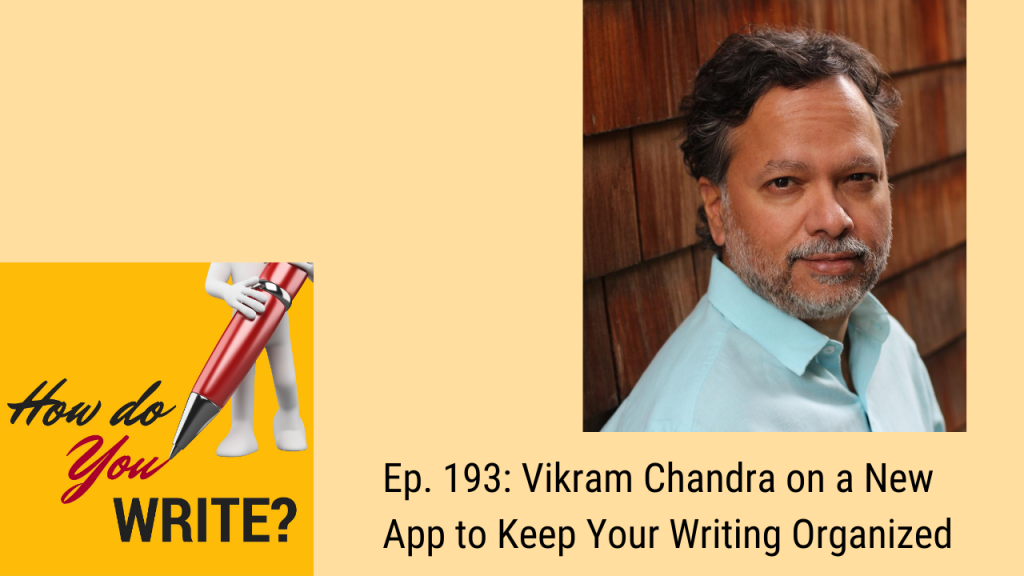
Ep. 193: Vikram Chandra on a New App to Keep Your Writing Organized

September 14, 2020

Vikram Chandra’s latest book is Geek Sublime: The Beauty of Code, the Code of Beauty. He has also written the novels Sacred Games and Red Earth and Pouring Rain and the short story collection Love and Longing in Bombay. In July 2018, Netflix released a series based on Sacred Games. In 2019, this series was included in The New York Times’ list of The 30 Best International TV Shows of the Decade. His honours include a Guggenheim fellowship, the Commonwealth Writers Prize (Eurasia), the Crossword Prize, and the Salon Book Award. He teaches creative writing at the University of California, Berkeley. His work has been translated into nineteen languages. He is a co-founder of Granthika, a software startup that is building a next-generation tool for fiction writers.

Vikram’s Character Creation: https://blog.granthika.co/on-character/

Granthika: http://granthika.co

How Do You Write Podcast: Explore the processes of working writers with bestselling author Rachael Herron. Want tips on how to write the book you long to finish? Here you’ll gain insight from other writers on how to get in the chair, tricks to stay in it, and inspiration to get your own words flowing. 

Join Rachael’s Slack channel, Onward Writers.

Transcript

Rachael Herron: [00:00:00] Welcome to “How do you Write?” I’m your host, Rachael Herron. On this podcast, I talk to authors about how they write, what their process is and how their lives fit together. I’ll keep each episode short so you can get back to writing.

[00:00:15] Well, Hello writers! Welcome to episode #193 of “How do you Write?” I’m Rachael Herron. So pleased that you’re here with me today. Today, I am talking to Vikram Chandra about what sounds to be a very, very cool new app/product, that you can use to write in and keep your writing organized, besides that, he is a very esteemed writer and it was just really fun to talk to him. So I know you’re going to enjoy the interview as that’s coming up. What else is going on around here? Well, I am having an incredibly creative week. I am, you know, in between projects right now, I’m balancing some projects that I want to be working on. I’m waiting for my editor to go over my new edits on Hush Little Baby, and, I’ve already figured out a couple of things that I really screwed up or not really screwed up, but I could do better. So I’m hoping that I get another round. That I can make some not big shifts, but you know, not small shifts to the book. So I’ve already been communicating with her about that, and that is fun.

[00:01:26] But what that means is in this in between time is kind of this fertile ground for me to be thinking about what I want to do next. And I was talking to my friend, J. Thorn over at the Writer’s Well, which is a podcast we do. And after our podcast chat, we were talking about other things and he recommended this book to me called E-Myth (E dash myth) And I can’t remember who the author is. It came out like literally 30 or 40 years ago. I think, I think I calculated 35 years ago. So there’s a mount data stuff in there. But was so useful to me to think about basically who I want to be as a writer. Who I want my business to be, what I want my business to be, and what I want to provide my customers, because our readers are our customers and they come to us because they are looking for a certain thing. My readers come to me because they are looking for a certain sense of comfort. And I know I’ve said that on the show before, even when I’m writing it. The scariest book I can possibly write readers say, oh, that is so heartwarming, which is not what I’m going for, but I can’t help but doing that, that is, that is my writing voice, that happens to be my personality, too. 

[00:02:53] Because I do believe in people, I really truly believe in the best in people. And I know how to bring that out. So I’m going to be doing a little bit of playing with this book that I’ve been calling Replenish for a while. It’s a collection of patreon essays that I’ve been shaping into an actual memoir, somewhat about burnout, somewhat about recovery from addiction. But I’m actually, I’m shifting the lens on it a little bit. I’m shifting the lens so that it is focused on the reader, and less on myself, if that makes sense. I teach memoir. I love memoir. I write memoir and I read memoir slash self-help. And when I’m reading memoir slash self-help, I really love the memoir parts of it. So I’m not going to strip those out, but a large part of me and my heart are now drawn more to pushing out to helping lift up, if that makes any sense. I’m pretty excited about it. Like I’m kind of giddy about it. I am, I changed the title to the book, which I’m not going to tell you yet because I’m going to reveal all soon. 

[00:04:12] But I think I might be starting a new podcast. Yeah, that, I don’t know. I’ll keep you posted on that too, but it feels like a really exciting time right now. Absolutely nothing will change us. I’ll still be teaching and I’ll still be writing the fiction that I love to write, but in terms of my memoir non-fiction, I wanted to be more helpful than it has been in the past. Without being a how-to, I know that I’m not saying very much, by this, but, but rest assured that I am, I’m, I’m overflowing with excitement about this. So yeah, it’s going to be great. That’s what I’m doing right now. What else am I doing? I feel like I wanted to tell you about something and now I can’t remember it, but I will tell you about two new patrons, Lisa Favish, thank you. Thank you so, so much. I got to work with Lisa on her query letter and it is rad. It’s going to be a great book. And, Anita, Anita Ramirez, edited her pledge up so that she’s now at the level where she can use me as a mini coach and I will answer her questions on the air. I do have a collection of some questions. And I will try to put together that mini episode sometime in the next week. So I was going to ask if you would go over to iTunes or whatever platform it is that you listened to the show on and give it a rating. I never asked for that. I never remember to, but it’s kind of important for visibility and I want to share with you a couple of the most recent reviews, and maybe I will continue to do this. So if you leave a review, I might read it out loud. 

[00:05:52] So this one is from Anthony Seymour and he says, ‘Hi, Rachael, great show. I’m a non-fiction writer. And I really like your take on telling stories and how it applies to actual real world writing. I love knowing that non-fiction writers are also listening to the show because I think we talk a lot about fiction a lot. But non-fiction, is also so, so fun to write and requires just as much thoughts. So thank you for that, Anthony and this one, really? I never look at my reviews ever on pretty much anything. And I just randomly looked at reviews yesterday to see if I should ask people for more of them and I should, but this one really struck my heart. So this one is from Anton H. Gill and he says, I’ve just listened to my very first episode. And I have to say that even though you didn’t have to, even though I wasn’t looking for it, and even though others might say, you have no business doing this on a writing podcast, I thought that it was brave and progressive of you to touch on the current BLM movement. And more importantly, the role that the Caucasian community needs to play in reforming their mindset. You have a voice and you’ve used it in a very small way to gently encourage others to self-reflect and change, bravo. Anton, thank you that really blew my mind and made me feel good. And also made me feel ashamed that we, as a country, are like this and have to be talking about this, but the fact that you left a review like that, I really appreciate it. 

[00:07:29] So all y’all. Go over to where you listen to podcasts. If you’ve been listening to me for a show or for a while, and if you don’t mind leaving a review, I’ll probably be looking for them on iTunes because I know where to look there, but if you put one somewhere else, go ahead and send it to me and yeah, I really appreciate it. So that’s that I will let you get into the interview now with Vikram. You’re going to enjoy it. He is a charmer and he absolutely knows of what he speaks. So enjoy. And I’ll talk to you soon.

[00:08:01] Hey, you’re a writer. Did you know that I send out a free weekly email of writing encouragement? Go sign up for it at www.rachaelherron.com/write  and you’ll also get my Stop Stalling and Write PDF with helpful tips you can use today to get some of your own writing done. Okay, now onto the interview.

Rachael Herron: [00:08:19] Okay. Well, I could not be more pleased today to be talking to Vikram Chandra. Hello, Vikram. 

Vikram Chandra: [00:08:25] Hi, it’s a pleasure to be here. 

Rachael Herron: [00:08:27] It’s a pleasure to have you. I’ve had your beautiful wife, Melanie Abrams on the show, and that was such a treat. And I’m so happy that you reached out and we’re going to do this today. Let me give a little intro to you, because you are an impressive, impressive writer and this, this is great. Vikram Chandra’s latest book is Geek Sublime: The Beauty of Code, the Code of Beauty. He has also written the novel Sacred Games and Red Earth and Pouring Rain and the short story collection Love and Longing in Bombay. In July, 2018, Netflix released a series based on Sacred Games. In 2019, this series was included in the New York times list of the 30 Best International TV Shows of the Decade. His honors include a Guggenheim fellowship, the Commonwealth Writers Prize, the Crossword Prize and the Salon Book Award. He teaches creative writing at the University of California, Berkeley and his work has been translated into 19 languages. He’s a co-founder of Granthika, a software startup that is building a next-generation tool for fiction writers. Did I say Granthika right? 

Vikram Chandra: [00:09:33] Granthika, yeah. 

Rachael Herron: [00:09:34] Granthika. Okay. So you do have the T H in there, I was wondering about that. Okay, so we’re going to talk about that because I’m excited about that, but also I, if anybody’s watching on the video, you are surrounded by books. I’m assuming this is your, your home office. 

Vikram Chandra: [00:09:47] Indeed.

Rachael Herron: [00:09:48] You get so much done and this show is primarily about writing process of working writers. And I would love to talk to you about how you do this, how you get this done with the family and perhaps how that might’ve changed a little bit during these unprecedented times.

Vikram Chandra: [00:10:06] Yeah. So, you know, I follow this discipline that I think is common among writers. I try and write at regular hours of the day, as much as I can. So you have to treat it like going to an office, right. 

Rachael Herron: [00:10:20] Yeah.

Vikram Chandra: [00:10:21] I think it was Picasso who said inspiration exists, but she has to find you working. 

Rachael Herron: [00:10:25] Yes, I love that one. And she gets used to finding you in your chair at a certain hour. Yeah.

Vikram Chandra: [00:10:32] Exactly. I should say though, that, you know, since we’ve had kids and then especially since the pandemic, when they’re home all day, 

Rachael Herron: [00:10:38] Yeah.

Vikram Chandra: [00:10:39] You have to find these fragments of time at least that’s what I’ve been doing. And I’ve surprised myself by actually being able to do it that way. It’s so not me and then the other thing is that I do that thing where I set myself a daily word target. So I do 400 words and if I reach that, even if it’s like within half an hour, I just knock off and the rest of the day feels like a holiday.

Rachael Herron: [00:11:00] Because you won, you got it done. 

Vikram Chandra: [00:11:02] Yes, I got it done. Yeah, and so, so I mean, incredibly enough, you know, after years and years, you, you finally finish, end up with the finished manuscript, right? So yeah, so that’s basically it and yeah, and as you see, I do lots and lots of research, and a pile of books behind me and papers and scan things in my laptop. And that’s, I mean, incredible. Oops, sorry. 

Rachael Herron: [00:11:30] No worries. Life happens.

Vikram Chandra: [00:11:32] Yeah. And that’s incredibly valuable. Although I do end up going down these rabbit holes all the time, which might not end up in the books, but they, I want to believe. And I think, really think they do. They form this under a structure that’s very rich and out of which I get unexpected surprises. Right. I mean, just this morning, I was doing some research about- I have a character who’s supposed to be born in a tiny village of India and I was trying to figure out where he’s going to be. And I was looking at a map of that area and I found a forest and like the whole morning is spent on researching this forest, but it’s going to be so cool because it’s, it’s a, yeah. I can put lots of things that are relevant to what I’m writing emerging from that forest. 

Rachael Herron: [00:12:18] Isn’t that interesting too, to think about research as that iceberg where, you know, the tip of it is what turns into the book, but the knowledge base that supports it is so huge. 

Vikram Chandra: [00:12:29] Yeah. Yeah 

Rachael Herron: [00:12:30] How do you manage the writing with Melanie? Like, like how do you, especially with the kids at home in this time. I’m just curious as how two writers living together work. 

Vikram Chandra: [00:12:41] Well, before all this happened, we had pretty regular hours because both of us teach at Berkeley fiction. And so we make sure that we’re teaching on alternate days. Right? And, and so we have a common office at the, in the department as well. So we don’t want to get on each other’s nerves there 

Rachael Herron: [00:13:00] Perfect.

Vikram Chandra: [00:13:01] So we could alternate it. And, and then for the weekends we could coordinate it. But. Really now, this situation has driven us both into a complete mess and the kids it’s really hard on the kids. Right? 

Rachael Herron: [00:13:09] Yeah

Vikram Chandra: [00:13:10] So again, we try as best we can, is to stagger it, right? It’s like, you’re going to take care of them from time actually. But I have to say as always, so much more of the burden falls on the women, right? The mothers always like get it because the girls want, they need her. I don’t know if they need her, but they want to express a different way than they can to me.

Rachael Herron: [00:13:33] And they’re little right?

Vikram Chandra: [00:13:34] They’re 10 and 12. Yeah. Yeah. I mean, those are essential years where you really need that, yeah, right?

Rachael Herron: [00:13:44] Yeah. Exactly. That’s so interesting, but I do love how you say that you’re surprising yourself by getting the work done and the surprising thing for me, is that in this podcast, I keep talking to writers who are saying the same thing. Like I thought this would derail me and it didn’t. I just, I just wrote, I just turned in a book on Monday to my editor and, and it was almost this blessing that I was working on it during the pandemic, because we can go into it and kind of disappear for a while.

Vikram Chandra: [00:14:10] Yeah, I mean.

Rachael Herron: [00:14:12] You find that?

Vikram Chandra: [00:14:13] I do, but I don’t know. I concentrate really hard. So, so I do get annoyed with our, either of the kids when they come in here and they need something during the day. Because then they’re like impatient. They want me to give them something immediately. No drives, go away. 

Rachael Herron: [00:14:31] That’s funny, yeah. I don’t have kids. So that at least, you know, I’ve got the dogs and the cats and they’re very easy to tell to go away. What is your biggest challenge when it comes to writing? 

Vikram Chandra: [00:14:43] I think right now, it’s a new area for me. So the last book was non-fiction, right, which I’ve never done. And, and, so that was completely new territory and that was really scary. I mean, especially in terms of finding a structure, right. Because in fiction, I’m very driven by plot. Right. I can figure out what the protagonist and the rest of them want. And then I can put that in action that I’d discover the book through that. And this time I had that, but I’m finding that I don’t want to do a plot in that conventional sense. Right. And so again, it’s like strange new territory for me, and I’m really anxious and I have to say terrified of this, because then I have to give the reader something else. Right. That’s going to drive them forward. 

Rachael Herron: [00:15:29] And how do you, how do you balance that? How do you, how do you figure out how to do it? 

Vikram Chandra: [00:15:33] Well, I’m on, I’m on first draft right now. So I’m trying not to think about that too much. 

Rachael Herron: [00:15:38] Just a mess right now. Yeah.

Vikram Chandra: [00:15:39] Just a mess right now. But I think, I mean, and the non-fiction book actually taught me something about this because it’s got, again, it doesn’t have a straight chronological structure although it’s describing history a lot, of various sorts. But it leaps from across centuries and from place to place. And, you know, you can gain energy in the writing just by making one of those surprise leaps, right. And that’s. No, I’m not doing quite that thing, but I’m managing to do something like it. 

Rachael Herron: [00:16:07] Yeah. I like that. That phrase, the surprise leaps, those are the best parts of writing. What is your biggest joy when it comes to writing? 

Vikram Chandra: [00:16:16] You know I don’t know Melanie might have said this already when she talked to you, but our friend, Bob Haas, Robert Haas, this amazing poet. And he said that that, writing is hell and not writing is hell, the only tolerable state is just having written.

Rachael Herron: [00:16:37] It is the truest thing that has ever been said about writing. 

Vikram Chandra: [00:16:40] Yeah. So, so like I was saying like 400 words, I go do those and then it’s like, so restful. And then the other part is that period, when you’ve turned in a book and the publishers have located, it’s gone off to print. And then before it comes out, you’ve done all the work and there’s nothing else to do. And you’re just off. It’s such a perfect holiday. 

Rachael Herron: [00:17:03] That is literally the best part. The best. Oh, what was I going to say about, I just had a tangent in my brain as I was following you. Can you share a craft tip of any sort for us? 

Vikram Chandra: [00:17:16] Well, I mean, there’s this, exercise, I guess you’d call it that I do every semester, whether I’m teaching freshmen or grad students. And it’s, I call it 12 questions in search of a character. Okay. So you start with, you know, give your character a name and then, you know, things like, tell us something odd or specific about their body, who, who broke their heart when they were young? Who was the famous person they hate and why? And then finally the, at the end, 

Rachael Herron: [00:17:53] I like that one. 

Vikram Chandra: [00:17:54] Yeah. And then two crucial questions. You know, what do they want, really desire at this point in their life? And then what’s preventing them from getting it, right. And again, then you’ve got, you know, you’ve got desire, obstacle, right. And then you can figure out like what, what will grow from that, right. And there’s that formula desire plus danger equals drama. Right?

Rachael Herron: [00:18:20] I have actually never heard that. I don’t think, that’s wonderful. 

Vikram Chandra: [00:18:23] Yeah, it’s great. So, so that’s usually where it starts for me. Right? So my last fiction book is this enormous 900-page monster about policing and organized crime and international sort of spy intrigue in India. And when I started that, I knew nothing, right. I had this policeman I’d written in that book of short stories that I had won my take on the police procedural, right? Your, your basic story with a dead body at the beginning. And by the end you’ll know why it was why the murder was committed, but this time, the same cop is outside a strange bunker-like building in Bombay. And he’s talking to a gangster, who’s barricaded himself inside a very famous gangster. And the guy’s talking to him over a speaker and I have no idea what the guy was going to say to them. I had no idea who this gangster was, like what he wanted, where he came from. And then by asking questions like this, it, it, I start to discover the history, the backstory, the texture of this, all the people, right.

Rachael Herron: [00:19:33] Yeah

Vikram Chandra: [00:19:34] And then it kind of grows from that. So for me, at least the story never comes externally, right? The architecture of the story is not something I think of first, although sometimes I think people work like that must be blessed, right. Because they can plan, but I’ve never been able to do that. And so then I explore the character and then I figure out things and then I, I can only discover through writing, right. Figure out what the story is. And then what also that means, that also means is that the first and the 19th draft are complete, completely messy and then it makes no sense. So Melanie and I, when we met, I was like halfway through Sacred Games, the big cop, the big crime book. And, you know, my friends used to ask, like, how’s the book going? Where are you? And I would always say in the middle. Yeah. That’s what, for years and years. And then one day, I, I typed the last sentence and I knew that was the last sentence. And Melanie was sleeping in the bedroom and I went and like tugged her toe and she opened her eyes and said, what? And I said, well, I finished. And she said, finished what? 

Rachael Herron: [00:20:44] You’re like only the most important thing.

Vikram Chandra: [00:20:46] Right. And then. And then she said, can I read it? And I said, no, sorry, you can’t like, because it’s full of holes and like backtrack and little notes to myself, fix this. It won’t make sense. And I think she wanted to throw something at me. And so then I spent the next four months, like doing the second draft, right. And in which I filled in all that stuff, cut out huge chunks. And it’s, it’s a grind, you know, it’s, it’s debilitating and, and you lose faith in the middle and then you have to work yourself back up and finally gets done. So, yeah, sorry. That was a big, long tangent from craft question. I should say though, that this is going to sound like self-promotion, but, so the software that I’ve been working on is called Granthika. So if you go to blog.granthika.co, I’ve written a bunch of, I guess you’d call them essays, a few essays about writing, right. And one of them is called Finding a Character. Well, you know, on how you figure out characters and how things are, and I’ve outlined it. I’ve given the entire exercise in that 

Rachael Herron: [00:21:50] Oh great. Then I will link to that in the show notes for this. So people can go to, HowDoYouWrite.net and I will send you over to the site. And I definitely want to talk about that program, but I, I do want to ask really quickly, just as kind of a curiosity thing. You are so, you do so much research for all of your books. Do you research more for fiction or non-fiction? I’m curious. I mean, it must be non-fiction, right? 

Vikram Chandra: [00:22:18] No, both, both, actually the same. 

Rachael Herron: [00:22:20] Equally? 

Vikram Chandra: [00:22:21] Yeah. Yeah. Because, so for instance, to use the crime book again, as an example, right? Like when I started, the reason I started it was because crime in the 80s, 90s and early 2000s in India in Bombay was, was astonishingly like violent. Right. Sort of what I guess occurred here in the 20s. Right? So there were my father and I were driving back home one afternoon and suddenly we hear automatic weapons, gunfire echoing off the buildings. And so my question was, why is this happening? Right? What is going on? And all I knew about organized crime at that point was what I’d seen in the movies. So because of that cop story that I was talking about, the short story at that time, I’d met a couple of policemen, a crime reporter who’s become over the years one of my best friends, it’s, he’s one of the people that Sacred Games is dedicated to. So I asked these people like, can you introduce me to other people who will talk to me? And then I just like, it spreads like a net, right? Like every person I would meet, I would say the same thing to them. And I find that really valuable because it’s like a kind of anthropological field research. Right? You learn so many things by sitting in people’s offices and there’s some stuff that you absorb unknowingly. This office tells you something about me, right? And you go to their homes and you know, you learn about gangster aesthetics, right? What an intensely, immensely rich guy, like a gangster puts in his living room. 

Rachael Herron: [00:23:57] Oh, I’m fascinated. Yeah. 

Vikram Chandra: [00:24:00] And then at some point you can use that all in your book. And then I did a lot of reading, right? Like, and, and apart from, like, news reports I mean, some of my friends in the field gave me like police reports, there’s police journals that you can read. Right. So it’s, it’s incredibly enriching and in some sense for non-fiction book, you can’t do the same if you’re writing about events way back in the day. I mean, except when you’re writing about contemporary events. Right. Because you’re going to go and talk to people who are doing tech right, now right?

Rachael Herron: [00:24:36] Right. Right.

Vikram Chandra: [00:24:37] But, but since I was writing about stuff that is happening now, I love doing that. Right. And it’s, like I said, it’s very, it shows up in my writing so it’s a reward. Right. And the most exciting thing is like, after the book was done, I got emails from people I’d never met. Who said, you know, well done. Right?

Rachael Herron: [00:24:57] Oh, yes. 

Vikram Chandra: [00:24:59] Right. I mean the best one was like, I’d met this incredible guy, David Sullivan, and we called him Sully. He was a one of North America’s most famous private detectives in the, in the true sense. He was a PI, right. And so when I met him, like every other writer who’d ever met in the life, I was like, Sully, tell me your stories, man. And he was very wary of this. Right.

Rachael Herron: [00:25:23] Of course, yeah.

Vikram Chandra: [00:25:24] And so, you know, the book came out, I went to India for a long summer. And then I get this text message which said, okay, now I know that you’re not just joking. Right. And that was the best compliment would get ever a guy like Sully, who spent a lifetime doing this stuff. Right. You’ve got, you’ve got most of the ground right, right. 

Rachael Herron: [00:25:49] Oh, that’s amazing. How do you, how do you organize your research? How do you keep it? 

Vikram Chandra: [00:25:54] Oh, you can see the mess, right? 

Rachael Herron: [00:25:58] In piles is the answer.

Vikram Chandra: [00:25:59] In piles. Yeah. But see, this is one of the frustrations that, that drove me to, to think about making software for writers. Right? So, so what used to happen and, and Sacred Games was my third book. Right? And so by that time I knew how awful and exhausting it was to manage information, right? So, so you gather all these books, you take notes, you make timelines on the wall or using software, but the problem is that it’s all scattered about, and there’s no connection to your, to your texts right. To your manager. So when you reach page 300 and you know, you suddenly remember, okay, so, and so told me such thing and, you know, 2015, and you want to look that up, you go to your note-taking program and then finding that stuff among 3000 other notes becomes a problem in itself. Right?

Rachael Herron: [00:26:54] Yeah. So tell us how Granthika addresses that.

Vikram Chandra: [00:26:57] Sure. So, so, so what it is, it’s like a- it’s like the child of a weird marriage between a text editor, a database and a timeline, right? 

Rachael Herron: [00:27:08] Oh, interesting.  

Vikram Chandra: [00:27:10] So what that means is that as you write, you create, I guess, what you could think of as pages or cards for characters, for locations, for objects and for events, right? And then those are very tightly integrated into the manuscript, right? So it’s like sort of doing, writing on Facebook. You do those mentions, right? You do the ad site. And so the text has connections built in, right? So I was writing this morning and I did it. So if I reach, you know, I’m referring to a character named Abba, somebody’s father. And I want to know something about him with one click, I can jump to his cart and then with one click I jumped right back. 

Rachael Herron: [00:27:49] That’s cool. 

Vikram Chandra: [00:27:50] Right. And so then, you know, the other thing is the timelines, for me at least are one of the most difficult things to keep track of. Right. Especially because I write stuff narratives that are set against actual history. Right. So I’m, if you mess up, right. You know, there were these bomb blasts in Bombay and my character was 32 at the time. And then you imply some, in some other way that he became a cop when he was nine years old. Right. That’s a problem.  You know people, readers write emails to you about that kind of thing. 

Rachael Herron: [00:28:23] They keep track of that stuff in their head. Yeah. 

Vikram Chandra: [00:28:25] Yeah. And it’s, it’s difficult because also you have to keep so much in your head. Right. And you spend, like, it feels to me like manual in a, in a ledger with a Quill pen, you’re doing double entry bookkeeping, right? 

Rachael Herron: [00:28:40] Yes. That’s exactly what it is. 

Vikram Chandra: [00:28:42] Right. So, so what the, what the, what we’ve done is, so we’ve built this kind of technology, in a sense from the ground up to be able to do this. And it provides lots of other useful things, right? So you can ask the program, give me all the chapters in which Holmes and Watson appear together, 

Rachael Herron: [00:29:58] Wow

Vikram Chandra: [00:29:59] And it’ll show you that it’ll, because the dimensions are done, when you look at our character, you can see every place in the entire manuscript where the character has been mentioned. Right. And again, John, with one click to whatever place in the manuscript you want to look at

Rachael Herron: [00:29:19] it’s a lot better than the whole find the, find the word bill, you know? 

Vikram Chandra: [00:29:23] Yeah. Right. Especially when bill will show up as a bird’s beak too. 

Rachael Herron: [00:29:27] Yes, exactly.

Vikram Chandra: [00:29:28] As an invoice, right. Right. So there’s that the event, the timeline and events are one of the things that are intelligent, right, in that if you say the inquest must come after the murder, right. It’ll figure out that the inquest must also come after the inciting event for the murder. 

Rachael Herron: [00:29:51] Wow. That’s smart. 

Vikram Chandra: [00:29:53] Yeah. And then, like I was saying, it’s, it’s flexible technology underneath. So in the near future, we can then, we hope to add things like, you know, it can reason over all of this, right? So if you say John marries Kamna, it’ll know that Ajit has now become Kamna’s, John’s brother-in-law right. Stuff like that. So, so. There’s that.

Rachael Herron: [00:30:18] Wow. 

Vikram Chandra: [00:30:19] What else? There’s, so, also to get a little tech nerdy, the reason we’re able to do this is because underneath there is a knowledge graph and the text is part of a knowledge graph, and what a knowledge graph means is like, if you imagine a whole network of facts, essentially, that are connected to each other, right. So knowledge operates like that in the real world. Right. You know, I’m so-and-so’s child and my child is their granddaughter. Right. So what this means is that we can, integrate outside knowledge into this knowledge graph. Right? So if there’s something in Wikipedia which refers to your, which is useful to you, we can reach out and get it right. And, and, and sort of show you, 

Rachael Herron: [00:31:03] Oh my goodness.

Vikram Chandra: [00:31:04] This might be connected, metrics. Right? So what I mean by that is this, you know, sentence length and, you know, that kind of thing is usually what is given to you. But we are working with one of the world’s leading experts on text analysis. He’s called Andrew Piper at McGill University up in Canada. And he’s helping us put in things like, you know, how many women versus men are there in your manuscript. Right. So if you analyze, pound of basket meals, you know, you see that the homesian universe is very male.

Rachael Herron: [00:31:36] Yeah. Yeah.

Vikram Chandra: [00:31:37] And then for gender conform, conformally, right? Like for are words like beautiful attached to women, much more than which is so annoying. Right? Like, you know, and I realize, as I’m saying all this, I’m making it sound like you need to have a degree in rocket science. 

Rachael Herron: [00:31:57] Well, and that’s, that was my next question. How difficult is this? Because this does sound hard. I could barely work 

Vikram Chandra: [00:32:02] No, no, no because we work really, really hard right from the beginning to make it not difficult to use. Right. So we had a bunch of writers come on board early and we call them our advisors and we ask them questions. Right. Like what you think will be useful. So there’s a big effort to make the UI, the user-facing interface. Really. Sort of, I wouldn’t call it simple, but like simple to parse. Right. You know what’s going on. And as far as we know, our youngest user now is seven years old and she’s happily making her stories in it. Oh. Which reminds me mentioning it reminded me one of the things she wants to do is to share her stories. Right. And, and so what we’ve got, which I don’t think anybody else has at least at the current time. So you, when you’re, you’re writing your story, you’re building a world, right. You’re creating an entire universe. So what we can do right now is you export that universe, right? Meaning all your characters and events and so forth, and you give it to somebody else and they can import that universe and start working in the same space,

Rachael Herron: [00:33:11] Wow. Yeah.

Vikram Chandra: [00:33:12] Using your character’s, right? And then in the near future, again, we’re going to build a web version, which means everything will be connected. So then you’ll be able to collaborate on your universe with other people across the world. Right. 

Rachael Herron: [00:33:26] People will love that. 

Vikram Chandra: [00:33:27] Yeah, yeah, yeah.

Rachael Herron: [00:33:28] Writers will really love that. 

Vikram Chandra: [00:33:30] Yeah. So, so it’s a very ambitious project.

Rachael Herron: [00:33:33] It sounds huge. Yeah.

Vikram Chandra: [00:33:35] Yeah. It’s very exciting. I mean, I’ve been obsessing about this for 25 years since I’ve started Sacred Games and to see it actually come into being, right, because like I’m a programmer, but I’m like, my level of programming is very mid-range. And my, my cofounder, Boris Yordanov, is like mad tech genius. So, so, I think because of him, we’ve been able to make this thing. Right. And so it’s, it’s early days, but it’s great, fun and exciting. 

Rachael Herron: [00:34:06] And just to clarify, so is it on the market now? 

Vikram Chandra: [00:34:09] Yeah, yeah, yeah. Yeah.

Rachael Herron: [00:34:10] Okay. And it is, it is also a place where you can, you’re writing in it?

Vikram Chandra: [00:34:16] Yes. Yes.

Rachael Herron: [00:34:17] This is where you, and then is it, is there just like a functionality to export it to words so you can set it to your editor?

Vikram Chandra: [00:34:20] Yeah. Yeah.

Rachael Herron: [00:34:21] Okay.

Vikram Chandra: [00:34:22] You can export to Word, Scrivener, PDF, and you can import in the opposite direction, right. From board and scrivener. 

Rachael Herron: [00:34:28] Wow, wow. 

Vikram Chandra: [00:34:31] Yeah. So, yeah. So it’s early days, I should say also, I don’t know, this is going to sound like a pathetic product plug, but, but one thing we do need help with, two things. One is that we need writers to give us feedback. Right. So we don’t end up sticking in things that aren’t useful to working writers. Right. So we’d love for people to try it out. Right. And there’s a free trial of course. 

Rachael Herron: [00:34:56] Perfect. 

Vikram Chandra: [00:34:57] A website and then anybody who’s a student or an educator, you can, you get a free subscription, right? 

Rachael Herron: [00:35:02] Wow. That’s great.

Vikram Chandra: [00:35:04] Yeah, yeah, yeah. And then the other thing is that. Okay. So Boris, we have a team of very talented programmers working with Boris, and we have one other person who has a PhD in software requirements engineering. And then there’s me a writer, and we don’t have the resources to hire a growth hacking expert, or a marketing person. So essentially, our marketing is crap. So,

Rachael Herron: [00:35:34] So it really has to be word of mouth at this point.

Vikram Chandra: [00:35:37] Yeah, yeah, yeah. Yeah, exactly. And we really need help in doing that. So, you know, if you guys only have viewers and listeners, you know, like I was saying, try it out. And if you think it’s useful to you, you know, tell other people. 

Rachael Herron: [00:35:52] And if you think it’s, if you think it’s not useful in any way, like what, the parts that don’t work.

Vikram Chandra: [00:35:56] Yeah, yeah, yeah. 

Rachael Herron: [00:35:57] Tell you

Vikram Chandra: [00:35:57] Yeah. I mean, critiques of that sort, just like they’re in writing are really, really useful. 

Rachael Herron: [00:36:02] Okay. And it’s, and it’s Granthika with the T H in the middle and a K. Okay. So G R A N T H I K A

Vikram Chandra: [00:36:07] T H I K A .co 

Rachael Herron: [00:36:11] Perfect. Okay. Yeah. I would really encourage all the listeners to go try that. I know I am going to try it, because I am starting a new book soon. I’m going to need a new place to hold it and to, and to work in it and I would love to try this kind of- I, I see it almost like this, this cobweb underneath it, holding everything up. That’s really beautiful. Thank you. So what are you, what are you working on now? 

Vikram Chandra: [00:36:38] Oh, it’s, it’s new or actually, I should say it’s not new fiction. It was fiction I was working on before we started this whole startup thing in 2016. And then I have to tell you, I mean, this is a tangent again, but everything you ever hear about how hard startups are, is true 10 times over, right. The usual startup terrors of like, not enough money, you know, how do you hire people? It’s exhausting.

Rachael Herron: [00:37:06] Yeah

Vikram Chandra: [00:37:07] Like I was saying very pleasing in some, in other ways, right? Like it’s really, it’s creative too. So it’s exciting in that way. So I, I stopped being able to write back then. Right and then just recently, since we released a version one in November, I’m, I’m writing, using Granthika and what I’m working on is, again, an ambitious book, it’s three, three novellas that are set in three different cities in three different centuries. Right. So again, therefore the pile of books, right? 

Rachael Herron: [00:37:40] Wow. But they are linked in some way. 

Vikram Chandra: [00:37:44] Yeah. Although I’m not quite sure how yet. Right. This is part of my problem as a writer, I have these glimpses of these other cities, but I don’t know how I’m going to get there, what roads I’m going to travel. But, but yeah, so I’m working on that and it’s the usual process, right? Like some mornings I wake up and I have the solution, right, and I write happily and then other times this, I sit on this chair, like staring at the screen, what am I doing? Why did I ever want to do this? 

Rachael Herron: [00:38:18] Why am I putting myself through this? I don’t know if you find this, but I always have the solution. The solution comes to me and I think it solved all my problems. And then I get to write and I think, Oh, no solve this tiny problem and I still don’t know what I’m doing with this book. Yeah. Oh, that’s fantastic.

Vikram Chandra: [00:38:32] Yeah. That’s my other craft tip. Now that I think about it is don’t be afraid of revision and revision is so, I mean, I, in some ways, like you were saying, what is the good time in writing? To me, revision is the best time because I’ve done the hard work of laying the foundations. Now I’m making everything fit together and making it pretty right. 

Rachael Herron: [00:38:56] My favorite part.

Vikram Chandra: [00:38:59] And I have, I have filmmaker friends who say the exact same in fact, one of them, on Sunday, we had a meeting about another project that we’re trying to put together. And he said that for him editing on the table or nowadays on the computer is the best part for him. Right. Because then you

Rachael Herron: [00:39:16] That must be like what people think of us as writers when they think, how can you revise a book? How do you even hold that in your head? I think of that with a filmmaker. How can they like that just boggles my mind that they are creating something out of all of these pieces and it is basically revision. I’ve never thought of it that        way. 

Vikram Chandra: [00:39:32] Yeah, yeah, no, it is. And I mean, back in the day I went to film school and I worked on film since then, but you know, you have to work with film strips. Right. And so keeping track of those was insane because you cut out like three frames, right. And then you, you stuck that up on the wall with a piece of tape and if you were very careful, you label that, right. But then four days later you say, oh no, that cuts too soon. And you try and find those three frames and it’s among a thousand other frames. So I, I mean, I’ve always thought that that, that kind of detail obsessiveness is another thing that is valuable and talented editors have that. Right. They can think in this split seconds of time, and then they know where to find the split seconds of time. 

Rachael Herron: [00:40:19] Yeah. 

Vikram Chandra: [00:40:20] And I mean, I’ve worked with, on one of the movies with one of the most talented editors, Renu Saluja, who, who India has ever produced. And she said, as soon as she got to electronic editing, it made her life so much easier.

Rachael Herron: [00:40:34] I can’t even imagine the difference. It’s, it’s, it’s, it’s even bigger than moving from typewriter and paper to a word processor. That’s just cause the cutting room floor is a phrase because it was covered with, with, with frames that didn’t make it. 

Vikram Chandra: [00:40:49] Yeah. Yeah, exactly.

Rachael Herron: [00:40:50] Oh, that’s fantastic. So, well, thank you for telling us about Granthika. And where can listeners find you online?

Vikram Chandra: [00:40:57] Oh, well it’s just my name, vikramchandra.com, that’s where I live.

Rachael Herron: [00:41:01] Okay. Perfect. Thank you so much for this chat. It has been such a pleasure to talk to you

Vikram Chandra: [00:41:09] Yeah, my pleasure.

Rachael Herron: [00:41:10] And I find you very inspiring and I am not a big researcher. I’m one of those people I research after I’ve written the book and I, and then I correct everything I got wrong in the, in the draft but for some reason, just looking at your office with all the books behind you makes me want to research. So good job on that.

Vikram Chandra: [00:41:25] Well, don’t let me corrupt you in that way. If you’re happy, right? Doing it in your way, I mean, that’s, my students ask me all the time. Right. And when you go out on book tour, people say, you know, how do you do it? And I always try and get, I mean, your, your method is your method. It comes out of your chemistry. Right. 

Rachael Herron: [00:41:43] Yes. 

Vikram Chandra: [00:41:43] So read all those, you know, how to write books. But don’t listen to all of them. 

Rachael Herron: [00:41:48] Yes. And that’s why I do this show because I’m always looking for the best process to write something that’ll make writing easy. And I also know that I’m never going to find it, but what people tell me and what listeners hear, we’re hearing so many different things that we’ll only, you’ll either accept it as part of your process or rejected and then know that about yourself. So, yeah. Brilliant. Well, thank you Vikram, so much. I wish you happy writing and we’ll talk soon. Bye.

Vikram Chandra: [00:42:12] Yeah, you too. Okay. Smooth words to future books.

Rachael Herron: [00:42:15] Thank you, you too. Bye.

Thanks so much for joining me on this episode of “How do you Write?” You can reach me on Twitter, twitter.com/RachaelHerron, or at my website, www.rachaelherron.com, you can also support me on Patreon and get essays on living your creative life for as little as a buck an essay at www.patreon.com/rachael spelled R, A, C, H, A, E, L and do sign up for my free weekly newsletter of encouragement to writers rachaelherron.com/write/

Now, go to your desk and create your own process and get to writing my friends.
Posted by Rachael Leave a Comment

Ep. 192: KJ Dell’Antonia on Dissecting Other Writing to Improve Your Own

September 14, 2020

KJ Dell’Antonia is the author of the viral New York Times essay Why I Didn’t Answer Your Email, the former editor of the Times’ Motherlode blog, the co-host of the #AmWriting podcast and the author of the book How to Be a Happier Parent. Her debut novel, The Chicken Sisters, is a timely, humorous exploration of the same themes she focuses on in her journalism: the importance of finding joy in our families, the challenge of figuring out what makes us happy and the need to value the people in front of us more than the ones in our phones and laptops, every single time.

How Do You Write Podcast: Explore the processes of working writers with bestselling author Rachael Herron. Want tips on how to write the book you long to finish? Here you’ll gain insight from other writers on how to get in the chair, tricks to stay in it, and inspiration to get your own words flowing. 

Join Rachael’s Slack channel, Onward Writers.

Transcript

Rachael Herron: [00:00:00] Welcome to “How do you Write?” I’m your host, Rachael Herron. On this podcast, I talk to authors about how they write, what their process is and how their lives fit together. I’ll keep each episode short so you can get back to writing.

[00:00:15] Well, Hello writers! Welcome to episode #192 of “How do you Write?” I’m Rachael Herron. So thrilled that you’re here today. Today, we’re talking to the fantastic KJ Dell’Antonia. And she’s just one of those people that I fell in love with as soon as we were introduced, I’d already enjoyed one of her viral essays, which you probably also read too. And she talks about dissecting other people’s work to figure out how it works. Also, she’s just a bundle of joy and energy and it was a challenge, not to want to talk to her for hours. So, I know that you’re going to enjoy the interview that is coming up. 

[00:00:57] What is going on around here, in the biggest news of all, I’ve really been enjoying, cutting my flowers from my flower garden. And today actually I’m working on a Patreon essay about compost and about learning that I could compost those post it notes that I do all of my decisions about writing on and about, I’m just thinking a lot about the fact that right now, above me on my desk, there is a vase of flowers that I grew from scratch, and it feels almost as satisfying as writing a book, I swear. And I’m really loving that. I turned in my book, the last, the fourth revision to my editor on Monday, I guess that’s actually the biggest news. Turn that in. I spent all of, this was Saturday, Sunday, and some of Monday, reading the book on my wife’s iPad. And that was the first time I’ve used an iPad to read the book and it was so great. So revelatory, that I got an iPad, the cheap small one. But being able to look at the PDF, that I made it look like a book on the iPad and being able to use the pencil, to write all my comments and notes, it was astonishing. How many terrible sentences were still in the book that had gone through now three revisions?

[00:02:20] And yes, this was the time where I was trying to make all the language the best it could be. This was the time but I still ran into my favorite sentence that I ran into was, she jumped, she jumped back, but not in time. And I write science fiction. I don’t worry time travel. That was just a bad sentence. So that took a couple of days and it was so, so, so, so much fun that it’s just, like I say all the time, that is my favorite place to be. However, I am looking forward to first drafting something soon. I have more vision to do on the collection of essays that I’m revising. But I’m itching. I’m kind of getting the itch. I need to be in a new book. So powering through a bunch of smaller projects that I need to get done and off and pay off, off of my desk, spending time in the garden. I’m feeling grateful that I don’t have Covid, that no one does and I hope that you do not also. Let’s see over in a business stuff. I just need to thank new patrons, Thomas J Langer and Josh Kylan and Patrick Martinez, just a bumper crock prop of men this time, and thank you guys. Josh and Thomas are at the mini coach level, so they get to use me as their mini coach. And Knitty, the online knitting magazine. I’m actually a patron of them. I just love Knitty. So if you’ve never been to Knitty.com, you should go there. Years and years of free knitting patterns, articles, stuff to do, stuff to learn. It’s fantastic. So thank you Knitty for supporting me. I appreciate it. 

[00:03:58] And what else, I think I’ve just been having a nice time thinking about what I love and doing what I love. I have been very much into reading every night, in my never-ending quest to get better sleep. I have really learned that if I don’t look at a screen two hours before I go to bed, it was an hour. Now it’s two hours, if I don’t look at a screen two hours before I go to bed and just read, boy do I sleep better. So I’ve just been blowing through books. And I know I’ve mentioned this before, but I’ll mentioned again, I only read books that I love. I was reading a book that everybody else loves, it actually I believe won a National Book Award last year, 2019 I think. And I got 75% of the way through it last week, thinking, ‘I will have to love it, everyone else loves it.’ And then at 76%, I went to ‘Screw this, this is much further than I usually get if I’m not loving something’. Usually I only get 20 pages and if I’m not loving something, I will quit. This one though, I was reading with a friend and she wanted to read it. So, no I quit. You don’t have to finish books. There are so many incredible books out there that want to be read that you want to read. Only read the books- Here’s my rule: only read the books that you think about watching TV, Netflix, the best series on TV that you’re super into right now, only read the book that will pull you away from that. Read the books that are so good, you don’t want to do the binging of television or whatever it is that you want to indulge in less. Read the book that pulls you off of Facebook, pulls you off of Twitter. There are millions of incredible books that we will never have time to read all of them. We should only be reading the books that we cannot put down, that we can’t wait to get back to. So I’ve been doing a lot of that and that really helps my life in all the ways. Plus as writers, we get to say very smugly to the people around us “Don’t, I’m sorry, don’t bug me. I’m, I’m doing work. I’m working here. Can’t you see I’m reading? This is my work, this is how we learn”, which is something that KJ and I talk about in the interview that will follow right now. I hope that you enjoy it as much as I did talking to her and also, in my ever hopes, I hope that you’re getting some work done. You’re getting some really, truly tragically, terrible words on the page that you would be embarrassed if anybody ever saw, because those are the words we all put on the page in a first draft, no matter how many books you’ve written, that is normal, you can fix it later. Be really proud of what you’re doing and come tell me about it somewhere. Go over to HowDoYouWrite.net or find me at rachaelherron.com, send me an email, tell me how you’re doing. I really love hearing from you. Okay my friends, we’ll talk soon. 

[00:06:50] Hey, is resistance keeping you from writing? Are you looking for an actual writing community in which you can make a calls and be held accountable for them? Join RachaelSaysWrite, like twice weekly, two hour writing session on zoom. You can bop in and out of the writing room as your schedule needs, but for just $39 a month, you can write up to 4 hours a week. With our wonderful little community, in which you’ll actually get to know your writing peers. We write from 8:00 AM to 10:00 AM on Tuesdays and 4:00 PM to 6:00 PM on Thursdays and that’s US Pacific Standard Time. Go to RachaelHerron.com/Write to find out more.

Rachael Herron: [00:07:31] Well, I could not be more pleased today to welcome to the show, KJ Dell’Antonia. Hello, KJ.

KJ Dell’Antonia: [00:07:37] Hello. I am so happy to be here. I listen to every episode. I already know my answers to all the questions, I hardly even need you.

Rachael Herron: [00:07:47] Funny sometimes you’ll notice, you’ll know that when people haven’t actually read the questions because I’ll stump them and I’m like ‘Dude, I sent you the questions.’ 

KJ Dell’Antonia: [00:07:53] What? A craft tip. I don’t know. 

Rachael Herron: [00:07:58] That’s the one that I have stumped people on before, but I won’t stump you.

KJ Dell’Antonia: [00:08:04] No you won’t, I’m ready. I’m totally ready. You know, so I do my own podcast and we had a guest recently. We had Susan Wiggs.

Rachael Herron: [00:08:10] Oh, I love her. 

KJ Dell’Antonia: [00:08:12] Okay. So you have her on, you can just, you could go out for coffee. She was hysterical, she didn’t need us in any way she performed. She was a great gift and she had, or she was a great guest and she had this great thing that she’s, her craft tip would be that she finds her characters’ wish song, like in a Disney movie.

Rachael Herron: [00:08:34] That’s so cute.

KJ Dell’Antonia: [00:08:35] That’s like, isn’t it awesome! I know. I’m- 

Rachael Herron: [00:08:37] That’s a great craft tip.

KJ Dell’Antonia: [00:08:39] Yeah, I think that’s brilliant. So there’s a bonus craft tip from Susan Wiggs, who totally, she just, we couldn’t, we didn’t even need to be there. She just. 

Rachael Herron: [00:08:49] I love her. She’s the very first person who blurbed my first book, 

KJ Dell’Antonia: [00:08:53] Wow.

Rachael Herron: [00:08:54] 25 books ago, and it was a cold call. I emailed her because we were 

KJ Dell’Antonia: [00:08:57] That’s impressive. 

Rachael Herron: [00:08:58] and I said, I don’t have a book out. Would you consider blurbing this? She read it. And she, she said she loved it and she gave me an amazing blurb. And I was like, ‘This woman is so big and so famous’ and so she didn’t need to do that. So for me, she will always be that person who is the first person to say yes.

KJ Dell’Antonia: [00:09:13] That’s really nice.

Rachael Herron: [00:09:15] But let’s talk about you. Let me give me your, your intro because you are the important person right now. KJ Dell’Antonia is the author of the viral New York Times essay, Why I Didn’t Answer Your Email, which I had read before we even met. The former editor of the Times’ Motherlode blog, the co-host of the #AmWriting podcast and the author of the book, How to Be a Happier Parent. Her debut novel, The Chicken Sisters is a timely, humorous exploration of the same themes she focuses on in her journalism: the importance of finding joy in our families, the challenge of figuring out what makes us happy and the need to value the people in front of us more than the ones in our phones and laptops, every single time. I find that so beautiful and 

KJ Dell’Antonia: [00:10:00] Thank you. I wrote it.

Rachael Herron: [00:10:02] I always have to remember that the people around me are more important than the people I’m making too. Right?

KJ Dell’Antonia: [00:10:08] Oh yes

Rachael Herron: [00:10:09] I tend to get pretty invested in my characters and not be able to leave my computer or be always… shows. People know when they’re not the focus.

KJ Dell’Antonia: [00:10:18] Yes, or when you’re just grumpy, because something is happening in your writing that has nothing, like there’s no reason in your world to be unhappy, but like your character, either a) your character is having a frustrating experience or b) your character is being super frustrating by like, not, whatever, yeah or your story is, yeah. 

Rachael Herron: [00:10:38] Or all of the above,

KJ Dell’Antonia: [00:10:39] or all of the above, absolutely. 

Rachael Herron: [00:10:39] Exactly, actually that’s how I have felt today. So that book, the “Chicken Sisters” is just coming out in December, is that right?

KJ Dell’Antonia: [00:10:44] December 1st. 

Rachael Herron: [00:10:45] Oh, that’s so exciting!

KJ Dell’Antonia: [00:10:48] That’s a great gift for your sister. 

Rachael Herron: [00:10:51] I’d give it to both of my sisters. I have two. Okay, so let’s talk about you because you are one of those people who does everything and is everywhere and knows everybody, we know each other through the amazing Jenny Nash, 

KJ Dell’Antonia: [00:11:02] The amazing Jenny Nash. 

Rachael Herron: [00:11:03] My goodness. She, that was such a great interview and she’s just so delightful and I knew that you were, as soon as we connected and I deep dove into your backlist and realized ‘Oh, I remember that essay that went viral.’ I loved that thing. But talk to me about your process, when and where and how do you get your writing done and please include like how that has changed nowadays.

KJ Dell’Antonia: [00:11:26] Oh my gosh. How that has changed nowadays. So, so I live in rural New Hampshire with four kids at home. One’s off to college next year and three dogs, and two cats and too many ponies and 18 full-size horses that I don’t have to take care of because somebody else lives here too and takes care of them. 

Rachael Herron: [00:11:46] Wow!

KJ Dell’Antonia: [00:11:47] Yeah, I know. So, so crazy. So what I typically, like my normal process, is that I get up, I, I exercise because, because I do, this is like a new thing and I’ve really beaten into my routine, I’m super proud of it.

Rachael Herron: [00:12:05] Oh, that’s so great!

KJ Dell’Antonia: [00:12:06] So I get up and I work-out and then I deal with like my family kind of stuff, yeah. If, if I need to drive people to school, which I frequently do because there’s no bus from where we live because it’s rural, I, you know, I do that if I need to just sort of help people sort out their lives and get them, if then I do that.

Rachael Herron: [00:12:23] What time do you get up to, to get your workout in before you start doing all that stuff? 

KJ Dell’Antonia: [00:12:27] 6, 6:15. 

Rachael Herron: [00:12:29] Okay. Yeah.

KJ Dell’Antonia: [00:12:30] Yeah. And, so usually I am back and I mean, this isn’t a normal life. If normal life ever comes back usually by like 8:20, 8:30, I’m back and I’m, I’m ready and the first thing that I do, I don’t look at, I don’t look at my email. I don’t look at I don’t even really look at text. I’m going to kind of glance to see who’s texting me because that’s what, that’s what would be my mother or once my son’s at college, that would be him. Like that’s what would be something like that. But mostly, I just, I don’t really read them. I just glance at, because my phone is also my alarm clock. So, I come back and I still don’t look at my email and I really do go right in and usually

Rachael Herron: [00:13:09] That’s the key

KJ Dell’Antonia: [00:13:10] Yeah. Yeah. So especially if I’m in mid-draft, like I know what I’m doing, I sit down and I, I work for, like I write for like, I’ve set a timer for 55 minute intervals. 

Rachael Herron: [00:13:27] 55 is yours. 45 is mine. 

KJ Dell’Antonia: [00:13:29] Yeah. So 55 is mine and I do two or three or maybe four, but that would be really hard. Yeah. 

Rachael Herron: [00:13:38] I was doing five and six last week on a deadline and I had one 12-hour day, but I remember that like two or three, is so awesome. Like, you get so much done in two or three and you get diminishing returns at four or five or more than that. Yeah, that’s. So then you take a break, do you walk around? Do you?

KJ Dell’Antonia: [00:13:56] Yeah well, now at the 55 minute. Yeah. I usually get up and make a cup of coffee or it’s not, it’s not set for that. It’s really because I can’t focus for any longer than that. 

Rachael Herron: [00:14:04] Yeah. Yeah.

KJ Dell’Antonia: [00:14:05] But, yeah I get up and get a cup of coffee. I’ll, I make some breakfast when I’m ready to eat. I let the dog out. 

Rachael Herron: [00:14:11] And you were saying 

KJ Dell’Antonia: [00:14:12] I come back and I reset it, oh and when I said, after I said it, I take my little phone and I’m gonna just demonstrate, don’t worry, no phones will be harmed in this demonstration. I go like that.

Rachael Herron: [00:14:26] People who are not watching this, she threw it, away. 

KJ Dell’Antonia: [00:14:29] Yeah. I just throw it.

Rachael Herron: [00:14:30] That’s a really good case. 

KJ Dell’Antonia: [00:14:32] Yeah, well, no, I get it’s a carpeted, and it’s carpeted, like, and I kind of throw it gently, so I’ll toss it onto the sofa or over the coffee table onto the like, I try to be gentle with it, but it has to be, yeah, it has to be gone. It’s funny because I won’t flake off into email in my laptop mostly unless I’m having a really terrible time and all my notifications are off. If I’m having a terrible term, I’d turn off the wifi, but the phone, if it’s sitting here, I mean, I just find myself, I’m like, ‘wait, why do I have this in my hand?’ ‘How did that happen?’  

Rachael Herron: [00:15:07] Yeah, and I would say that the majority of my life, it is within reach, you know, and we don’t think about that. I just loved just seeing you throw it. Everybody wished if you’re not watching on video, you should come to the video and watch it. She just threw it. That was like a huge light bulb went on in my brain because honestly, when I –

KJ Dell’Antonia: [00:15:22] I can’t have it by me. 

Rachael Herron: [00:15:23] And if I walk away from my phone, like often I’ll leave it in the kitchen, If I looked at it at lunch or whatever, and I don’t notice I don’t have it for three or four hours.

KJ Dell’Antonia: [00:15:29] Yeah.

Rachael Herron: [00:15:30] Because, I’m just doing my stuff, and then I go, where is my phone? But if it’s nearby, you’re checking it all the time. 

KJ Dell’Antonia: [00:15:36] Yeah.

Rachael Herron: [00:15:37] That’s good. Okay. And you said before we got on the air that you don’t usually work at your desk, you’re working downstairs where people can come in and bother you.

KJ Dell’Antonia: [00:15:46] Yeah, now they can. So normally, you know, in normal times, They’re not at home and no one is at home, but now there are five other humans in my house. Actually, right now, there are nine other humans in my house because we have achieved the enormous coveted victory of having guests. 

Rachael Herron: [00:16:05] Oh, your bubble has opened.

KJ Dell’Antonia: [00:16:07] Yeah. They took a test and they got in their car and they drove here and 

Rachael Herron: [00:16:12] That’s wonderful. 

KJ Dell’Antonia: [00:16:13] These are some of our very best family friends so I’m delighted that they are here.

Rachael Herron: [00:16:17] That must be so nice.

KJ Dell’Antonia: [00:16:18] Although the truth is that I thought they were coming tonight. And so yesterday at five, when they were like, ‘We’ll be here in half an hour!’ I was like ‘Oh, of course you will!’

Rachael Herron: [00:16:29] Like I’ll go fix a bed.

KJ Dell’Antonia: [00:16:30] I’ll go buy some food. Yes, that’s exactly, because in my mind, I was going to do all of that today. Like that’s I was gonna get things ready, and I was gonna go to the grocery store. I was gonna wash sheets and make children clean bathrooms and all those things. We did those things really, really quickly and the truth is that that’s what would have happened anyway. It would have gotten to like six o’clock and I would’ve been like,’ Oh my god, they’re gonna be here any minute!’

Rachael Herron: [00:16:54] And now it’s done. It’s taken care of. Oh, that’s wonderful. I’m jealous about having house guests. So must be really, really nice.

KJ Dell’Antonia: [00:16:59] I know, it’s so fun, it feels so human and they’re like our best friends and we can talk and, and, oh, it just, it feels almost normal. It’s wonderful.

Rachael Herron: [00:17:10] Oh, that’s so good, that’s so good. I’m so happy, happy to hear that you are having that. What is your, what is your biggest challenge when it comes to writing? 

KJ Dell’Antonia: [00:17:18] So my, among my biggest challenge, I think probably my biggest challenge in fiction is making my characters do the stupid thing. Like I really have a tendency to be like, But she’s a really smart person. She’d probably just go to the other human that she’s having trouble with and say, ‘Hey, I, I think we should talk this through.’ So, I have to like really set out for okay, like what would be the worst possible decision this person could make in this situation? We’re going to do that. 

Rachael Herron: [00:17:49] And give her the real reason. Yes. 

KJ Dell’Antonia: [00:17:52] Yeah. Oh yeah. Totally and why, but, but yeah, so making, making the bad things happen and then another bad thing, and then and making sure that they happen because my character is screwing up. Not just because the bad things are raining down, but because they are making bad choices for, in their minds excellent reasons. 

Rachael Herron: [00:18:12] That was the hardest thing for me to learn for a number of books. 

KJ Dell’Antonia: [00:18:15] It’s really hard. 

Rachael Herron: [00:18:17] Yeah, yeah. Jenny, I think, has some kind of tool of like backwards, like because of this, this happened or something. I keep,

KJ Dell’Antonia: [00:18:23] Yeah. She’s got this whole inside out. 

Rachael Herron: [00:18:26] Yeah. The inside out

KJ Dell’Antonia: [00:18:27] Like, you have to have, yes, you have to have a, because at the end of everyone, but even she would sometimes let you slide by with a you know, because there was a really bad thunderstorm and I’m like, and I’ll I get now I know to go back and be like, no, no, because my character left all the windows of their car open you know, the really bad thunderstorm because they were angry at their sister or whatever, 

Rachael Herron: [00:18:49] Yes

KJ Dell’Antonia: [00:18:50] It has to be all those things. So that to me is the hardest thing. And even like, I’m, so I just turned in a manuscript. So now I’m like, what’s next? You know, like I’m, I’m, trying to pull together and, and I’m trying to figure out, like, I kind of know who I’m going to write about, I kind of know what’s going to happen, I know what she wants, I know all these things, but what I don’t know is what does she do that like tips the rollercoaster. I can’t figure that out. 

Rachael Herron: [00:19:17] Do you like this part while you’re in this exploration? 

KJ Dell’Antonia: [00:19:20] I do, but I like even better the part where I know where I’m going, and I have maybe even pre-written a little bit, and I’m just gonna like dive in. I like, I really liked the best part where there’s going to be lots and lots of words. 

Rachael Herron: [00:19:33] Yes, yes. The more words, the better. That’s-

KJ Dell’Antonia: [00:19:36] Yes. Even if they’re terrible words, you know, they’ll probably have all the right letters in them and I can use it. 

Rachael Herron: [00:19:43] That’s a great way to say it. What is the biggest joy that you have in writing?

KJ Dell’Antonia: [00:19:47] That part, that part. 

Rachael Herron: [00:19:48] That part, the words?

KJ Dell’Antonia: [00:19:49] The, where you’ve sort of pre-written and you, you know what, like, you know what this scene is going to be, and yet it’s not boring because if it’s boring, you should just don’t write in and just like write two sentences and hopefully skip over it, and sometimes you can’t do that, but, yeah. So that part, that part where you’re like, I know where this is going, and it’s going to take a couple thousand words to get there, but I’ve got like these points that I’m going to hit during it, even in nonfiction. Same thing when I know where it’s going. It’s so, so much fun. 

Rachael Herron: [00:20:18] You write yourself to where, know where you’re going or do you know it ahead of time? 

KJ Dell’Antonia: [00:20:22] In nonfiction, in essays, I tend to write myself to it 

Rachael Herron: [00:20:26] Yeah, me too.

KJ Dell’Antonia: [00:20:27] And then I have to go back and rewrite it. Usually from the beginning and frequently while throwing aside everything that I have written except, maybe the last paragraph. In fiction? No, because I will write 30,000 words, but just like, especially if my characters start talking about food, it could be pages before we come back. Yeah. So in fiction I have found that I really need, it- sometimes I still write my way to it. Like, sometimes it doesn’t go the way that I thought it would and I still have to, but, but I, it’s better if I at least have some and this, this manuscript that I just turned in, I didn’t know what was going to go disastrously wrong. I did, I did start writing without knowing what was going to go disastrously wrong. And I may have to do that again because I not only have I not figured out the tipping point of the roller coaster, but I haven’t figured out like the catastrophe at the end.

Rachael Herron: [00:21:21] Sometime I write whole books without knowing that I have to, I have to get there. I prefer to know everything. I think you and I have a really similar system where we write our ourselves to what we know in nonfiction, but we have to know a little bit more for fiction, but I, I often have no idea what the, what the dark moment catastrophe is going to be and I never know how they’re going to fix it because I figure if I already know, then it’s too easy, you know?

KJ Dell’Antonia: [00:21:42] Yeah. Well I turn this manuscript in and I just realized, and I just was thinking about it. And I’m like, you know, I don’t think they fixed it themselves enough. I think I gotta fix that. It’s okay. I mean, I just like it’s, it’s 

Rachael Herron: [00:21:56] Yeah, yeah, yeah. Revisions will be coming.

KJ Dell’Antonia: [00:21:58] Yeah. Revisions are on their way, but I already know that that’s going to be like, you know, people sailed in and told her what she needed to hear and I need a little more of her. Yeah. 

Rachael Herron: [00:22:11] Oh, good. Good. I love, I love hearing that. Okay, so not Susan Wiggs’, what is your best craft tip that you could share with us?

KJ Dell’Antonia: [00:22:21] I like to- I like to dissect things. 

Rachael Herron: [00:22:24] Ooh, tell me more. 

KJ Dell’Antonia: [00:22:25] So, I will, for example, take a Catherine center book because those are beautifully formed. 

Rachael Herron: [00:22:32] I have not read her. 

KJ Dell’Antonia: [00:22:34] Catherine Center. Okay. So she’s got technique. Girls got game. 

Rachael Herron: [00:22:38] Do you have a particular one you’d recommend. 

KJ Dell’Antonia: [00:22:40] I, I think-

Rachael Herron: [00:22:44] I’ll just look around.

KJ Dell’Antonia: [00:22:45] Look around, like they’re here or whatever, but not the current one, but the one before, which I think was called what, no, I think the current one is ‘What You Wish For’ and the one before that, ‘Things You Save In A Fire’. That one.

Rachael Herron: [00:23:53] Oh, what a great title.

KJ Dell’Antonia: [00:22:55] Yeah. Yeah. So this, the first third of that book, like I’ve torn that apart to see like, why did I want to keep reading this so bad. Why did this work so well, like seriously to the, to the level of like, how many words were this you know, how many paragraphs were spent in this backstory and how many paragraphs were spent here?

Rachael Herron: [00:23:15] Super analytical. 

KJ Dell’Antonia: [00:23:17] Yeah. Or I’ll take a book and be like, okay. I really felt like the mother was an important part of this book, how many times did the mother actually appear? And sometimes the answer is like, three.

Rachael Herron: [00:23:28] Yeah. Yeah

KJ Dell’Antonia: [00:23:40] So, it just like that’s stuff informs what I’m doing. And I, with non-fiction it’s even, it’s even easier I mean, if I am, we’re reading the same book. I can see it in the background.

Rachael Herron: [00:23:49] Which book?

KJ Dell’Antonia: [00:23:50] I think that’s, is that the ‘Vanishing Half’? No?  

Rachael Herron: [00:23:53] No. that’s probably mine. That’s, that’s Stolen Things. 

KJ Dell’Antonia: [00:23:56] Yeah sorry I was distracted. I forgot where I was. 

Rachael Herron: [00:24:01] Oh, dissecting.

KJ Dell’Antonia: [00:24:02] I was dissecting non-fiction. It’s even better for nonfiction. So like, if I want, I don’t do this as much anymore, but when I was really getting started as a freelancer, if I wanted to pitch a piece to a particular magazine, I would go and I would look at okay well, how did their pieces start? And how many people are getting interviewed and how long are then how many? And, and really make sure that what I pitched them fit what it was, or if I wanted to write, like, even now, if I wanted to write an, a persuasive essay for a particular newspaper about, I don’t know, maybe like, maybe I want to write it about how, you know, you shouldn’t eat factory farmed meat.  So I might go and find a persuasive essay that they had published that was about how, you know, vegetables are like. But anyway, I would, and I would tear that up and figure out how many words and, and where the like, where do they put the, you know, where do they put the thing that says why they’re writing it? Where do they put what they said with the part that, where they say, why you should care that they’re writing it in particular? Like where is all that stuff? I don’t have to do that as much anymore because I’ve done so many essays now. But when I was getting started, I did that all the time. So I love to just tear stuff up and really look at the nitty gritty of what makes it work. 

Rachael Herron: [00:25:24] I love that, and I wish I did that more. I have done it a lot in non-fiction, like you said, less so in fiction, just because a lot of times fiction seems so, so big and broad and like, how did they do this? But I just started a collection of essays last night called ‘Tomboy Land’. It was it’s from one of the Amazon imprints and it was one of their, you know, Kindle. 

KJ Dell’Antonia: [00:25:46] Sure

Rachael Herron: [00:25:47] Kindle first one, so I grabbed it and it’s so beautiful. And I’m actually doing that. Cause her essays are really long with a lot of multiple parts. She’s definitely like an acolyte at the Rebecca Solnet alter. Right. She’s-

KJ Dell’Antonia: [00:25:58] And I just learned to do that. 

Rachael Herron: [00:26:01] Me too.

KJ Dell’Antonia: [00:26:02] I should grab that because I’ve been trying to learn to make my essays less like, here’s 800 words for the New York Times. Here’s 800 words for the questions, 

Rachael Herron: [00:26:10] Yes

KJ Dell’Antonia: [00:26:11] I love that I can throw those around like that. Right. You know, what, what, what would I do if I was going to write for like, I don’t know or 

Rachael Herron: [00:26:21] More forum or yeah.

KJ Dell’Antonia: [00:26:22] Yeah. More forum or there’s a Southern one that I really love. What would I, you know, what would, what would that look like? 

Rachael Herron: [00:26:27] And it’s so interesting cause she writes these and then you’re like, I don’t think she’s even on her point anymore. And then she brings it back around. So yeah, I’m, I, I’m dissecting that the way that you’re saying. 

KJ Dell’Antonia: [00:26:38] Okay. Yeah. I should-

Rachael Herron: [00:26:39] So good. More people should do this. That’s such a good, such a great tip. What, I have no idea how you’re gonna answer this. What thing in your life affects your writing in a surprising way? 

KJ Dell’Antonia: [00:26:49] Oh, I was just thinking about this and then I forget what I thought of. What did I think of?  What thing in my life affects my writing in a surprising way? I think the best thing I thought of was almost that the things that don’t affect it in the way that I thought I would.

Rachael Herron: [00:27:06] Yes. Take us there.

KJ Dell’Antonia: [00:27:07] Like, because I was already in the book for when Covid hit, 

Rachael Herron: [00:27:12] Yeah

KJ Dell’Antonia: [00:27:13] I was able to keep going. It didn’t matter. Like, because, I think because I’ve been a professional, you know, I’ve been making my living at this for 10 years and I did a lot of it on it daily, multiple deadlines schedule. If I know what I’m going to write, the, you know, things can fall down around me and I can still, if I have, it has to get done, it’s going to get done. So it’s almost more, I wrote and I the ‘Chicken Sisters’, I finished it during breast cancer treatment. Same thing. I knew what I was doing. And it was, I mean, obviously I was okay. 

Rachael Herron: [00:27:46] Yeah

KJ Dell’Antonia: [00:27:47] And then I was going to be okay and I didn’t even have to have chemo and I still have my hair and it was all great. Except that it wasn’t great,

Rachael Herron: [00:27:53] But it wasn’t great. Yeah 

KJ Dell’Antonia: [00:27:54] It didn’t, I guess I’m surprised by how little those things do throw me off my game, whereas let’s see what does throw me off my game.

Rachael Herron: [00:28:05] Yeah. What does throw you off?

KJ Dell’Antonia: [00:28:06] Yeah, a little stupid stuff like the, those days where it’s just like, somebody asks you to do this and somebody asks you to do it and you get thrown off at the very beginning. And then right when you’re going to sit there, if I don’t start, if I don’t do the writing part first, I probably won’t do it.

Rachael Herron: [00:28:24] Me too. We’re so alike in this. I can’t recover from that. I can’t then at noon go, okay, let’s start my write- my 8:00 AM writing now I just, done.

KJ Dell’Antonia: [00:28:34] Yeah. Maybe if I’m on a terrible deadline 

Rachael Herron: [00:28:36] Yes. Yes

KJ Dell’Antonia: [00:28:37] And especially if I knew, if I like planned for it. If I knew that I had, you know, I was like, had to take your kid to the dentist. And so I’ve mentally gone at 11, then I can start, then I can probably pull it off. But if it, if it just sort of doesn’t happen and mostly it just doesn’t happen. 

Rachael Herron: [00:28:54] Yeah. I want to, this is so not on the topic at all, but I want. Because you and I both have these aura rings now that track our sleep and our movement, and I love them. I’d love these things. So what, what exercise are you doing in the morning? Cause I’ve got to get better at doing exercise in the morning. 

KJ Dell’Antonia: [00:29:11] Oh, I get up and I have a weightlifting machine kind of thing that my husband got this is another lunatic-

Rachael Herron: [00:29:15] I was just thinking about getting into weightlifting. 

KJ Dell’Antonia: [00:29:18] Okay. So this is another lunatic purchase of tech variety, which he actually bought before Covid, but it has been great for Covid. So it’s this thing it’s called Tonal, T O N A L. And it’s like, I don’t know if you’ve seen the mirror on Instagram, 

Rachael Herron: [00:29:31] No

KJ Dell’Antonia: [00:29:32] but it kind of looks like that. So it’s like, it’s like, it’s like a, 18 inch by 4-foot thing that goes on the wall and it’s like, so like six inches deep and somehow through the power of magnets and technology, it can make things weigh a hundred pounds for each arm.

Rachael Herron: [00:29:50] No kidding. 

KJ Dell’Antonia: [00:29:51] Yeah. So, and then it has like little people, there’s little people in it Rachael, it has

Rachael Herron: [00:29:50] I bet there’s more people

KJ Dell’Antonia: [00:29:51] or created by these, you know, so you play, you say, I want to gain, I want to build muscle and it’ll give you a 4-week program and, and, and it can tell, like if you’re doing bicep curls and you’re here and you’re like, I can’t do this anymore, it’ll drop the weight

Rachael Herron: [00:30:15] No way

KJ Dell’Antonia: [00:30:16] or it’ll add to the way I want to.

Rachael Herron: [00:30:17] Do you love it? I want that.

KJ Dell’Antonia: [00:30:18] I do. I do love this thing. I have no idea how much it costs. Cause I didn’t did not have anything to do with the purchasing of it. That was my husband. Jim has his, his, yeah. 

Rachael Herron: [00:30:31] So you do that in the morning. Okay.

KJ Dell’Antonia: [00:30:33] So yeah, so I get up and I do that or I run, I run a mile. It’s not pretty much. That’s as far as I want to run, I like to run. I really hate running, but I can run a mile. So I run, yeah, every other day I run a mile or I do the total and some days I do both because my stupid ring has not accepted that I did enough. 

Rachael Herron: [00:30:53] Stupid ring. I was on deadline this week and the ring just kept telling me, you know, it sounds very politic, politically like, is it time to stretch your legs a bit? I’m like, no, screw up. I cannot get up. 

KJ Dell’Antonia: [00:31:05] Or you get on a car. Stop it. Yeah. Yeah. I can’t figure out why it wants me to do what it wants me to do, but I’m willing to do it.

Rachael Herron: [00:31:03] I like it when it congratulates me that I did it. So nice. Okay. So tell us what the best book is that you’ve read recently. And why did you love it.

KJ Dell’Antonia: [00:31:21] Oh man, I’m torn between two.

Rachael Herron: [00:31:24] Ooh, tell us both. 

KJ Dell’Antonia: [00:31:25] Alright. So I just read the ‘Vanishing Half’, which is what I thought was in the background there. Brit is the person’s first name and I don’t remember what her last name is.

Rachael Herron: [00:31:35] Okay

KJ Dell’Antonia: [00:31:36] But it is the story of two twin sisters, identical twins. They start off in 1950s, Louisiana. They run away from home for various and sundry, not particularly just, they just do, they’re black girls, but they’re very light skinned and one decides to pass. So she… boom. She’s gone. She’s the vanished half, like, cause she, she doesn’t keep in touch with anyone, and this has been the story of, so it go at a stretch. It’s not in the present today, but into like 1970s. 1980s and sort of follows them both and, and their children and their mother and it’s-

Rachael Herron: [00:32:09] That sounds fascinating.

KJ Dell’Antonia: [00:32:10] Really, really, really good. Like it’s a just 

Rachael Herron: [00:32:15] Going to the top of my TBR file. 

KJ Dell’Antonia: [00:32:18] Yeah. So it’s worth the hard back price because it ended as a high

Rachael Herron: [00:32:21] That is good to know.

KJ Dell’Antonia: [00:32:22] Yeah. It’s worth it. So that was, I loved that. And the other one was Rodhem, Rodham? I don’t know you know, 

Rachael Herron: [00:32:21] Oh, Hillary. Yeah.

KJ Dell’Antonia: [00:32:22] Curtis Sittenfeld’s exploration of what if Hillary didn’t read Bill or didn’t marry Bill. It’s so good. 

Rachael Herron: [00:32:37] I didn’t know what she was writing about. Okay.

KJ Dell’Antonia: [00:32:41] It’s such hutzpah and I mean, she went there. There are sex scenes. Like she did not pull any punches. She’s like in, I’m in Hillary’s head. And I am going to do this thing and I read the first third, I almost felt like, I was like, I think I would like this better if it was all fiction. Like if it weren’t, I was very dubious cause I kind of kept going well, did that really happen?

Rachael Herron: [00:33:04] Yeah. Yeah.

KJ Dell’Antonia: [00:33:05] How about that? I didn’t go look cause I didn’t want to. And I, so I threw it out there on, on Instagram and was like, okay, people. Should I keep, I just get, keep getting really distracted by the truth. The truth is very distracting and everyone was like, no, no, no, keep going, keep going. And they were so totally right. Cause the minute she like doesn’t marry bill, the whole thing takes off and it’s just this amazing alternative, entertaining fiction that’ll make you feel better about life, except that it didn’t really in a book West wing episode in a book. Yeah, and it is super fun and I really, I really enjoyed it. And also I’m just so impressed because I mean, balls out move. 

Rachael Herron: [00:33:46] Yes. Yeah. And also balls that move for the publisher. 

KJ Dell’Antonia: [00:33:49] Yes. Yeah. I think that if, if a man had written this and it were called McCain, it would be like winning the Pulitzer and things like that. It’s not really that good, but because it’s a woman, it’s about a woman, it’s you know.

Rachael Herron: [00:34:01] Yeah. By a woman. Yeah. Okay. Thank you. Oh my gosh. Both of these have just shut up. And I have to say that you are just as delightful as I thought you would be

KJ Dell’Antonia: [00:34:10] And you are too. 

Rachael Herron: [00:34:11] I was so afraid to talk to you. Okay, so, tell us now about you, where we can find you what the, the latest book is we should get from you, or do you have a mailing list so that they can tell you can tell them when the ‘Chicken Sisters’ comes out?

KJ Dell’Antonia: [00:34:25] I do. I would love it if people got on my mailing list and the way to do that is actually to go to follow kj.com, where you will find a little site. 

Rachael Herron: [00:34:32] Good.

KJ Dell’Antonia: [00:34:33] Yeah. And it’s actually took you to buy a nice URL like that. And then you just point it to your signup page that you 

Rachael Herron: [00:34:34] Yeah, yeah. That’s a good point. 

KJ Dell’Antonia: [00:34:35] You don’t, you don’t have to make anything, you just buy the URL. So, yeah. Follow kj.com. My friend and co-host Serena Bowen says I absolutely one half a hundred percent have to change the image on that page, but I refuse to, because I think it’s really funny. I’ll let you look at it. 

Rachael Herron: [00:34:49] Can’t wait to look at it.

KJ Dell’Antonia: [00:34:52] So that’s a great way to get on my list and yeah, I send like a, an essay, like kind of like an essay, a riff on creative life, and some pictures of my farm animals. Every, it was theoretically it’s every week, but it’s for like couple of weeks when I do, it’ll probably start to be a, probably be every week until my book comes out in the middle, like off again. And the other great place to find me is Instagram. I am @kjda  

Rachael Herron: [00:35:18] KJDA. Great. And also tell us a little bit about this writing podcast of yours. Because want to hear about it.

KJ Dell’Antonia: [00:35:25] So, #Mwriting we’re at episode 253. Yes, it is hosted by myself, Jessica Lahey, who’s a non-best-selling non-fiction author of a book called ‘The Gift Of Failure’ and our third cohost is Serena Bowen. She’s got 30 odd romances, USA Today Bestsellers. Every time she says 30 odd, I’m like, Oh, that’s such a softball and I hit that out of the park. But, and we alternate between the three of us talking craft, talking about why, how we’re working and talking about why we can’t work or we just recorded an episode busting, busting writer myths. And then we do interviews, which we don’t do all three of us because that would be insane, but we really scored some amazing, we interviewed David Sedaris.

Rachael Herron: [00:36:10] Oh my Lord!

KJ Dell’Antonia: [00:36:11] He gave the flat out worst writing advice I have ever, ever heard. So I got to call him out on that night. That’s my claim to fame now.

Rachael Herron: [00:36:19] Do you want to tell us what it is? 

KJ Dell’Antonia: [00:36:21] Yes, he was. We said, we always liked to have people tell us how they got started. Even if it’s probably not super relevant to our readers are listening, I would say readers or listeners. And he said, well, you know, people knew I was writing little things, but I didn’t make a big deal of it. You should never ask anyone to look at your work. Don’t ask anyone for anything. I was like, Oh no, no way, that is so not how you do it. Really I can’t even just, even though you’re David Sedaris, I can’t let that stand. He was like, yeah, I think Ira Glass had me at a party and he had asked me to read my thing and I’m like, That’s great. 

Rachael Herron: [00:37:00] You are not typical. David Sedaris. You are not typical.

KJ Dell’Antonia: [00:37:03] That is not the advice we are gonna let stand for our listeners. You must ask people for what you want. 

Rachael Herron: [00:37:08] I would be nowhere if I couldn’t do that. Literally nowhere I would have had, I would’ve had no career.

KJ Dell’Antonia: [00:37:14] I’m just gonna sit here and wait for people to find the right New York, New Yorker called, you know, they haven’t actually called me yet and I been like, yeah, we’ve been out there. So anyway,

Rachael Herron: [00:37:25] I can’t wait to listen to that interview too. 

KJ Dell’Antonia: [00:37:26] And we’ve had Jennifer Weiner, Celeste Headlee, 

Rachael Herron: [00:37:30] Oh wow

KJ Dell’Antonia: [00:37:31] Richard Russo, Alan Alda. But honestly the, the good people, like the best episodes, are the ones where you’re like, well, I’ve never heard that person because that person is, you know, busting their butt freelancing or that person’s got a debut novel that just came out and they’re going to talk about how they got that novel, you know, out there. 

Rachael Herron: [00:37:53] So there’s something to be

KJ Dell’Antonia: [00:37:54] I love the famous guests, they’re, they’re, they give us a lot of street cred, but really the best episodes are the ones where you’re like, I don’t, I don’t know, but it sounds like a good topic. 

Rachael Herron: [00:37:58] That’s exactly right, because I think the rest of us who are really busting our ass to put food on the table and making the money, we’re the ones who still have to think really hard about the craft. I can imagine that if I had millions in the bank from writing, I might not think too hard about the craft anymore. I think I would, but

KJ Dell’Antonia: [00:38:13] Or even if i just, 

Rachael Herron: [00:38:15] I think I would, but

KJ Dell’Antonia: [00:38:16] At that point, you were like, yes.  But even if I was, so I just read Jennifer Weiner’s latest book, which is ‘Big Summer’.

Rachael Herron: [00:38:21] I haven’t read it yet. 

KJ Dell’Antonia: [00:38:22] It’s really, really good. It’s really entertaining. But so I didn’t do anything more than look at the, like the first line of the flap copy is like, you know, a girl, over- overweight girl goes to be bridesmaid at her famous rich college or high school friends’ wedding on Cape Cod and things happen. And I was like, okay sold. 

Rachael Herron: [00:38:43] Sign me up. Yes.

KJ Dell’Antonia: [00:38:48] for Weiner. That’s fine. I’m, I’m in for all of those things, it’s going to have food. It’s going to have, it’s gotta be funny. And you look at the camera and it’s like, women’s commercial fiction, right?  Okay. It’s a mystery. 

Rachael Herron: [00:38:57] What 

KJ Dell’Antonia: [00:38:58] It’s a total flat out 100% all in genre mystery, right down to amateur sleuths with a Blackboard listening clues. But because she’s Jennifer Weiner, Wiener, I think she can do that. And I loved it. I mean, I loved every single bite of it, but it’s, and I got to the part where like the, and if I had read all of the flap copy, I probably would have pulled in that the something awful might be like, 

Rachael Herron: [00:39:23] That is fascinating though. 

KJ Dell’Antonia: [00:39:25] And it is not being marketed. You know, this is being marketed as straight up because she’s Jennifer Weiner 

Rachael Herron: [00:39:31] And then they have to market her to her fans and they will all buy it and they’ll be like oh, this is fun! 

KJ Dell’Antonia: [00:39:39] No, I was not one bit disappointed by the discovery that I was going to be solving a murder with the, the, the chicken. It was all good. It was all good. I was totally there for it, but I did just keep boggling because it’s like, man, man, she can just do the things, right? 

Rachael Herron: [00:39:55] I love her. I love her. 

KJ Dell’Antonia: [00:39:56] I do too.

Rachael Herron: [00:39:57] Okay. Well thank you so, so much for this interview.

KJ Dell’Antonia: [00:40:00] You’re welcome this was so much fun. 

Rachael Herron: [00:40:02] You are a delight and it will be out very soon as will your book be in a few months. So everybody goes, sign up, follow kj.com, if you want to be on that list. All right, my friend, we’ll talk soon and thank you so much. 

KJ Dell’Antonia: [00:40:12] Thank you. Bye.

Thanks so much for joining me on this episode of “How do you Write?” You can reach me on Twitter, twitter.com/RachaelHerron, or at my website, www.rachaelherron.com, you can also support me on Patreon and get essays on living your creative life for as little as a buck an essay at www.patreon.com/rachael spelled R, A, C, H, A, E, L and do sign up for my free weekly newsletter of encouragement to writers rachaelherron.com/write/

Now, go to your desk and create your own process and get to writing my friends.
Posted by Rachael Leave a Comment

Ep. 191: How Do You Keep From Getting Distracted While Writing?

September 14, 2020

Miniepisode with Rachael! How do you keep writing when your brain won’t sit still? Also, would you recommend Scribe? What about those sites that promise to promote your book for you? 

How Do You Write Podcast: Explore the processes of working writers with bestselling author Rachael Herron. Want tips on how to write the book you long to finish? Here you’ll gain insight from other writers on how to get in the chair, tricks to stay in it, and inspiration to get your own words flowing. 

Join Rachael’s Slack channel, Onward Writers!

Transcript

Rachael Herron: Welcome to “How do you Write?” I’m your host, Rachael Herron. On this podcast, I talk to authors about how they write, what their process is and how their lives fit together. I’ll keep each episode short so you can get back to writing.

[00:00:15] Well, Hello writers! Welcome to episode #191 of “How do you Write?” I’m Rachael Herron. This is technically a mini episode, but it may be more like a maxi episode cause I have three questions to answer and I want to do them justice. But there’s no interviewee this week, just these questions. So a little catch up while we are at it. I do not have COVID. That is the best thing ever. I got sick and from the point of which I got sick and got a test, two days later, it took them 12 days to get me the test results, which were negative, and for those 12 days I was stressed out and really, really watching my wife Lala, to see if she was going to get sick. And then she seemed to, because of course she would, I’m staring at her 24/7 waiting for her to get sick. And it was just allergies or whatever. And my thing that I had was just a bad cold, which is what I’ve been hoping for but that was stressful. So if you’re going through that or dealing with anybody, God forbid, who is sick from COVID, God bless. We are thinking about you and it sucks to have this kind of worry. So if you do have this kind of worry, take care of yourself, maybe write a little bit about it. Maybe journal a little bit about it. You know that as a writer, you process things through writing. So consider doing that. 

[00:01:39] In business news, I’m just finishing up this last revision, after which I think the book will go to copy edits unless my editor has some more little changes for me, but those will be pretty minor. Everything is in place. And now I’m in the beautiful, sweet spot of fixing the tiny things. Oh, you know what? And I shared something with my 90-day class earlier and I kind of want to share it with you now that I am thinking about it. I really love when I am doing these micro edits, because this, I call it my lyrical pass as my last pass. It’s when I get to make all the words, saying all the sentences as tight as they can be, but let’s face it. I am a workday writer. I write good solid pros. I don’t write lyrically, beautiful phrases that sing off the page. I write stories and I write them well. But this is the point at which when I’m doing these micro edits, the macro edit, the micro edits, I will sometimes come across sentences – okay, like a lot of times I’ll come across sentences that can be better in terms of mood and tone. And I’m just going to read a couple of sentences here that I wrote. So this is a scene that occurs in my book when my main character is having, she has just had a big phone fight with her ex-wife and it’s really tense, she thinks her ex-wife is out to get her and her ex-wife might be, we don’t know. So the paragraph that was in my book, as soon as her wife, her ex-wife hangs up on her. This, this the, the here’s the three sentences: I listened to a plane, drone overhead, and watched three bees poke at the flowers in lemon tree. Our- my backyard was in oasis. Too bad I felt like tugging out the delphiniums Rochelle had put in before she left. So that’s my normal writing voice. It tends to be kind of warm and fuzzy. It tends to be rainbows and puppies and this was a thriller and my big thing that I’ve been doing is upping the tension on every page to pull a reader through feeling the tension grow and grow and grow.

[00:03:58] So just today I was like, Oh, I can show people the difference here. So I went back to that paragraph, and just have to go, just going through the book in order and I got to it and I changed the paragraph just a little bit. And now it echoes the tension that I want to have in the book. So the revised sentences read like this: A helicopter roared angrily overhead as I watched three bees stabbing at the lemon trees and flowers. Our- my backyard had been in oasis. Now I felt like taking a blow torch to the delphiniums Rochelle had put in un-abandoned before they even bloomed. So that’s the tone that I was looking for. Harsh, stubby, uncomfortable. Yes. I used an adverb angrily because I wanted to. I use adverbs sparingly, but their words and I use all the words, you know, I do. So, thought I would just show you that right there. So that’s kind of the level of revision that I’m doing right now. And it is just a joy. It’s a joy, it’s so much fun. So I’m in heaven. And this book is due on Monday. I am talking to you from a Thursday and I think it’ll be done. I’m really, really close and I’m not stressed out. I’m just having fun. 

[00:05:14] So that is awesome. Well, let’s jump in to some of these questions. So I think I will have a normal opening and closing segment on this podcast. So I will just remind you that if you support me at the Patreon level at $5 a month or more, I am your mini coach. And you can ask me any question that you want about anything probably about writing. That probably would be the best idea since writers listen to this show. But how about it? And I really, really, really appreciate your support. This allows me to do this show to write the essays that you will get, that I love to write. They’re my favorite thing that I write and I’m going to be writing in one next week. As soon as my book has turned in and I already know what it’s about. For once. So you can always check that out at patreon.com/rachael R A C H A E L.  And now let’s get into these questions. 

[00:06:06] So this one is from Evan Oliver. Hello, Evan. Evan says, Rachael, first, let me say thank you for all the encouragement and inspiration that comes from your podcast each week. Your welcome. You do an amazing job. You do an amazing job and it’s so encouraging and helpful to hear you talk about everything that goes along with the writing life, especially self-care. I’ve only been a fan for about a month now. So I’m still going through the old podcast and hope to be able to read your essays this weekend. I have written three short stories on KDP, which is Kindle Direct Publishing. And I’m working on a fourth, but the marketing is currently kicking my butt and I have a couple of questions. Number one, do you know anything about services like whizbuzzbooks.com that claim to promote your book for you? And number two, what are good resources for self-publishing authors who are trying to figure out marketing in KDP? It feels like a lot of the stuff I come across as full of spelling errors and typos, or has little useful info. Okay. Good, big questions. 

[00:07:04] So I had never heard of Whiz Buzz Books. So that kind of tells you something there, but I went and looked at it, it looks like what I do for these kinds of things. So Whiz Buzz Books is one of those places where they will push you out, this one it looks like it’s on social media, I can’t remember if this one said it would also go to their newsletter list. But what I do in these a lot of times, even when I get offers like this, because they will end up cold emailing you, you’ll go to their Facebook page and they have 200 followers, or they say that they’ll tweet you to 2 million people and the only Twitter you can find for them has 7 followers. So whiz buzz does look like it’s been around in a while and for $49, they will, they say that they will push you out to over 600,000 real followers. Used to notify users of new books. They actually give their social media platforms a spot on their website, which makes me trust them a little bit more. They have 164,000 followers on Whiz Buzz Twitter, on Facebook they have 3000, although that is going to be a professional page. So it’s actual outreach will be a lot smaller. So, I mean, you could try this one. I wanted to right now, though, share with you the ones that I use. So I have Ed, I have an Ed. You know, everyone should have an Ed. So Ed Giordano is the one who does everything for me. And he’s a BookBob master. So BookBob, you may have heard of it’s the holy grail of this kind of marketing. When we’re talking about sending q book’s picture and its info out to a whack of people. BookBob does it, using their newsletter. BookBob used to be extremely effective. It is now effective. It’s- it’s now quite effective. 

[00:09:05] We have not done a BookBob yet that has not returned our money and made us but I’m talking about, you know, back in the gold- golden age in 2000, I don’t know, 12 or 13. If you got a BookBob, you’d make 10 grand that month and that doesn’t happen anymore. But you can make up the amount and then I do see a long tail of people who download all these free books from the BookBob and then they do read them. And then they do go on to read the rest of your books. So BookBob, I think is worth it. However, in your case, BookBob will not work because your book has to be, I think, 150 pages for BookBob to consider you for a BookBob. I think it’s called a featured deal. The one that you, the, the, the big one. However, you can buy BookBob ads we have not played around very much with that, but I’m not sure if there’s a length restriction on that, but you can look into that. The other blasters that I am, I am- Ed has tested this to make sure that they work and are working right now at the time of this recording, which is July 23rd, 2020.

[00:10:11] We are still liking e-reader news today. That’s a $50 blast. And let’s see, I’ll just give you numbers. Okay. So that was $50 and we got 673 downloads for that. We use e-book Betty, which is only $12.50 cents and we got 155 downloads from that. So that was about 8 cents a download, e-reader news today, we just spoke about with 7 cents a download, FreeBooksy, still does well. And that your book, your book that you’re advertising does have to be free on Freebooksy. That was $110. We got 2,700 downloads. So that’s 4 cents a download. Fussy Librarian that was $41, and that was 453 downloads for a cost of 9 cents a download and Robin Reads is the most expensive at 10 cents a download and it’s a $75 ad with 777 downloads in terms of my last book. But I think this was a just standard romance. So with the cost of BookBob being $657, I know ouch. That was a total outlay of money of almost a thousand dollars and we made it up and then some. The reason that we do this is to get eyeballs on our work, hopefully that reader for our mailing list and in what we really, really want is for them to go on and read the other books in our series. 

[00:11:46] So what Whiz Buzz looks like, they’re doing something similar to the ones I was just talking about. But I kind of want to say one thing and then it is hard. It is hard. If you are struggling to figure out your marketing, it is hard and it is hard with short stories. So I don’t know if you’re writing something long, if you want to, or if you want to write a series or if these, I’m assuming that you have a first in series free and you’re pushing a free first short story and it’s going to a series, if not, you may want to consider that first in series free, still does work. I believe all of my series that are self-published have a first book in the series as free. So that is still, it’s not a big organic marketing thing, but people do find the free book. So you may want to try that and give Whiz Buzz Books a try if you feel like it. It looks like their site looks legit. It’s just arguable, but about like how much effect anything has really. So keep an eye on the numbers. Write down what the, what, how your book sales changed, how many downloads you got that day, as opposed to other days, all of those things are really, really worthwhile tracking, which is why Ed is so amazing. Cause I’m so terrible at tracking that. And he sends me these incredible spreadsheets and all the information is on there. And right before I got on to this podcast, I sent him an email that said help send me what we do. And he sent it to me. 

[00:13:14] So, that is what I recommend, is just trying some things when I am experimenting with ads, I like to do them by themselves without trying anything else. So I won’t try an ad or, you know, a social media push by a company, if there’s anything else going around, going on around it. So we can test it cleanly that first time. So I hope that helps a little bit, but yes, please just know it is hard. So good resources for self-publishing authors who are trying to figure out marketing and KDP, I really have to say it is. M-effin expensive, but Mark Dawson’s course ads for authors is probably still the gold standard. I have taken it. I recommend him. I have also heard great things about Nick Erik, Nicholaserik.com  E R I K, I guess he does a great ad’s course too. I was just actually went in looked to see if I could take it and it is closed right now, but I put myself on the mailing list because, I do believe that nowadays selling books is many times pay to play and I’m saying many times, but really in my heart, I’m saying all the time, because there’s so much competition out there.

[00:14:32] And so we do have to spend money on ads in order to make money by selling books. And you can start out at a very low, very cheap rate. But yeah, it used to be, you could be found for free. And now that opportunity is a little bit less, but it’s out there and it’s doable and God knows, I have done it without Ed and have made money so I can do it. Anybody can, it just takes some thought and there are some books out there. Let’s see. I think Nick Erik has a book. I know he does because I bought it. I just haven’t read it yet on ads, and I would go to, you know, Amazon and look to see what the most popular best reviewed book on Amazon ads is. And then the best reviewed book on Facebook ads, if you don’t want to shell out for Mark Dawson’s course, which I think is more than $700. So there’s that. Okay. Yeah. So those are the resources I would use, also make sure that you’re listening to shows that talk about this a lot. Joanna Penn of course, I think is the gold standard for that. She’s always bringing on guests who are talking about this kind of thing. Six-figure author, that’s a podcast that talks a lot about this stuff too. So those are some good free resources that you should be listening to the career author podcast. If I think of others, I will pop them out to you. 

[00:15:55] Okay. So speaking of things, whether I recommend them or not, Tom Langer is a new patron. Hi Tom. Thanks so much for joining. And Tom says, have you ever discussed, Scribe on a podcast or do you have thoughts on it? A friend is recommending their services. Oh my gosh, Tom. Do I have thoughts on Scribe? Yes, I do. Yes. Yes, I do. It is a, it’s not a vanity publishing service. It is what I would consider to be a hybrid service in that you pay them a lot of money and they do all the steps for you that you would need to do if you’re self-publishing. There is some merit to those kinds of businesses.

[00:16:43] Most of them are teetering on the edge of vanity publishing, which just means that they take your money and you get nothing from them except you have to buy some copies of your own books, and that’s it to you, see you later. Goodbye. There is one called She Writes Press that I’ve heard very good things about, and that’s honestly, the only one that I’ve heard, very good things about. So people, when I hear these kinds of questions and I get them a lot, what I always do is go to Google and I put in like in quotes, “Scribe Publishing” close quote, predatory. Used the word predatory and just everything will pop up on these kinds of presses. I do believe that Scribe is predatory. It is owned by Tucker Max, who is just not somebody that I admire, he began his career, his illustrious career by publishing the definitive book of pickup lines. He kind of started, the literary genre frat tire. It’s, it’s, you know, that’s kind of fun. You can sell a lot of books. But he’s also just kind of a big jerk. Let’s see, I’m trying to scroll through his Wiki, even as Wiki doesn’t look at it, and it’s his own Wiki he is kind of the charmer that I don’t love. He offered to give planned Parenthood $500,000 if they named an abortion clinic after him. So of course they declined. He is kind of the, the guy who started the whole, how to pick up women book thing. And he has had multiple New York Times Bestsellers. 

[00:18:37] Anyway, don’t love the guy, don’t know him, perhaps he’s wonderful and decent and kind and gentle. I doubt it, but he started Scribes. So what he gets from running Scribes is a hell of a lot of money, let me click over to their costs. So, in order to publish with them, it starts at 10 grand and that is them doing the bare minimum of stuff. So, let’s just break it down. I went the most expensive way that I could do this self-publishing and I wrote down the cost. So a cover generally I’ll pay a hundred, $150 for cover, but even if you budgeted $500 for an awesome cover, okay, that’s $500. The edit that you will have to pay for, as a self-published author- I usually splash out about 2 grand for that, but say you did 3 grand, you get an excellent developmental edits, fantastic. You do your revisions. Then you hire a copy editor for 800 bucks say, and then you hire a formatter, to do all your formatting for you. Let’s say $150, even with these big numbers, bigger than I usually pay. We’re looking at $4,450. And so they’re making that other, by- can’t do the math, $5,550. I think that that is an egregious amount to charge somebody. And not only that, but they are obviously in the market of pushing you into higher ad spend. They do a really good job on their site about trying to talk you into the 16,000 guided author thing, which, you know, people pay for. The guided author gets you an audience with Tucker Max along with a bunch of other people, he’ll tell you how to write a book. And then there’s a Facebook group that supports you and they help you write your book in six months and then they help you put it up and get the book. And they, they don’t do the editing in that case. If you want the editing, oh no, maybe they do, do editing on that one. I take it back. But if you don’t want to write it for $36,000, that would, that’s the Scribe professional package. You just tell them what you want the book to be about, and then they’ll write it. They say we handle all the typing and the writing for you, but the words and ideas and voice are still entirely yours and you can have that for about an hour and a half on the phone per week. 

[00:21:05] Oh my gosh. There’s a hundred k option. Wow. There’s a – there’s one you can get for a hundred thousand there. I do not recommend Scribe. That’s, what I’m going to say about this. So let me tell you a few other things when you are looking at pack- kind of this, kind of like a packaging company. They’re going to take your book and do things to it and put it up online which you could do for free after paying for those services that I’ve already quoted to you, you could just upload it for free. You don’t need to pay $5,000 for somebody to do this for you. But if you do, there are people who do really like to keep their hands off, and don’t want to do this and they have the money to spend, in which case absolutely use a good service of one of these. I know that She Writes is good. I don’t know about anybody else. And I know you’re not a she, so I don’t know if that would stop it, but this is what I do. I put the publisher name into the Amazon advanced search and look at their books. I look at their covers and I look at how many reviews they have and how good those reviews are. I also look at the frequency with which they are publishing.

[00:22:15] So for a Scribe, their imprint is called Hounds Tooth Press. And if you do this with Hounds Tooth Press on the advanced search they’ve only been doing this since February, apparently of 2020. I will say their covers look great and they do have good reviews. So they may have some method of distribution of pushing out the word to people that these books exist, but they are brand new at doing this. So I would just encourage you to do the same thing with whatever company you are thinking about using, put in their press name and go look at it over on Amazon. The best thing to do, and you can’t do it in this case, cause they’ve only been doing this since February, as far as I could tell. The best case to do this, if you are looking at a different packaging company, go to an author, who’s about a year out. Who’s had their book for out for about a year, and email them through their website and say, would you recommend the company that you used? Do you feel like you got your money’s worth? Did they do distribution? Did they do promotion? What would you have changed about that experience? That’s the best way to find out, but I’ll tell you what, Scribewriting.com, it was just a joy to look at because it’s just so awful and is trying to hurt some people and that makes me angry. Don’t want these kinds of predatory people to hurt you.

[00:23:39] So, Tom, I love that you asked this question, and there are such better options out there. There are so many, including just hiring people and doing it yourself, which is what I do. I hire the people I need, and then it takes me, oh an hour to upload at all the different platforms, or I have my assistant Ed do it and that’s all it takes. It’s fantastic. And then you were in charge of everything and you are making every decision rather than letting some company who does not care very much about you make those decisions. That’s my advice. Okay. Thank you Tom, for the question. 

[00:24:15] And we are at the last question. Okay, this is from May, and May, she already knows this, but somehow I lost this question for a long time and just found it in Patreon unread. So I apologize to you May. Let’s see, she says I’m having problem focusing. I will start writing and go for maybe 10 to 15 minutes if I’m lucky and then I get distracted. Not always by outside things like my phone, sometimes my mind just wanders. Lately it’s been getting worse since I’ve been stuck inside since February. She’s in Korea and the viruses hit there hard. How do you develop the discipline to stay focused on what you are writing and not suffer from ADOS? Which is attention deficit oh, shiny! I love that. I’ve never heard that. Are there any mental exercises I can do to help? I already use freedom on my phone and computer, but I can’t block daydreams.

[00:25:03] Yes. May, I love this question. This is me, this is my problem. And the truth is, is that environment dictates what we do so much. Which is why so many authors, environment will always win against willpower. It’s just fact environment wins. You can only use your willpower so long and then your willpower goes, but I want to daydream, but I want to sit here and you know, this is where I’m comfortable and I can think about other things. So that is why writers for years, hundreds of years have gone outside their house to write. Once you go to the cafe, if you don’t have the password to the wifi, you’re going to write cause you get bored. That experience, that ability has been taken away from us during COVID-19. We can’t leave the house. We have to stay in the house. So all of us are really struggling with this, May. And I love that you asked it. For me, the biggest difference that has ever occurred in my writing is when I started a regular meditation practice because on a really secular level, meditation is just your brain doing pushups in order to stay focused. Meditation is not clearing your mind.

[00:26:18] It has nothing to do with clearing your mind. Meditation is just about focusing your mind. And that is what we do when we write, when you meditate, you focus on something, you could focus on a candle’s glow. You can focus on your breath is a really common one to do. And then you get distracted because that’s part of meditation. Sometimes it only takes a third of a second to get distracted from thinking about your breath. And when you eventually realize that you’re thinking about something else, you gently bring yourself back to the focus back to your breath. If that’s what you’re using, I use my breath cause it’s always there. And that right there is one rep, it’s one pushup for your brain. When I started doing this for my writing specifically for my writing, I felt the difference in a week, but I was able to stay on the page for longer, without getting distracted. And the benefit just goes up. And I know I’m proselytizing. I know I am preaching to the choir. I know a lot of you already do this. Writers just meditate because so many of us have discovered that it is the secret weapon, when it comes to staying at the desk, but girl, I also got to tell you, I have ADHD. You will not be surprised to know this from just knowing me and hearing me on a podcast. You will know that I am definitely shiny squirrel everywhere. I have been since I was little diagnosed when I was like six re-diagnosed as an adult and I have Adderall, I do not take it often. In fact, I usually don’t take it unless I’m on deadline. And you know, this is the way I always talk. I did take Adderall this morning, but it’s been like eight hours and that does honestly, helped me, slow down and focus. Apparently, people who don’t have ADHD when they take Adderall speed up. But those of us, I’m the age of ADHD. I am the hyper age. I don’t have the attendant- the attention deficit part. I have a hyper, so taking it slows me down and stops my brain from frizzing out and seeing all the shiny things around me and being distracted by the hair that’s on my arm that fell out of my head that is itchy. And oh my gosh, pull my hair back. I’m a little bit hot, normal, little bit cold. Put on my slippers. Take off my socks. 

[00:28:33] That is really what happens to me when I’m writing at home and when I’m actively meditating. And when I take Adderall, when I really, really need it, I try not to use it very much. It is prescribed by my doctor and my sponsor knows about it. But the fact remains that I am an addict, so I am very careful about it, which is why I don’t use it very much, but it can be very, very helpful. So if you do actually have ADD also, then maybe think about that May, as you think about treatment as an option. But far better than any drug I ever tried is meditation for keeping my brain on the page and in the place I want it to be, of course we will get distracted, but the distractions get fewer and you get to stay on the page longer.

[00:29:20] So this was a fun episode. Thank you very much for listening to me. I have been revising for like, 7 hours already today. So I know that are a little bit jumbled and that’s what happens. But so glad to talk to you all, and I wish you very, very happy writing. Please come over to HowDoYouWrite.net and leave me a comment or reach out to me anywhere where I am on the internet. And if you’d like your questions answered, you can go to patreon.com/rachael and just join it at the $5 level. Plus, you’ll get all of the back essays. There’s like 40 of them. Okay. That’s enough shelling. I hope you’re having a great week. I hope you do not have COVID and I hope you’re healthy and happy and be gentle with yourself. Give yourself permission to have what you need right now. And hopefully some of what you need is some writing. Bye now. 

Thanks so much for joining me on this episode of “How do you Write?” You can reach me on Twitter, twitter.com/RachaelHerron, or at my website, www.rachaelherron.com, you can also support me on Patreon and get essays on living your creative life for as little as a buck an essay at www.patreon.com/rachael spelled R, A, C, H, A, E, L and do sign up for my free weekly newsletter of encouragement to writers rachaelherron.com/write/

Now, go to your desk and create your own process and get to writing my friends.
Posted by Rachael Leave a Comment

Ep. 190: Anthony Moore on Capturing Ideas as they Arrive

September 14, 2020

Anthony Moore is an author, speaker, and one of the top 100 writers on the entire Medium.com platform. In the past 3 years, he’s gone from virtually zero readers, subscribers, and income to 45,000+ Medium followers, 75,000+ email subscribers, and a 6-figure writing business. His book What Extraordinary People Know: How To Cut the Busy B.S. and Live Your Kick-Ass Life (Sourcebooks) hit bookshelves in 2019, and his book Wealthy Writers: How To Go Viral, Get Followers, and Get Rich Writing has been read by hundreds of his writing students through his online courses and coaching. 

How Do You Write Podcast: Explore the processes of working writers with bestselling author Rachael Herron. Want tips on how to write the book you long to finish? Here you’ll gain insight from other writers on how to get in the chair, tricks to stay in it, and inspiration to get your own words flowing. 

Join Rachael’s Slack channel, Onward Writers!

Transcript

Rachael Herron: [00:00:00] Welcome to “How do you Write?” I’m your host, Rachael Herron. On this podcast, I talk to authors about how they write, what their process is and how their lives fit together. I’ll keep each episode short so you can get back to writing.

[00:00:15] Well, Hello writers! Welcome to episode #190 of “How do you Write?” I’m Rachael Herron. Really glad that you’re here with me. Today we’re talking to Anthony Moore, who is, charming and sweet and has some great things to say about how to keep and capture the ideas you get. So many of us have these ideas, assault us wherever we are. No matter what we’re doing and we lose them. I know I do. And it was really great to talk to him. He has a business model that is not like everybody else’s and I know that you’re going to enjoy listening to this smart man. I’m a little slower and I usually am today, a little bit down speed. Possibly, I have been sick. I don’t know if it’s been COVID. I really don’t think it has been, because as basic, because I’m better in a way week. Right, I, the last time I talked to you was pretty much the last time I felt good. So I’ve had this for a week and exactly is the same thing I got in the beginning of March with, all of the symptoms of COVID, but none of them lasting very long. Thank God. Right? So, I don’t know what’s going on, but a week later I am up at my desk for the first time and we’re waiting for my test to come back. However, they said it can be up to 10 days to get the test back. So it’s still just waiting. 

[00:01:44] There’s a part of me that hopes it is COVID just so I can have this assurance that, yeah, no, I’ve had it twice and I’m one of the people that gets it lightly, perhaps. Perhaps this time. I know a lot of people have gotten it twice now. However, this disease is so awful and bad and scary, and I know it mutates and does crazy, awful different things to so many different people. I also don’t want that to be true. I would like to know if we can lift our total quarantine cause right now, we’re not even going to the store when, of course we’re not going to the store. We’re not doing anything. I am not even talking to neighbors out the window right now because I feel weird about it. So yes, we do that in my neighborhood. We do talk to neighbors out the window sometimes. But not right now. And if I don’t have COVID, then I just have bad flu or cold or something like that and I can go back to after well, socially distancing, going to the grocery store, doing things that I enjoy doing, going swimming. I have not gone swimming again in the Bay. I have not even taking a walk in the last week. I’ve just been sleeping like 20 hours a day. So, very glad to be back at the desk, not looking for sympathy, just kind of explaining why my affect is like this today. But today I had a great day, I’ve done 45 minute sessions in revision cause I’m behind. I three, I lost three work- no four work days because of this. And I’m on deadline again for this book, but it’s, you know, a lighter weight deadline, lighter weight revision. So that is okay. And you know what life happens and we can’t always write on the days that we need to, we can’t always write on the days that we want to. I was reminded over at the Writer’s Well of, by Stephanie Bond, who’s awesome. And who filled in for me this week on the Writer’s Well. So if you don’t listen to that podcast with me and J. Thorn, you may want to go check that out, but I was reminded by Stephanie of the serenity prayer that I made for writers a while ago, and it is secular, non-God related. It just opens with the generic, please, please grant me the serenity to accept it when I cannot write. The courage to write when I can, and the wisdom to know the difference. There are many times in my life where I think to myself, I can’t write today. And what, what it is, is, is I just really want to, you know, screw off and watch Netflix or work in the garden or whatever it is that I’m working on. That’s what I’m talking about, the courage to know when I can, the courage to know, you are just procrastinating right now, Rachael. You’re just being a big whiny baby. Sit your butt down in the chair and do some work. You’ll feel better. That’s where I need courage. I also really, really, really need to embrace the serenity that comes with understanding when I can’t do work, I really tried to work when I was sick and my wife just kept rolling her eyes and reminding me, look, you’re sick. You can’t, your brain is not working. I was barely able to speak English. Your brain is not working. You must rest. And I don’t know if any of you are like me, but when I am sick, I am convinced, and this is weird. I’m convinced I’m just being too big a baby, and that anybody else would push through the fever, push through the coughing and get to the desk and do the work. And I’m just a lazy loser slob. And that is an abusive brain pattern that I have. I have, you know, I’ve, I really do struggle with a lot of guilt. Which is dumb. It’s so dumb and I’m not even beating myself up when I say this. I’m saying this gently and lovingly. That kind of guilt is not useful. I am a good person who does good things who feels good about my life choices. I am harming the earth little as possible, except I do eat meat and there’s no reason for me to feel guilt. I have an awesome life, but guilt, guilt is the engine that keeps me trucking along. And I know that and when I am sick, there’s no need for guilt, Jesus Christ. So it’s good to have a wife who is wonderful and reminds me of that and tells me to go back to bed and, and quit being even bigger baby and it’s really good to feel better and be back at the desk. And if you are struggling with illness or if you are struggling with stress or trauma or chronic illness or depression or chronic depression, those are all things. There are days where, you know, in your gut that you have the courage to push past the procrastination and that’s all it is, it’s procrastination. You’re lying to yourself. You can get up and sit in the chair and do 45-minutes work. And then there are other days when you can’t on those days, I’m asking you to give yourself that pass, that I was finally able to give me self this week. That just says, yeah, I need to rest, resting is my job. Whenever I realized that resting is my job, oh my gosh, I rest my ass off. Tell me to do a job. I’ll do a job. And when you tell me resting is a job, I embrace it. But when I think of resting as being lazy, then I get guilty and all of that, you know, the whole cycle starts again. So, if you need to rest my friend rest, like it’s your job, but because it is, and, please do what you need to do right now in these really difficult times to take care of yourself. Please don’t get COVID, please. I hope that everyone listening to me right now is healthy and safe. And I wish those things for you. I also wish, and hope that you are getting your own writing done and that it is filling your soul. Even if you’re writing terrible crap that you absolutely do not believe in, nor do you believe that you are the person who should be telling the story. Those are all just lies that we all are fed by the, the group unconscious that says, no, you shouldn’t write this. Yes. I’m telling you, you should write this. You have to write this. It’s your job also and it’s wonderful and I’m really proud of you. So, reach out to me wherever you can find me on the internet.

[00:08:05] Don’t reach out to me on texts cause my phone just broke. It’s just been one of those days. So, I am very glad to be in this chair. Very grateful for all of you who are listening and, and, and that’s all, that’s all I’m going to end this clumsily. Please enjoy Anthony Moore and we’ll talk soon.

[00:08:24] Hey, you’re a writer. Did you know that I send out a free weekly email of writing encouragement? Go sign up for it at www.rachaelherron.com/write  and you’ll also get my Stop Stalling and Write PDF with helpful tips you can use today to get some of your own writing done. Okay, now onto the interview.

Rachael Herron: [00:08:42] All right, well, I could not be more pleased today to welcome to the show Anthony Moore. Hello, Anthony. 

Anthony Moore: [00:08:47] Hello, how’s it going?

Rachael Herron: [00:08:48] It’s good to have you, let me give you a little introduction before we start. Anthony Moore is an author, speaker, and one of the top 100 writers on the entire Medium.com platform. In the past 3 years, he’s gone from virtually zero readers, subscribers, and income to 45,000+ Medium followers, 75,000+ email subscribers, and a 6-figure writing business. His book, What Extraordinary People Know: How To Cut the Busy B.S and Live Your Kick Ass Life (Sourcebooks) hit bookshelves in 2019, and his book Wealthy Writers: How To Go Viral, Get Followers, and Get Rich Writing has been read by hundreds of his writing students through his online courses and coaching. What brought you to all of this like that- so that was how many years ago did you do this in the past three years? 

Anthony Moore: [00:09:32] Yeah, three years. 

Rachael Herron: [00:09:33] What was the motivation behind doing this? 

Anthony Moore: [00:09:46] Oh man. Well, Rachael, I’ve been wanting to write it for a long time. When I got to college, my construction business owner dad, wanted me to be an engineer or some kind of like, you know, working with, with, with my hands, like he did, but I took a creative writing class and I just fell in love and I was like, I have to be a writer. So I became an English major. I got all the laughs, people followed me, all those lists of like worst majors to get, you know, like anyone who’s an English major knows that. Right. But ever since I was in college, I wanted to be a writer. And so for several years, four or five years after college, I tried to be writer and I just basically failed at everything. I mean, I, I tried everything you were supposed to try. I had a blog, I was paying a lot of money for like hosting fees and like constantly redesigning my website for some reason, trying to guest posts and like figure out advertisements and like, nothing was working. I made like 40, 50 bucks total after like five years.

Rachael Herron: [00:10:28] Yeah. Yeah. 

Anthony Moore: [00:10:30] So, the past three years, everything changed. And I really just changed my whole mindset on how I approach my business. And before basically I was just treating myself like a casual blogger who wrote every few weeks and didn’t really do much. But changed it until like looking at it as a business, like how can I treat myself as a professional top tier writer? Like what were like the top paid authors and speakers and coaches and writers doing? And I should do that. So, just really saw a huge growth in the past few years. So it’s been a long time dream. I tell my wife every day. I mean, I’m so thankful for this life. I mean, I, I used to work in telemarketing. I was doing all kinds of crazy odd jobs or horrible, always wanting to be writer. So I finally made it thank God. I’m so grateful. 

Rachael Herron: [00:11:09] I have been a full time writer for four years now, and I am the same way. Grateful every single gosh, darn day that I get to do this kind of thing. So where does the actual writing, fit into your day. Talk, talk to me about your process of writing. Writing, kind of the new work or the revision of the work.

Anthony Moore: [00:11:27] Yeah, sure. So, like what you mentioned in my intro, thanks for that, I am a top writer on Medium.com, which if listeners don’t know what that is, this is a big writing hub. You can talk about all kinds of stuff, you know, politics, tech, social issues, whatever and I’ve kind of built my platform on medium. So I post two or three articles a week, and frankly, they’re only about maybe 1500 words, not that long, maybe 5, 10 minute reads and I’ve been doing that for several years now. And just the consistency, I think is the backbone of my writing period, you know, and 

Rachael Herron: [00:12:00] And nowadays, people get paid to write on medium, right? If you get a certain number of readers, how does that work? Or certain number of blocks? Or?

Anthony Moore: [00:12:07] Yeah. They actually changed the algorithm a lot, which is a little frustrating, but yes, they do pay you based on how long people read your articles.

Rachael Herron: [00:12:16] Oh, how you try to get them through. Yeah

Anthony Moore: [00:12:07] So, it used to be flags, it used to be views. It’s just like the read ratio who reads the whole thing and you get paid based on that. So it’s a great platform if you’re looking to make money as a writer, they can pay you starting immediately. 

Rachael Herron: [00:12:29] Yeah. Fascinating. Okay. So, and how do you get that done? Are you a first in the morning kind of guy or are you late in the evening writer?

Anthony Moore: [00:12:38] You know, I have spent a lot of time figuring this out because as writers, this is our bread and butter. Like, how do you write the best, right? And I’ve written when I had a 9-5 and I’ve written as a full time writer myself. And basically what I found Rachael, is that, different things work at different times for me, like I used to wake up at 5:00 AM every single day. My wife and I were teaching English abroad in South Korea, super crazy. It was like language barrier and food and culture. And it was so busy, but every single day I was writing at 5:00 AM. It was awesome. But then I moved back here and it’s like, Hey, I can sleep in. I don’t need to do that. So it’s like, whatever my life becomes it’s like I write around that. So now it’s like my whole basis of writing, Rachael, it was just writing a little bit every day, small progress every day. And that’s how I’ve written my, my two books, how I’ve made huge online courses. It’s like when I have these deadlines and like word counts of the day, that really stresses me out. I feel like I’m already falling behind if I’m not feeling that day, whatever. But if I can just write a little bit, all the time, eventually I looked down and it’s like, wow, I’ve written a book. I like, I’ve written a whole book. I’ve written five articles like this week, and they’re all really great. So it’s just small progress every day for me. 

Rachael Herron: [00:13:47] Do you, any of your articles end up in your books? Do you kind of collate them in or are the books completely standalone from the articles? 

Anthony Moore: [00:13:55] No, they actually pretty connected. And I studied a lot of like bestselling authors and figured out how to write, you know, and a lot of it is like my kind of like rise to where I am now, it’s like I work a lot, I had a couple of articles that really, really hit, like, you know, really, really big semi viral articles. And it’s like, that works. Let’s focus on writing this kind of concept and for like a book. And it just connects into the business of my writing. So any online courses I have, or coaching I offer, or other books I’m making it, it’s like everything is mentioning everything else. So it’s a big cohesive connection that really fits, across the board. You know.

Rachael Herron: [00:14:30] Yeah. That’s really smart. I write in five different genres. So I, I, I screwed the pooch on that one. That’s not what you want

Anthony Moore: [00:14:40] It’s hard to connect all to that

Rachael Herron: [00:14:42] to do. Yeah. Yeah, exactly. What is your biggest challenge when it comes to writing? 

Anthony Moore: [00:14:44] Oh, that’s a good one. Good question. You know, I think as writers, I’ve stumbled on this, this writing style that worked, you know, it’s like short, clear, concise. If you read my writing, it’s like pretty brief blunt. It’s like lean meat, you know? and, and like that work and it’s like, I tried for years, I finally found something that works, but it’s challenging to break out of that once you establish yourself as this, this person and I work with a lot of new writers and like I have writing coaching and writing courses and they come to me asking like, oh my gosh, like, I’m so scared. I’m going to get rejected. We’re going to laugh at me. It’s not gonna work. And on the one hand, I want to tell these people, like you’re in a great place because like, and like most loving, caring way, I can say nobody’s reading yet. 

Rachael Herron: [00:15:30] Yes

Anthony Moore: [00:15:31] So you can do whatever you want and I’m like, 

Rachael Herron: [00:15:32] nobody’s waiting for you

Anthony Moore: [00:15:33] Yeah. Once you kind of establish yourself, it’s harder to break through a mold. Like, hey, you’re this personal growth guy who like, writes this way. Like, why are you branching out into like in fiction or like, whatever it is. So it’s challenging to adopt new styles, even write a new John Rose. Once I have established myself the way I am now. 

Rachael Herron: [00:15:51] Do you want to write in fiction?

Anthony Moore: [00:15:56] Yes and no. You know, like I like write primarily nonfiction, which is great and actually I studied fiction so much. A lot of fiction techniques are in my nonfiction writing, like storytelling, the hero’s journey, a tone, like, like different ways to like structure the article in a nonfiction way. So down the road, yes. But again, it’s like, I have established myself here. It’s hard to break out in like other areas.

Rachael Herron: [00:16:17] Yeah, yeah. What is your biggest joy when it comes to writing? 

Anthony Moore: [00:16:24] You know; I get pretty vulnerable in my writing. I talk about my history with addiction and my family issues. 

Rachael Herron: [00:16:30] Hey, Hey, I’m a fellow addict here. 

Anthony Moore: [00:16:32] Okay, great. It’s like, yeah, it was great to meet another person to talk through

Rachael Herron: [00:16:36] Recovering. Yeah

Anthony Moore: [00:16:40] I talk a lot about that. I mean, as a kid, I used to stutter and I got bullied and like all these things, I never let, you know, I used to hide in shame for years. Right, and now that I write about it, Rachael it’s crazy seeing how many people email me saying, Hey, I have the exact same thing. Like, what did you do? Like, Hey, I stutter her too. How do you fix that? Or like, Hey, I also have addict issues, like family issues, or I feel so helpless. Like I write about my deepest, darkest struggles. And it’s so rewarding to see people message me like out of nowhere, I’m like, Hey, I found this article. It really spoke to me like one of the best articles I’ve ever read, because it really cut to the core of what I’m feeling. How can I, how can we talk more? It’s like helping them in ways I want to be helped for so long. It’s just, it’s incredible. 

Rachael Herron: [00:17:23] It is the best. It is the best. And I really believe that about the more, true we are, when we’re talking about our own shame, the more we connect with the reader. And I swear to God as a memoir writer, I thought I was tapped. And then I really discovered that I was an alcoholic and addict. And, and then there was, you know, it was an awful time to like get sober and do all that stuff. But in the back of my mind, I’m like, yes! More to write about, more to talk about. Yeah

Anthony Moore: [00:17:52] Yeah. 

Rachael Herron: [00:17:53] Can you share a craft tip of any sort with us? 

Anthony Moore: [00:17:57] Yeah. What I do is that once I’m in like the momentum of writing, ideas, just, just come to me, you know, and if you stop for even a little bit, it’s like the whole process kind of dies really quickly. I mean, I, I read Stephen King’s book on writing, I’m sure a lot of listeners have, and he mentioned something like he like stopped writing for two weeks. And it felt how much harder it was to start again, right? So the craft tip I have, is a, once, you’re writing a lot, which is a given, you should be writing all the time, right? Start writing down these ideas that come to you. And for me, I use an app called Evernote was just like one of those mini generic note taking apps, but like I’m walking the dog, I’m in the car, like I’m going to a stop light. This, this headline pops into my mind like this, this idea and I write it down. And I feel like if you don’t use it, you’re going to lose it. But the more that you like writing it down, it’s like the more things are unlocked. There’s this great kind of like an analogy by, I forgot who it was, it’s a kind of a crew name. It’s called “Idea Sex” And they’re saying like, if you can connect like business with like, you know, arts or like two totally different things, if you connect those, you can make crazy idea babies, like things you’d never consider, but you have to like be listening to these thoughts all the time. And eventually you’re going to make these connections automatically, passively as you’re hanging out in the shower, walk your dog because you’re always thinking kind of like opening up your mind to these things. So I say, write all the time and then write down what comes to mind, because the more you write down, the more it’s going to come to you. 

Rachael Herron: [00:19:29] It’s, it’s such a thing that I always forget to do that. I always think when I’m walking the dog, that I’m going to save the idea and I’m going to have it when I get home. Not only do I not remember the idea when I get home, but I don’t remember that I had one, 

Anthony Moore: [00:19:40] Yeah

Rachael Herron: [00:19:41] Not like I get back to the desk and struggle. It’s just, it’s just gone forever. Perfect.

Anthony Moore: [00:19:43] Yeah. I’m like walking the dog like learning how to type as Alicia’s like, oh my gosh, that’s like, hold on. I was like, write this down, you know, I’m good at that. 

Rachael Herron: [00:19:50] That is good. Voice to text man hit that speaker, man.

Anthony Moore: [00:19:52] You’re right. That’s true. 

Rachael Herron: [00:19:56] What thing in your life affect your writing in a surprising way? 

Anthony Moore: [00:20:02] Well, you know, I mentioned my, my stories growing up. Before I was trying to be a writer, right. And I actually recall, I wrote this like dumb little article about like, you know, career stuff or something and somebody comment me, Rachael, they said nobody ever commented on my stuff, right? Cause I was like a no name writer. And so I’ll come and it’s like, wow, somebody commented. They wrote, this is the worst article I have ever read my entire life, like period. But that’s it, it crushed me, crushed me. Right. So horrible. And so for years, I’m, I basically made it my subconscious mission to never write anything that could elicit that reaction ever again. And so, Hey, like that happened. Nobody ever commented because nobody ever read any more because it was the most vanilla boring, junk, 

Rachael Herron: [00:20:44] Exactly

Anthony Moore: [00:20:45] You know, non-controversial stuff. So

Rachael Herron: [00:20:47] You can’t make everybody like your stuff.

Anthony Moore: [00:20:49] Exactly. So, when I started writing, like kind of getting back to like these roots of like, Hey, I’m going to make a stand. I’m going to draw a line in the sand saying, Hey, this is what I believe. Here are my stories. Here’s my darkest deepest stuff. Like this is me being vulnerable. Using these things, I never talked about it. Never wanted to talk about like I made a point to hide. When I talk about these things that hugely affects my writing, because that’s what I can bring lots of fiction techniques into like, save myself up as the year’s journey, overcoming adversity, bringing different characters, of tones of voice, dialogue into nonfiction. And so that makes like, just to adds a whole other level on my nonfiction work and really just builds huge rapport with my audience and me who have gone through the same thing. So not hiding those dark stories, but you use them in a way to say, Hey, I’m not perfect. I struggled too, but here’s what I’ve done. And maybe you can benefit from this too. That’s just worked wonders of my work

Rachael Herron: [00:21:36] That’s the kind of creative nonfiction that I love reading the best is when we go into a moment of another person and get to inhabit that with you. Yeah, that’s awesome. What is the best book you’ve read recently?

Anthony Moore: [00:21:50] I read books all the time. I think that’s a huge technique for writers to just get out of your craft. One I just read was the autobiography of Malcolm X. A really intense with just right now with, with the current climate, I want to be more informed as a straight white guy. I’ve had the wind in my sails pretty much since I was born. So I just, just hearing just the side of like black America, especially back then, it was just so eye opening and that’s such a good technique for writers to, and anyone like writers to like were like, Hey, I’ve never considered this before. And like writing characters or just like writing truths and principles. So that was a great book. I also just read, Phil Knight’s autobiography called Shoe Dog. He was a founder of Nike, just again, two great autobiographies that were almost like novels they’re written so well, like you’re like reading for them. And like things happen. It’s like, like you never forget, it’s a true story. So two great autobiographies. I found great just input from reading autobiographies of famous people across the board. It’s just really helpful for me to understanding how people work. 

Rachael Herron: [00:22:46] That’s fabulous. Thank you for those two. I haven’t read either of them and I’ve meant to read the Malcolm X forever and thank you for reminding me of it.

Anthony Moore: [00:22:51] Really good, great book

Rachael Herron: [00:22:52] Okay so now, where we can find you and everything that you are doing? 

Anthony Moore: [00:22:57] Yeah. So basically two places first, is just my blog, AnthonyMoore.co  all my stuff is there. And also just I made a free writing training. It’s focused on medium and like how to kind of make money from that. 

Rachael Herron: [00:23:09] Excellent

Anthony Moore: [00:23:10] So if you go to freelance writer, starter package.com. It’s an hour long free training that talks about how I make my income streams, how to just write great articles. Freelance writers’ starter package.com, free training, check out how to write on media and kind of build-up this writer’s feels.

Rachael Herron: [00:23:22] Fabulous. I want to do that. I want to read that. So I’m going to go sign up for it right now. And I will put it in the show notes for everybody who wants to come by HowDoYouWrite.net and you can find it there. 

Anthony Moore: [00:23:31] Perfect. 

Rachael Herron: [00:23:32] It’s been a treat to talk to you, you are really, really 

Anthony Moore: [00:23:35] It was great

Rachael Herron: [00:23:36] You tell your energy and how you are living your life, and you have achieved your wildest dreams. 

Anthony Moore: [00:23:42] I am so grateful. Thank you. It’s great talking to you, Rachael. 

Rachael Herron: [00:23:45] Awesome. Thank you. 

Anthony Moore: [00:23:46] Thank you.

Rachael Herron: [00:23:47] Bye.

Thanks so much for joining me on this episode of “How do you Write?” You can reach me on Twitter, twitter.com/RachaelHerron, or at my website, www.rachaelherron.com, you can also support me on Patreon and get essays on living your creative life for as little as a buck an essay at www.patreon.com/rachael spelled R, A, C, H, A, E, L and do sign up for my free weekly newsletter of encouragement to writers rachaelherron.com/write/

Now, go to your desk and create your own process and get to writing my friends.

Posted by Rachael Leave a Comment

  • « Go to Previous Page
  • Go to page 1
  • Interim pages omitted …
  • Go to page 23
  • Go to page 24
  • Go to page 25
  • Go to page 26
  • Go to page 27
  • Interim pages omitted …
  • Go to page 353
  • Go to Next Page »
© 2026 Rachael Herron · Log in