• Skip to main content

Rachael Herron

(R.H. Herron)

  • Blog
  • Books
  • Bio/Faq
  • Subscribe
  • For Writers
  • Podcast
  • Patreon essays

Rachael

Ep. 218: Ricardo Fayet on Finding the Perfect Editor

March 17, 2021

Ricardo Fayet is one of the four founders of Reedsy, a marketplace connecting authors to the world’s top publishing talent—from editors to cover designers, book marketers, author website designers, and literary translators. He’s the author of several Reedsy Learning courses on book marketing and a regular presenter at several prestigious writers’ conferences: NINC, RWA Australia, and The Self Publishing Show Live, among others. He’s also currently finishing his very first book on marketing. In his spare time, he enjoys watching football, and carrying tactical analyses to explain why his favorite team won—as well as referee mistake analyses to explain why it lost.

How Do You Write Podcast: Explore the processes of working writers with bestselling author Rachael Herron. Want tips on how to write the book you long to finish? Here you’ll gain insight from other writers on how to get in the chair, tricks to stay in it, and inspiration to get your own words flowing. 

Join Rachael’s Slack channel, Onward Writers!
Transcript

Rachael Herron: [00:00:00] Welcome to “How do you Write?” I’m your host, Rachael Herron. On this podcast, I talk to authors about how they write, what their process is and how their lives fit together. I’ll keep each episode short so you can get back to writing.

[00:00:16] Well, Hello writers! Welcome to episode #218 of “How do you Write?” I’m Rachael Herron, and I’m so thrilled that you’re here today. Today, we are talking to Ricardo Fayet of Reedsy. And if you haven’t heard me wax rhapsodic about Reedsy.com, (R E E D S Y.com) you will love this interview and if you’ve heard me wax rhapsodic, you will still love it. What it is really quickly, and then we’ll go into it. It is a place to find editors for your work. If you are going to self-publish or if you want an editor to help you, before you go out to find an agent, it’s a place to find them. And I need to apologize right upfront right now that I am so enthusiastic about the service it sounds like a commercial for him. He did not for him and the company, he did not come on asking me to do this. I reached out to him and asked him to come on my show. I believe in Reedsy. And before we get into my update, I just want to tell you, I want to read from an email that I got and here it is. Okay. This is from a reader. I get another reader, this from a writer, I get a lot of queries and I’m very flattered by them from people who want me to read and edit their books, especially their memoirs.

[00:01:37] And I just don’t have time to do that. I did that for a while, probably about a year, I did that and it took so much away from my writing. I’m a writer, not an editor. I’m good at editing, not my own work, of course, but other people’s work, students work. I’m good at that. But, I just can’t do that. I don’t have the time. So what I do is for years, I’ve been sending them to Reedsy. And I just got this email, a couple of weeks ago. I want to thank you for recommending that. I use reading to Reedsy, to find an editor to read my first draft of my book. I found the most wonderful person. She wrote a long editorial letter, gave an overview of each chapter and on many pages posed questions that when answered will add emotional depth to the story I’m writing. She is extremely encouraging and thinks the format is very good. The first writer who critiqued my work thought I should structure it differently chronologically, but this editor noted anecdotes. She loved and liked the chapter. The first critiquer told me to definitely drop. So although I asked you, if you would be able to do a critique and you weren’t able to, I really appreciate you recommending Reedsy. Thank you so much based on her guidance, I have my work cut out for me. So real letter that I got, I redacted the names. About Reedsy, you can go to RachaelHerron.com/Reedsy  to find out more about it, or just listen to me, do this commercial for Ricardo’s company, but it is so important to be able to find an editor that you can trust that you know is good because that’s the hard part. How do we just go out and find an editor if we don’t know they’re any good, or if our friend says are good, how do, how does our friend know that they’re good editors. 

[Read more…] about Ep. 218: Ricardo Fayet on Finding the Perfect Editor
Posted by Rachael Leave a Comment

Ep: 217: Show Me the Money, 2020 Edition

March 17, 2021

Every year, Rachael Herron talks you through what she made over the previous year and how she made it because she firmly believes there’s not enough transparency in publishing. In 2020, she made $186,000, and here’s how she did it. 

How Do You Write Podcast: Explore the processes of working writers with bestselling author Rachael Herron. Want tips on how to write the book you long to finish? Here you’ll gain insight from other writers on how to get in the chair, tricks to stay in it, and inspiration to get your own words flowing. 

Join Rachael’s Slack channel, Onward Writers!

Transcript

Rachael Herron: [00:00:00] Welcome to “How do you Write?” I’m your host, Rachael Herron. On this podcast, I talk to authors about how they write, what their process is and how their lives fit together. I’ll keep each episode short so you can get back to writing.

[00:00:16] Well, Hello writers! Welcome to episode # 217 of “How do you Write?” I’m Rachael Herron. Could not be more thrilled you are here today for our annual money, honey roundup. We’re going to be talking about how much I made in 2020, and I will spoil it a little bit right here and tell you that I made more than I made in 2019. So hazah! that’s the whole goal. Well, it’s not the whole goal. It’s actually not even a big part of the goal. So let me backtrack that a little bit, but it is a nice goal to have and I hit it. So I’m really pleased about that. First of all, though, a little bit of an update around here. Thank you all for your concern that you sent after the last podcast. I am still sick. I’m still battling some tough organs in my body that want to, like I said, leap out of them, leave out, leap out of it. So I have a CT scan scheduled for tomorrow. I did end up pushing my 90 day classes for two weeks which I just want to say was really huge for me. And I talk about it a little bit over at my Youre-Already-Ready podcast, which is not about writing. It’s more about life and I’m really loving that podcast. 

[00:01:31] I’m so glad that I started it. Would I have started a brand new project? Had I known I would get sick a week later? Absolutely not. My goal for You’re Already Ready was to post to it a couple times a week, two to three times a week. And I can’t do that right now. Maybe once a week is my max for that. So that’s kind of rough, but the fact that I am listening to my body and like I talked about last week, I have one job right now and my one job is to get and stay healthy. And I’m working on that. I have other little jobs and one of those little jobs I have decided today is being able to do this podcast for you to update you. I was not sure. I was going to be able to get this out this early in the year. Usually I try to make it my first episode of the year. I couldn’t do that this year, but it’s the second. That’s not too bad. And I don’t feel like I’m pushing myself too hard after this. I will go lie down for another great long while during my lying down, I am reading a ton and treating it like my job because my writing friends, reading is your job. You should be reading. I really recommend the Good Reads Reading Challenge. I hate Good Reads as a platform. I hate that Amazon owns it. I don’t use it for book recommendations. Although a lot of people do get a lot out of that. I do that. However, a couple of years ago, I discovered that they have that reading challenge per year. And when you finish a book, you just zap over to Good Reads. Put in that you finished it. You can give it a star rating if you want. You can do a long review if you want. I don’t. I only do star ratings and I put red because I wanted on my list. Sometimes I don’t even do the star rating if I don’t care that much. If I love a book, I give it five stars. If I don’t love a book as much, normally I don’t finish it. But if I do, I just leave those stars blank because as writers, we are polite to each other. If you give a writer a two or a three-star review, absolutely, you will hang out with them at a party, at a conference someday. And you will wonder if they remember that and they might, so I leave five stars or nothing, but I always mark them as read in Good Reads.

[Read more…] about Ep: 217: Show Me the Money, 2020 Edition

Posted by Rachael Leave a Comment

Ep. 216: Heid E. Erdrich on Writing Poetry in the Dark

March 17, 2021

Heid E. Erdrich is the author of seven collections of poetry. Her writing has won fellowships and awards from the Native Arts and Cultures Foundation, the McKnight Foundation, the Minnesota State Arts Board, the Bush Foundation, the Loft Literary Center, and First People’s Fund, and she has twice won a Minnesota Book Award for poetry. She was also the editor of the 2018 anthology New Poets of Native Nations, which was the recipient of an American Book Award from the Before Columbus Foundation and a Midwest Booksellers Choice Award. Erdrich works as a visual arts curator and collaborator, and as an educator. She teaches in the low-residency MFA creative writing program of Augsburg University and is the 2019 distinguished visiting professor in the liberal arts at the University of Minnesota, Morris. Erdrich grew up in Wahpeton, North Dakota, and is Ojibwe enrolled at Turtle Mountain. She lives in Minneapolis. Her latest book is Little Big Bully. 

How Do You Write Podcast: Explore the processes of working writers with bestselling author Rachael Herron. Want tips on how to write the book you long to finish? Here you’ll gain insight from other writers on how to get in the chair, tricks to stay in it, and inspiration to get your own words flowing. 

Join Rachael’s Slack channel, Onward Writers!

Transcript

Rachael Herron: [00:00:00] Welcome to “How do you Write?” I’m your host, Rachael Herron. On this podcast, I talk to authors about how they write, what their process is and how their lives fit together. I’ll keep each episode short so you can get back to writing.

[00:00:15] Well, Hello writers! Welcome to episode #216 of “How do you Write?” I’m Rachael Herron and I am so pleased that you’re here with me today. Today we’re going to be talking to Heid E. Erdrich on writing poetry in the dark. I have been getting so much more into poetry this year. I have mentioned it. I took a class. It has really unlocked and un-bottled some stuff inside me that is really important. And speaking of importance, Heid really talks about how writing can be transformative and we talk about how important to can be in terms of emotional health and strength and recovering from trauma. So I know you’re going to enjoy the interview. Very quickly, what’s going on around here? Well, what is going on? And I mean, very quickly, what is going on is I am very sick there’s something wrong inside me and doctors can’t figure out what it is and I’m in a great deal of pain. Right now, all the time. And I have been for the last 10 days and I need more tests and an MRI and all this other stuff. So, I have been feeling terrible. That is why there was no podcast last week. And I just need to say right now, that if there’s no podcast next week, that is why I’m going to try like hell to get this up. But I can only sit up for about 10 minutes at a time right now. So I’m kind of hearing my voice that I’m upset. I put on lipstick for you and I put on mascara but let me just talk for a minute about what we do when this kind of shit hits us. We do the freaking best that we can. That is all. 

[00:02:09] I have my 90 day classes starting on the Tuesday after this goes out, I’m recording this on Wednesday. It’ll go up on Friday. Hopefully, if I get it done. And then I have 90 day classes starting on Tuesday. That is my focus right now, are these 90 day classes. They are so important to me. They are what I love to do. Number one in my life, you know is writing in terms of my work life. Number one in my life is my people, but number one of my work life, is writing in a very close number two, are helping other writers write their books and revise their books. You know that I love that so much and I don’t know what’s going to happen. I may have to push the class for a week or two, and I can’t even think farther than that, but I don’t think I will. Which is why, if you are taking one of these 90 day classes, I haven’t made that announcement because I think I’m going to be able to do it. Hoping, fingers crossed and that is something I’ve been thinking about a lot. We don’t- in writing, we don’t need as much certainty as we think we do. There are plotters and there are pantsers. There are people who plot their books and there are people who fly by the seat of their pants. A real truth of life, I think for most people lies somewhere in the middle, we plan quite a bit and then things happen and we have to fly by the seat of our pants. And I am one of those people who prefers to plan things out. I prefer to have an outline. However, in reality, when I’m writing, I deviate from the outline almost a hundred percent, as soon as I start writing, Oh, one page later, I’m in a different land and that is just life. Remembering that is very important to me, remembering that everything is changing all the time and I don’t need to have the answer for what’s going to happen tomorrow or the next day or next week, when the classes start understanding that we can make shifts. And most importantly, we have to take care of ourselves in whatever way that looks like. 

[Read more…] about Ep. 216: Heid E. Erdrich on Writing Poetry in the Dark

Posted by Rachael Leave a Comment

Clementine and Meditation

February 22, 2021

Written on December 5th, 2020

It is, after all, 
a command she understands. 
Sit. 
So we do. 
Stay is harder. 
Rest in the breath is only as good 
as your hammock mind allows,
and currently the swing is occupied by:
ten undone monkeys,
a small, cheerful rat,
an elephant wearing a magician’s cape,
and one very nervous jackalope. 

She doesn’t mind the interlopers, though. 
Age has mellowed her prey drive,
and now she nods to squirrels affably.
It’s dulled her hearing, 
and now she enjoys a 
good fireworks show as much as I do.
Her sense of smell is still acute,
So acute it’s asnorable.

But I don’t baby talk at her 
from my cushion
(for once).

Instead, I put on a serious show.
Eyes closed spine straight hands still legs crossed,
ignoring the hammock menagerie
as they perform circus dives into cups of water
and hoot rudely at the crows overhead.  

What I can’t ignore is her: 
Next to me, she sits better than I do.
But then: 
a jostle, 
a shove that would be rude on the train, 
her head juts under my elbow and
without my permission, she’s in my embrace. 

The sign in my mindsky flashes in neon green: 
DO NOT PET DOG WHILE MEDITATING.

But with a wrist-twist, 
I touch her chest, 
and under my fingers, 
the feel of her rough silk 
becomes my prayer. 
She won’t be here long. 
Nor will I.
Stay.
We try. 

Posted by Rachael 8 Comments

What We Knew About Clementine

February 21, 2021

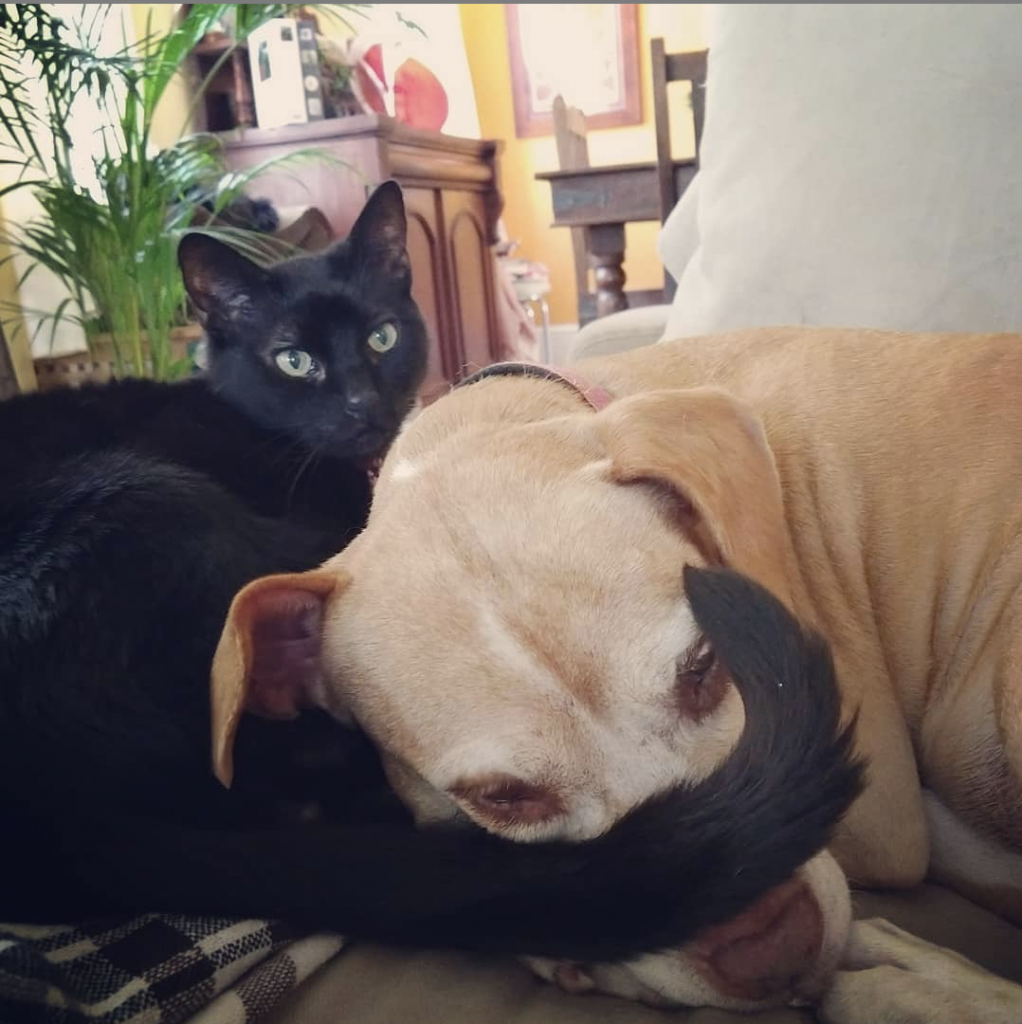
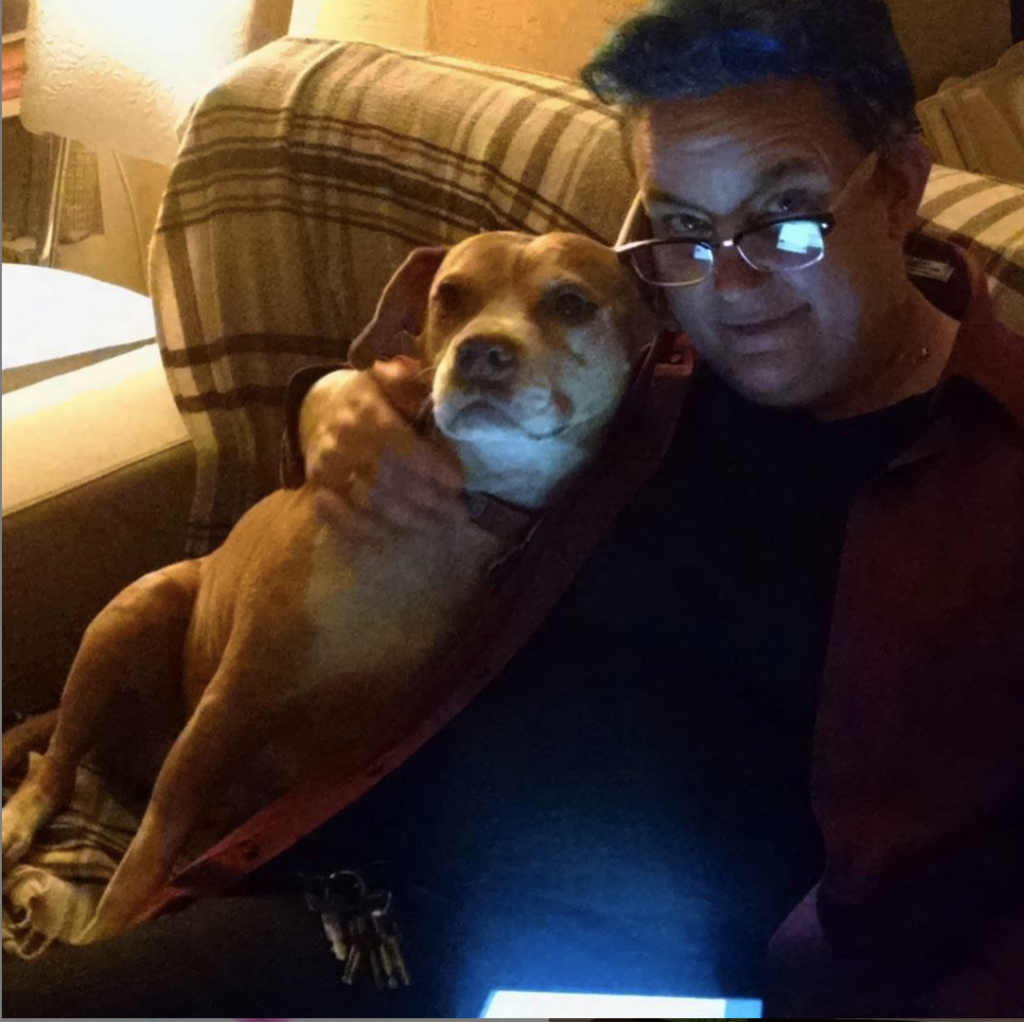
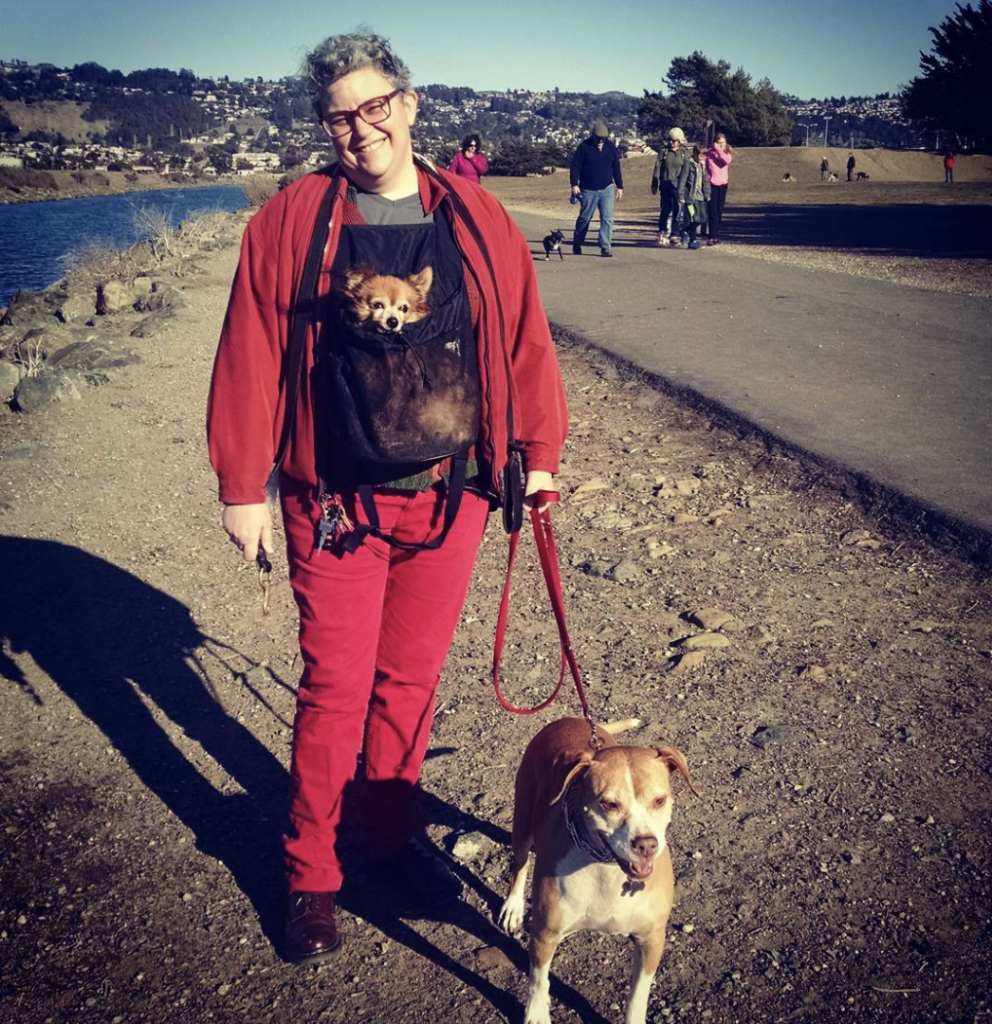
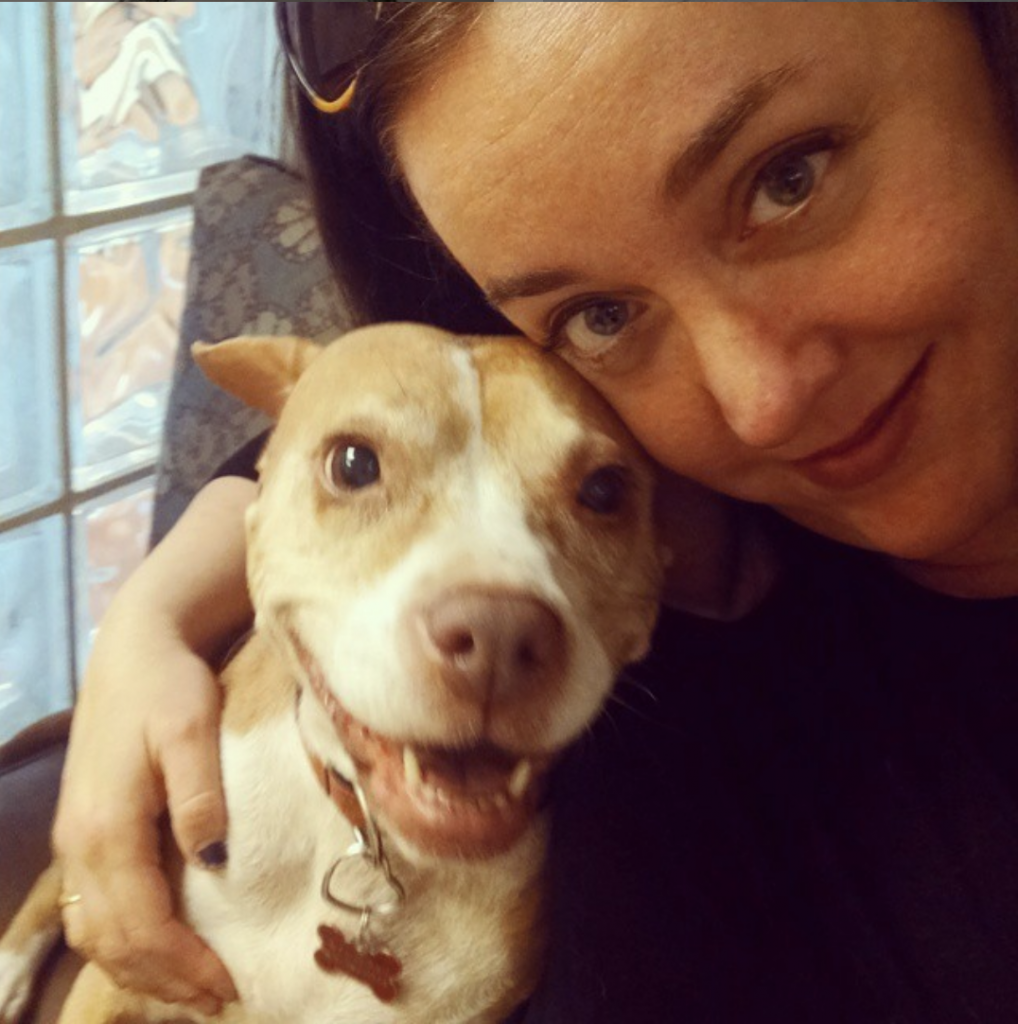
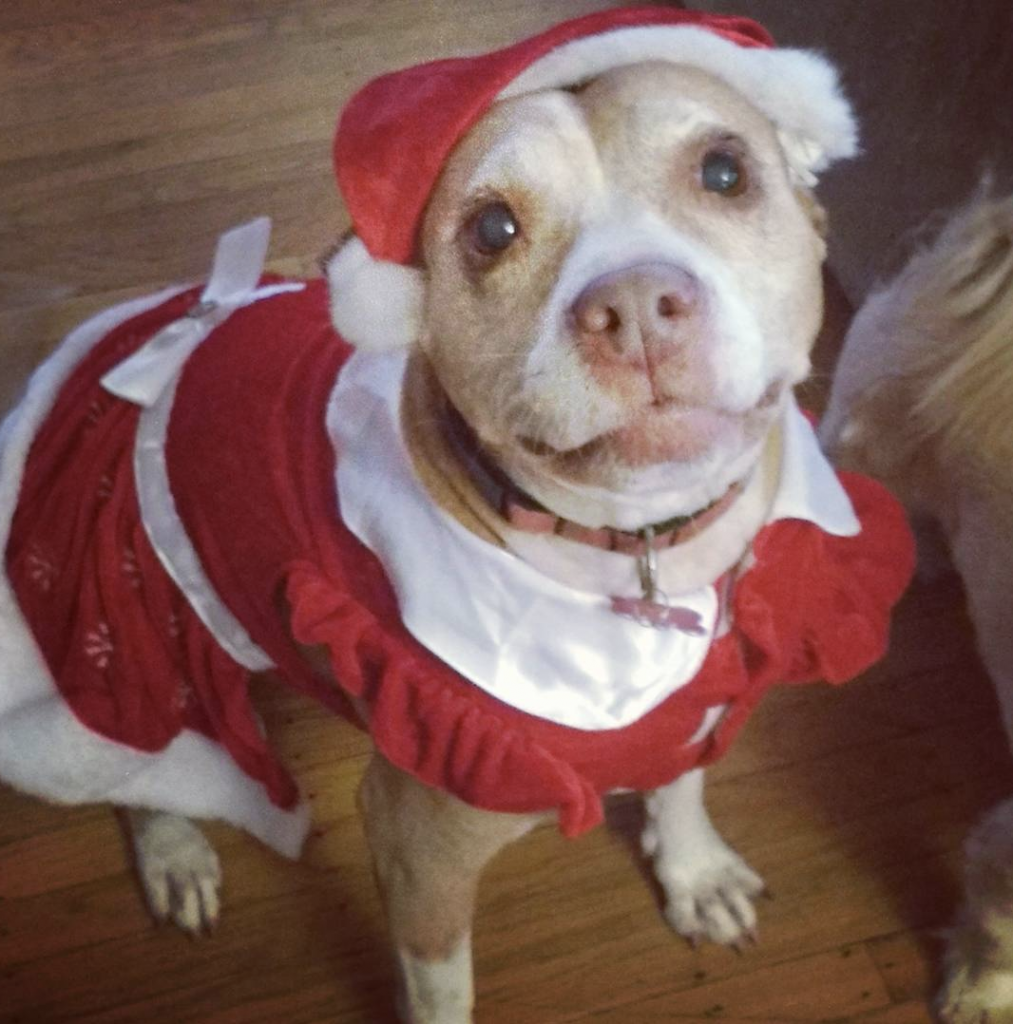
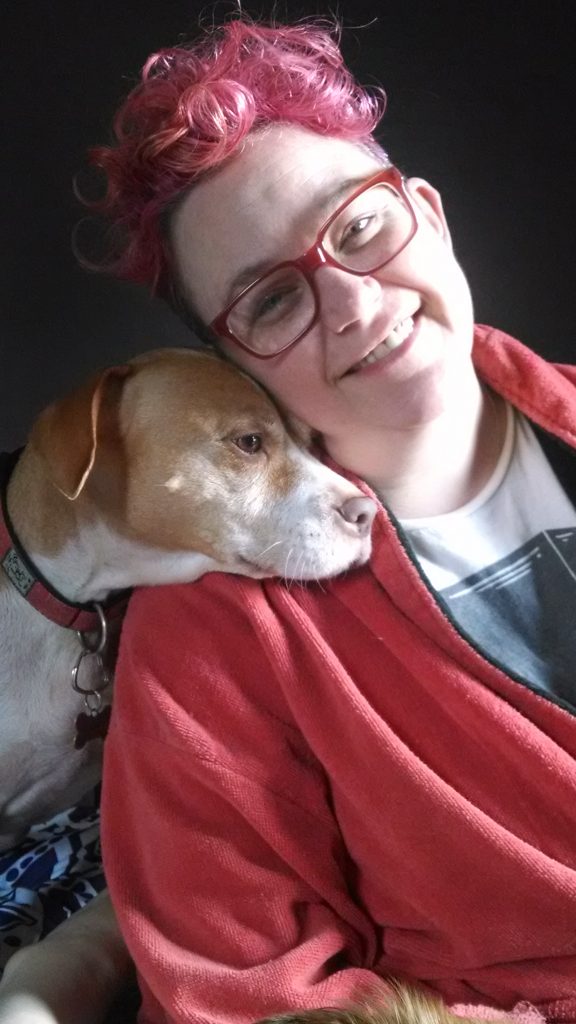
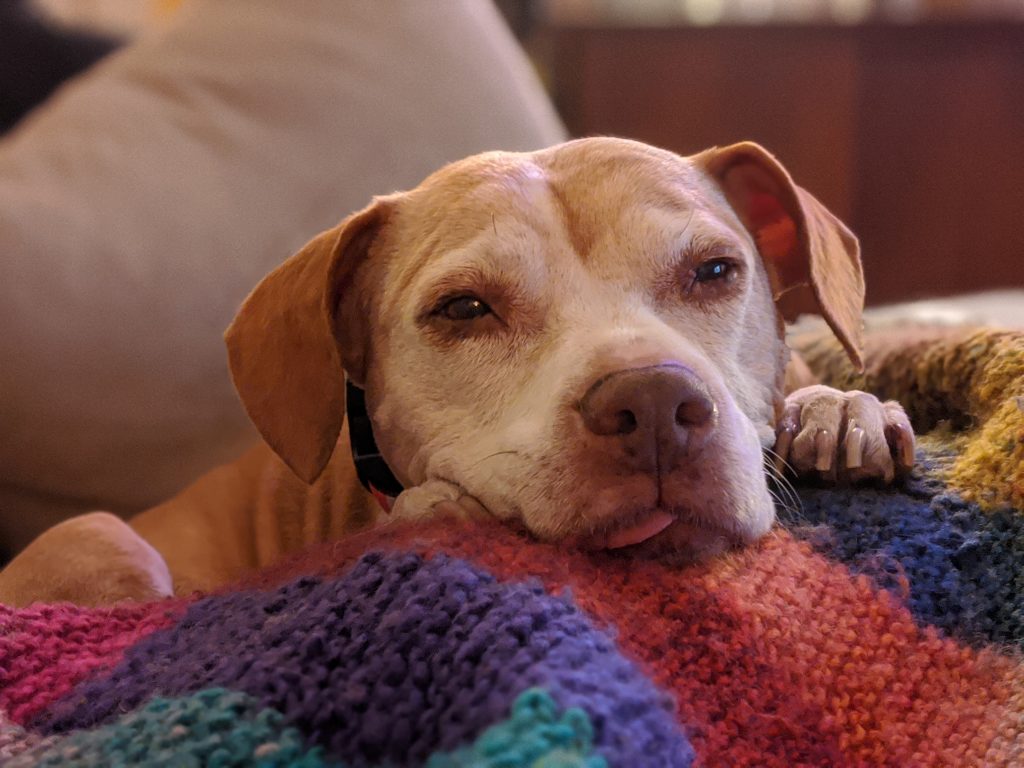
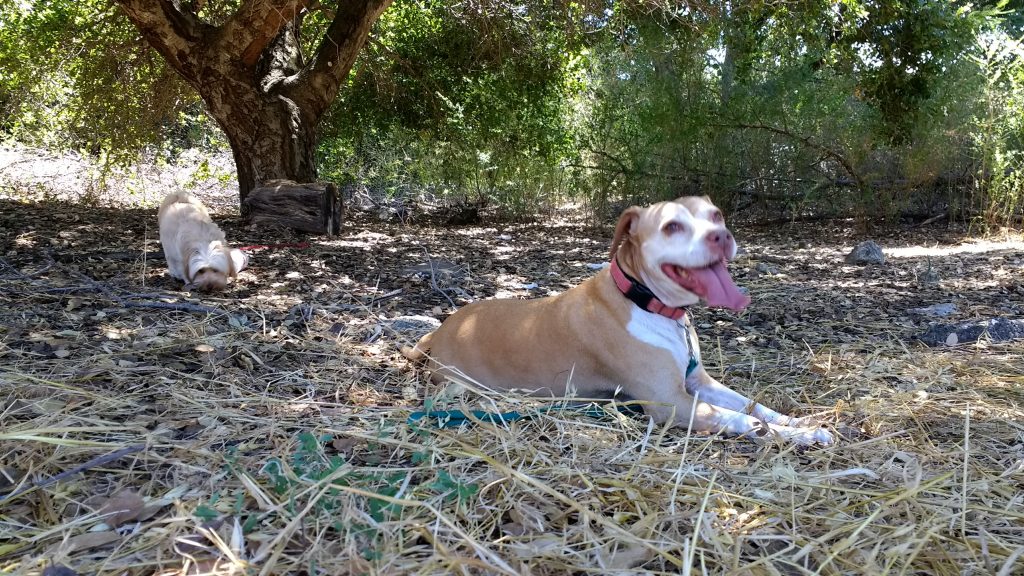
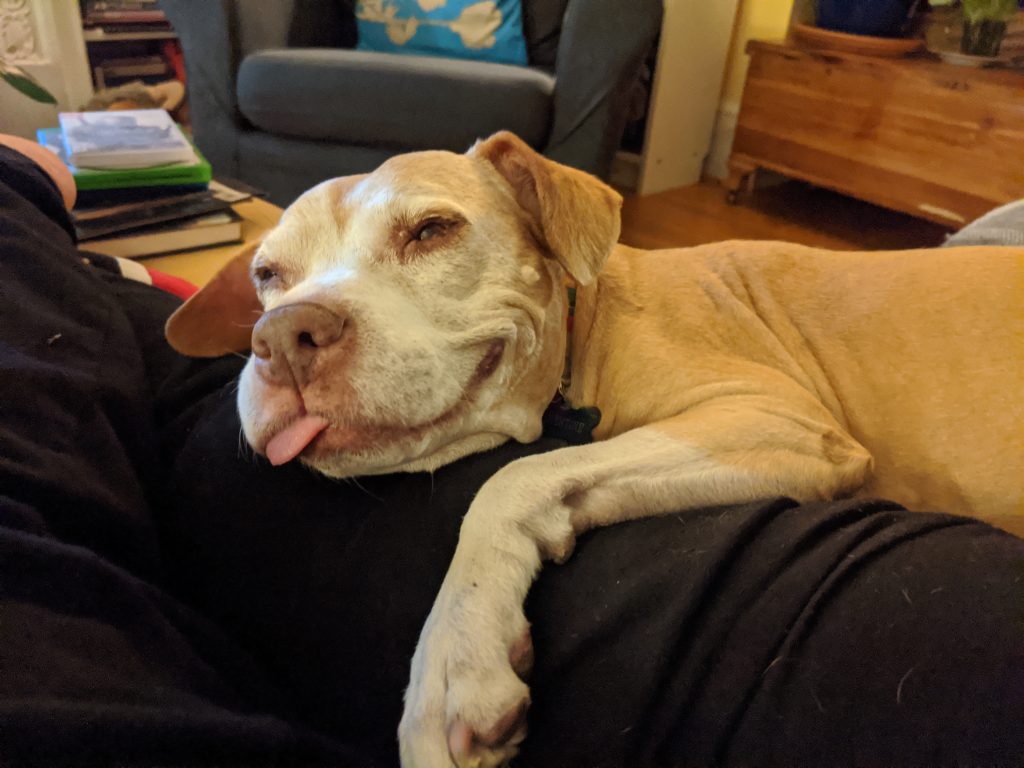
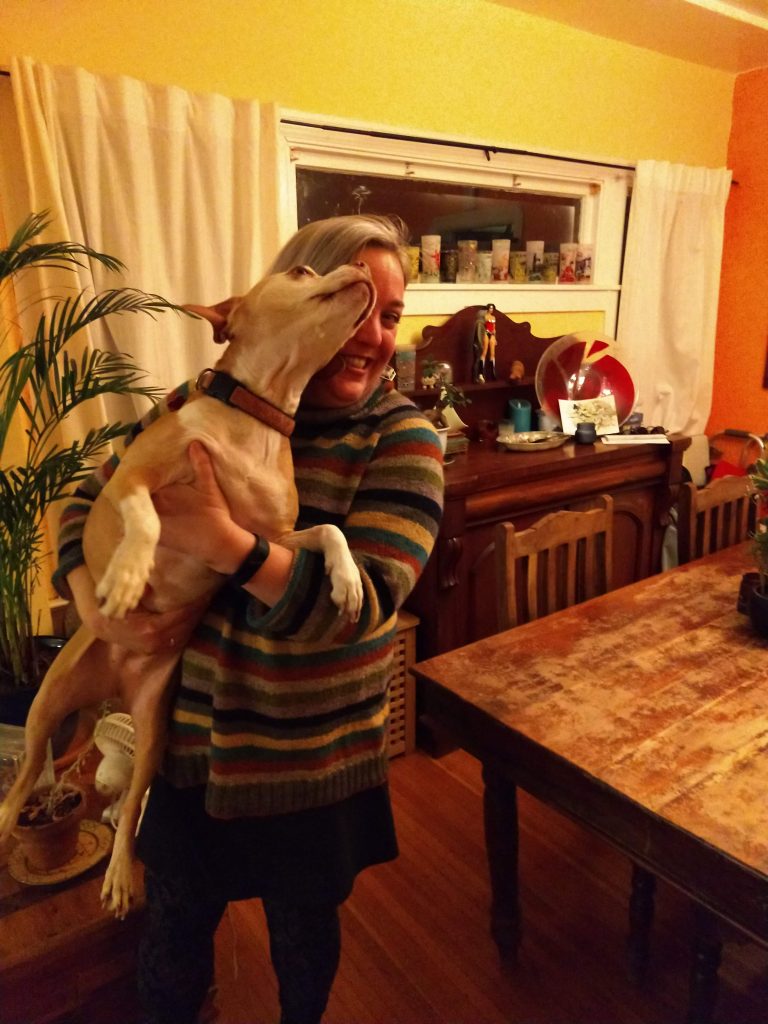
She picked Lala. Thirteen years ago, we went to the pound to look at another dog, but the one in the cage next to that one just looked at Lala and asked to be met. In the meeting area, she leaned on Lala, and Lala leaned back against her and that was it.

with a wee Miss Idaho, too

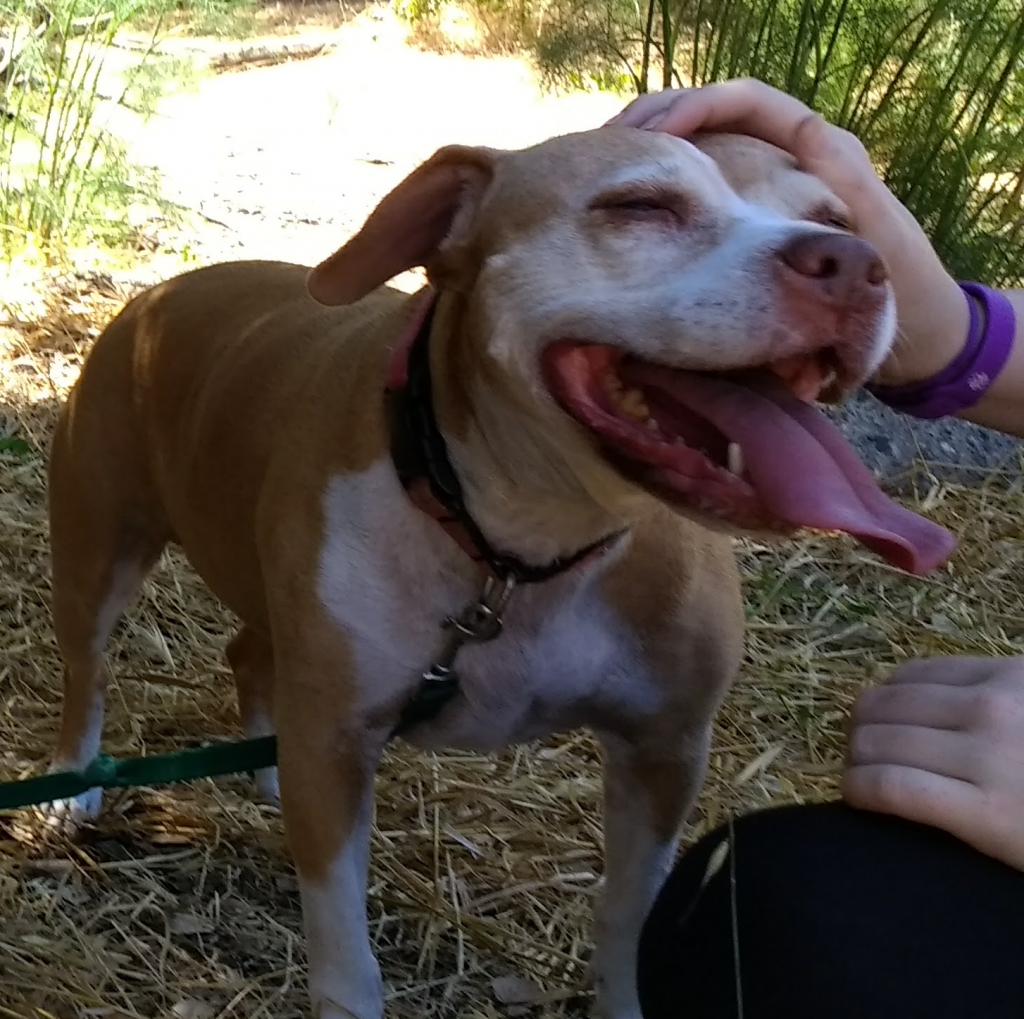
She liked two things – everyone, and all food. She wasn’t crazy about other dogs, but if you were a human, and especially if you were a human who knew how to carry food in your hands, she was your best friend.

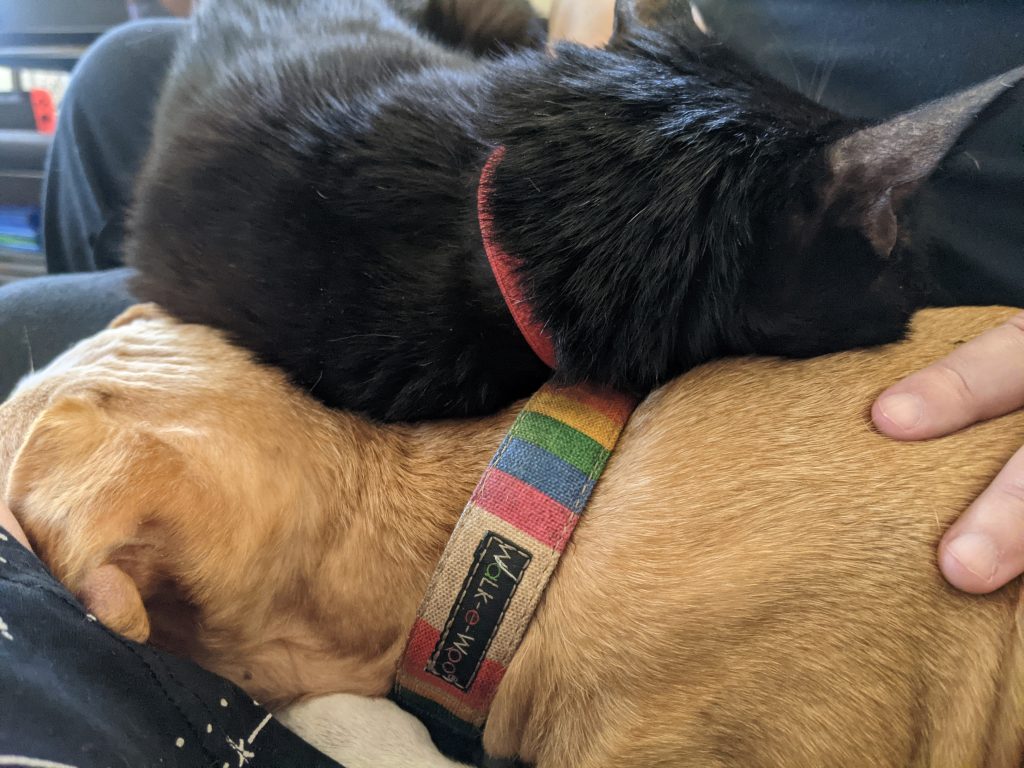
She was the cuddliest dog I’ve ever met. The perfect little spoon. Her snores were so cute that we called it “snorebuggling.”

Once, a man we didn’t know came over to buy a couch we’d listed on Craigslist. He came in the house, sat on the soft, and Clementine raced in from another room, launching herself at him. She tucked herself against him and almost snuggled him to death. That’s how she was for STRANGERS. Imagine what we got from her. Every day.

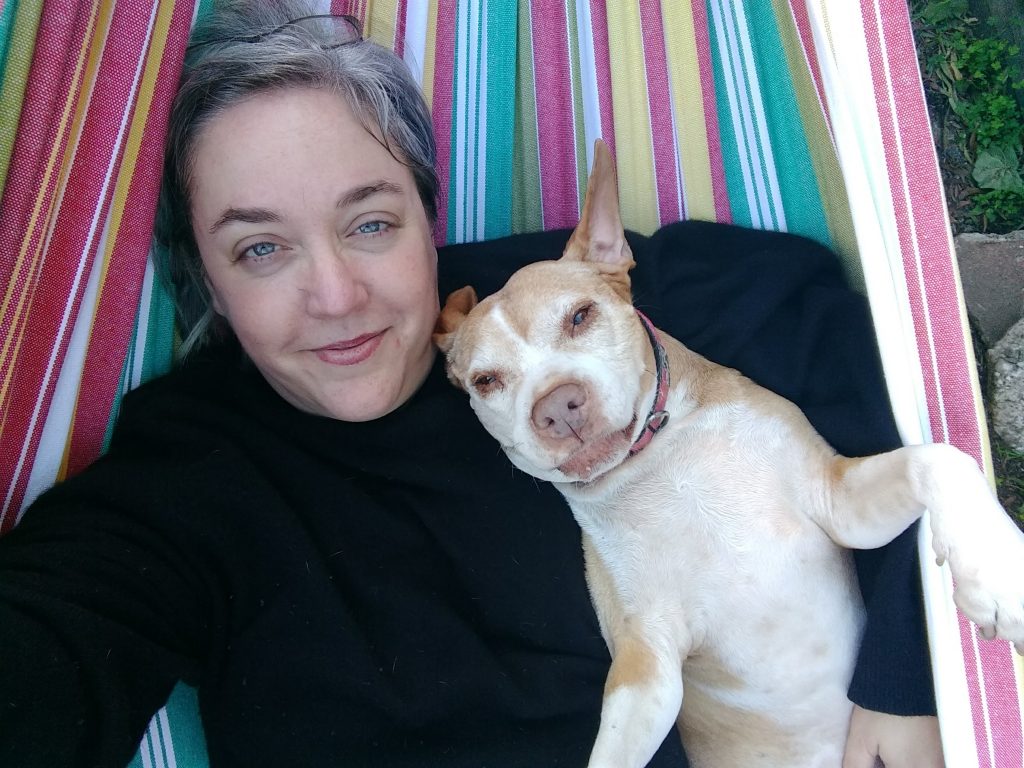
She enjoyed hammocking with me.

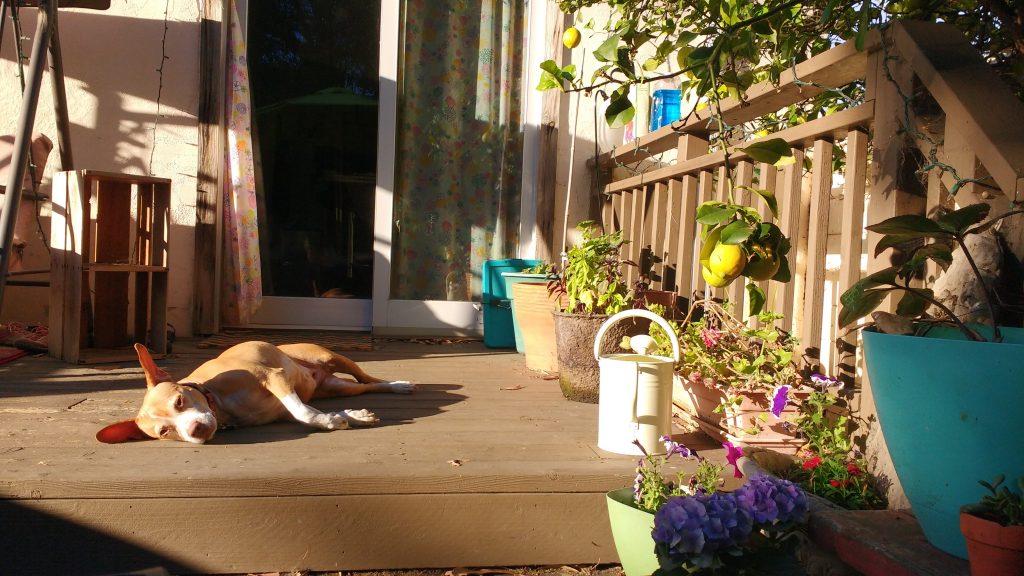
Sun – all day. She soaked it in. (And look at those earssss!)

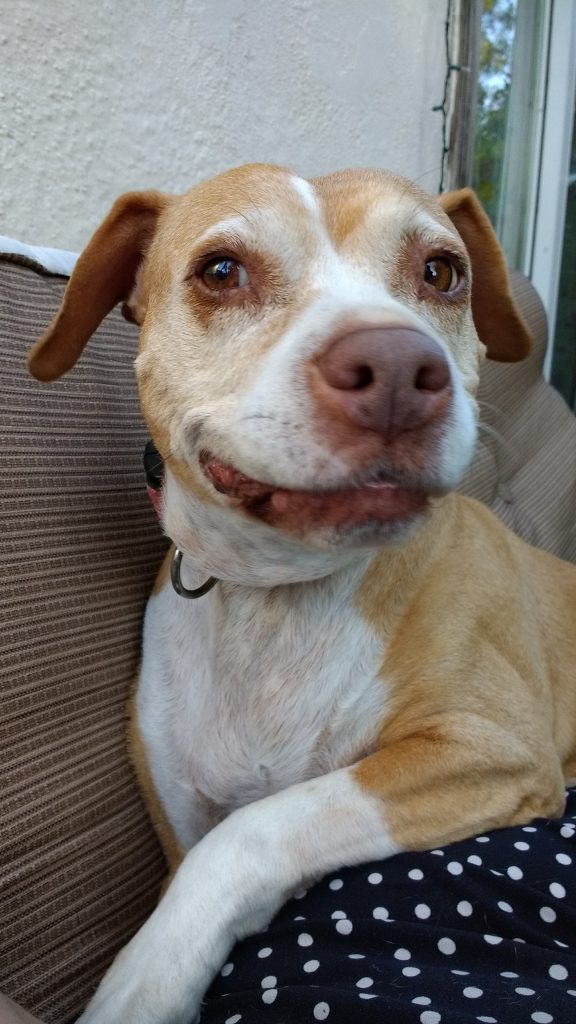
She was a pocket pitty, thirty-five pounds of love. We always said she looked like a beagle wearing a pit-bull costume.

YOU ARE TOUCHING ME OMG OMG OMG

She was a goofball.

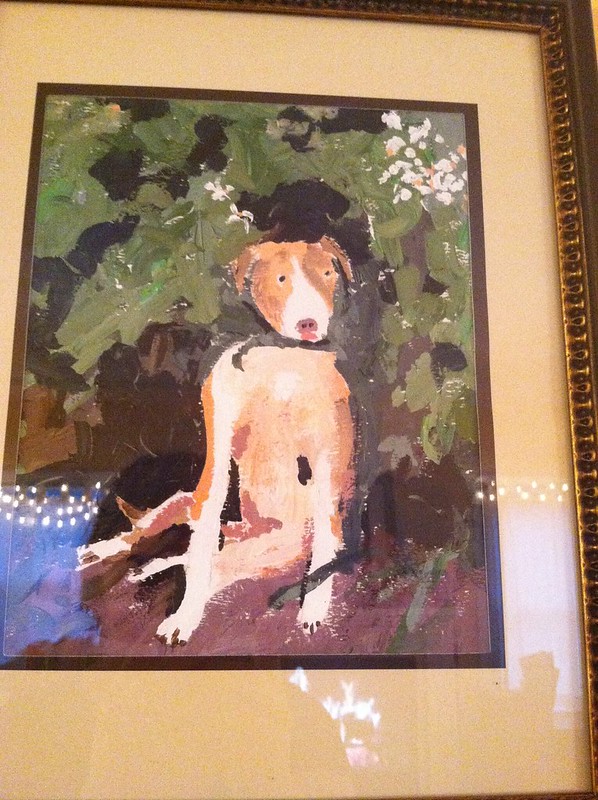
The only picture I’ve ever painted was of her for Lala for Christmas, sitting with the jasmine vine tangled around her neck. She’d constantly get stuck there and then just wait patiently for us to cut her out.

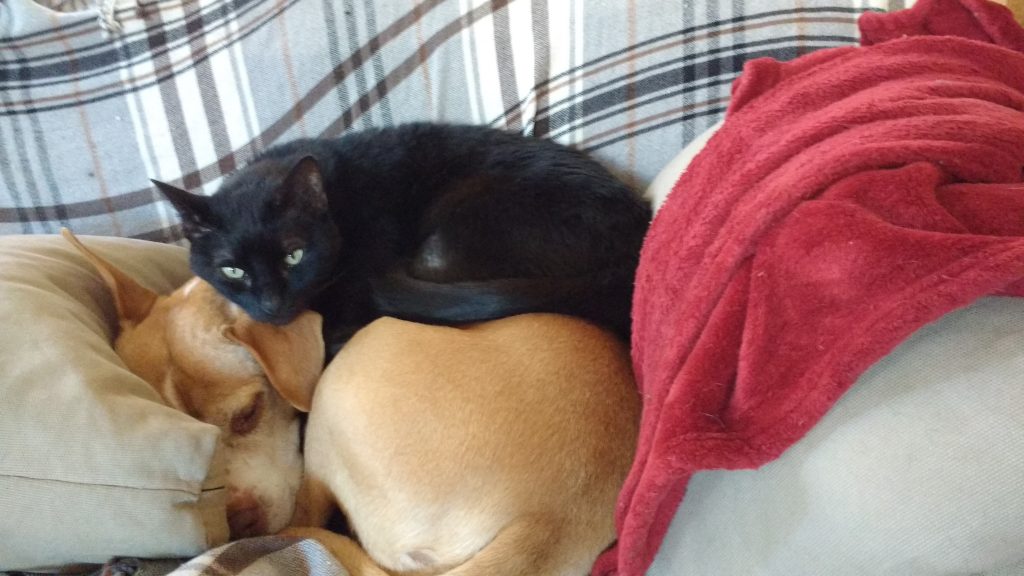
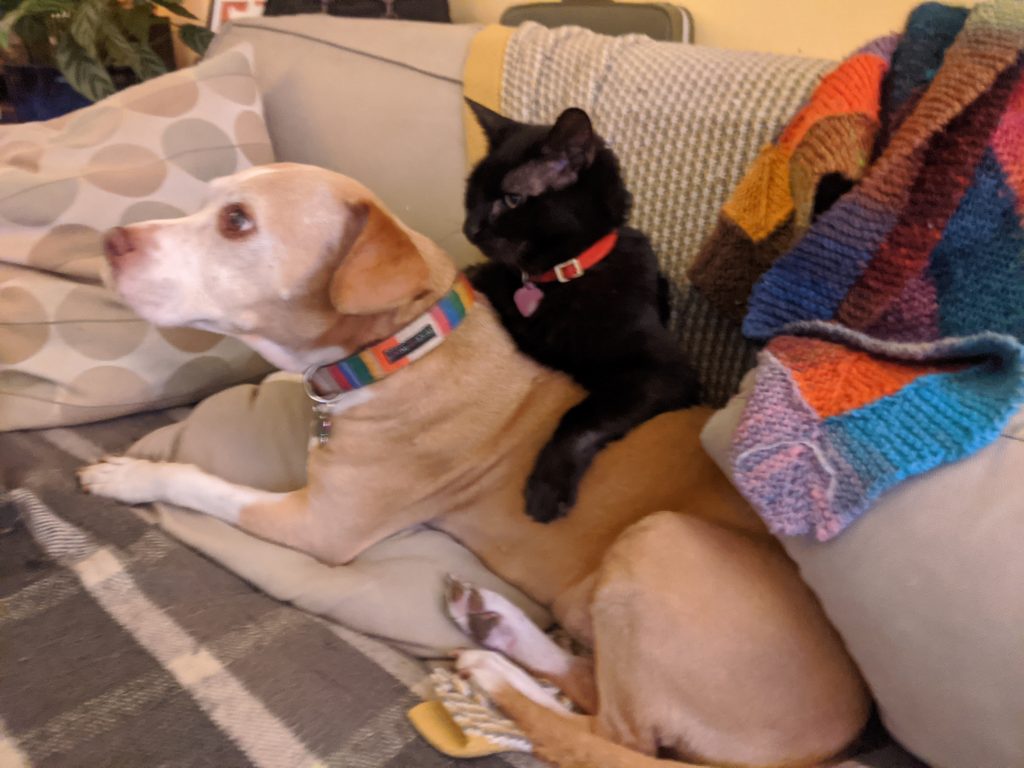
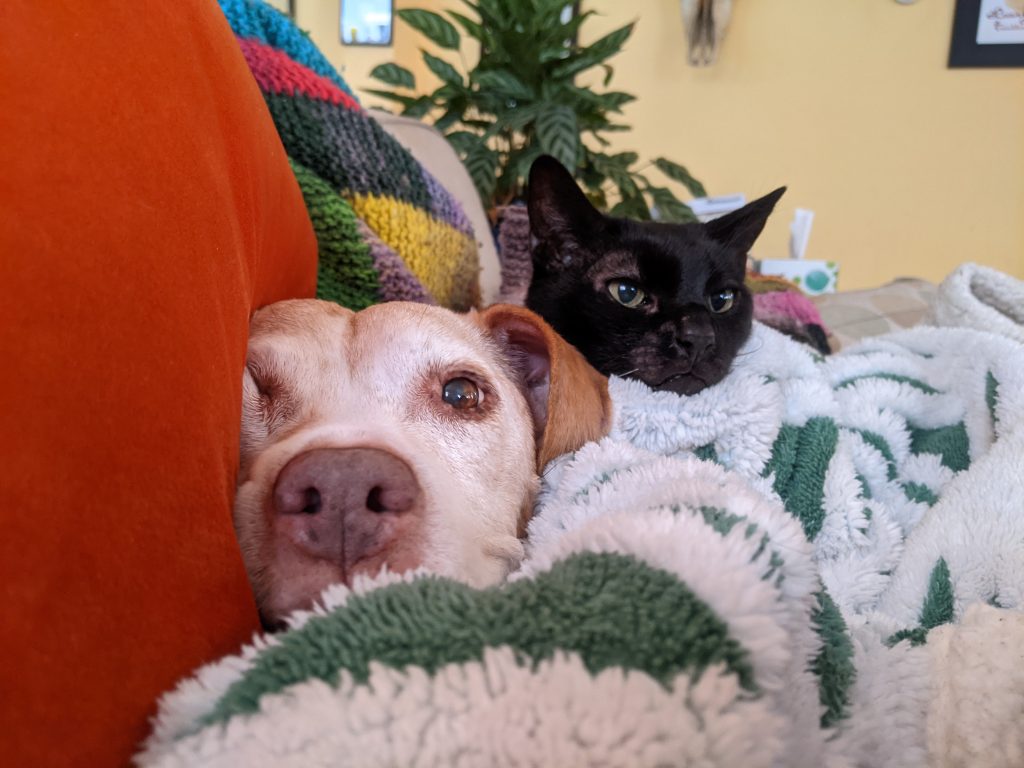
She had her very own cat, Waylon.

Clemmy’s been in hospice for about 6 or 8 months, and had graduated OUT of it twice! (Seriously, Pet Hospice has been the greatest thing to ever happen for our confidence that we were doing it all right, as we trudged this difficult time.)

And hey! We’ve been cooking her food for her morning and night for a year (pancreatitis and kidney disease). SHE LOVED THAT.

And we’ve been home for a solid year! YAY PANDEMIC! Always with her, ready for a cuddle! SHE LOVED THAT, TOO.

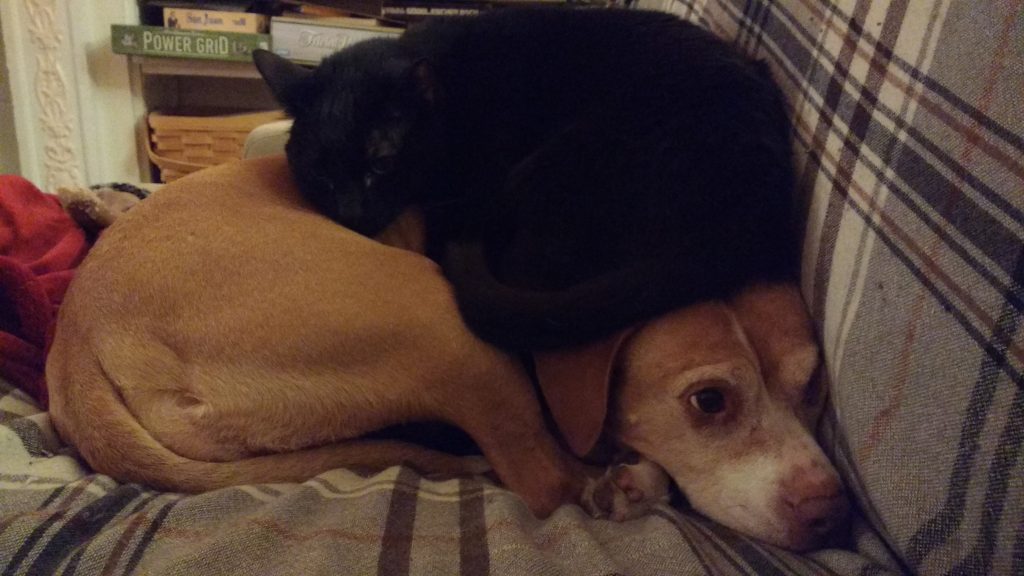
And today, when hospice came to help her on her way, her cat helped, too. Waylon was with her until the very end right along with us, and kept his paw on her as she died.

Our hearts are broken. Thanks for loving her, too.

Posted by Rachael 36 Comments

The Muse Isn’t Who You Think She Is

February 18, 2021

You’re already ready. That’s my battle cry and my deepest truth. There’s nothing you aren’t ready to make, to learn, to do, or to become. 

But you may have already noticed that doesn’t make it easy. 

Just being ready to do the Big Scary Thing you want to do isn’t a cure-all. Simply being ready doesn’t make you leap up in the morning to work hard to chase your dream. 

And that sucks! I know. 

Often, artists (like you, like me) wait for the inspiration to follow their dreams. They wait for the Muse to take them by the hand and lead them to the magic. They wait for the moment that conditions are just perfect for making their art. Or they believe that they just have to find the exact right process that works for them, the process that will finally allow them to work more regularly on their art. 

And they think that if they just do the work more often, it’ll get easier to do it. 

But—sadly—doing the work of our heart never becomes easy. Ever. 

One of the biggest joys of my life is working with new writers who want to write or revise their books. Most of them enter my ninety-day classes expecting to find out that once they’re on track and working regularly, things will smooth out. The thing they’ve been missing, they think, is commitment to the project. I can help with that—they get external accountability, which is incredibly helpful, yes. They make a concrete plan of action (which is changeable, just like life), and yes, that’s also awesome. 

But then, a few weeks in, they all start to realize something at the same time: Oh, damn, this is still really hard!

Dude, that’s a real downer of a realization. 

Making the commitment and showing up to do the work—isn’t that enough? Shouldn’t they be rewarded with pleasure and ease? 

I understand the pain they feel of crashing into this question because I’m a forgetter. I forget the things I’ve learned over and over, and I ask when my art is going to get easier all the time. 

The more books I write, the more I expect the Muse to show up. I like to believe that someday she’ll wake me with a gentle kiss on my cheek. Then she’ll make me a perfect cup of coffee and guide me to the desk, where she’ll not only open my document, but also inspire me to write sentences and paragraphs and scenes and chapters and whole books quickly and easily because she’s chosen me. I have committed to the process, and therefore, I will finally be the Muse’s teacher’s pet.

Hell, no. It just doesn’t work that way. 

You already know that, don’t you? You can feel that in your bones. You’ve been waiting for the heat of the Divine Muse, but you’re really pretty chilly most of the time. 

The Muse is often ascribed fire-like properties. She burns. Shakespeare said, “O for a Muse of fire, that would ascend/The brightest heaven of invention.” When caught in her arms, you’ll burn, too, all the passion in your body and heart bursting into a creative blaze. 

And okay, a small part of this is true. The Muse does require warmth. She hates the cold, and she’ll definitely go on strike if the temperature drops below sixty-five. 

So that makes you, the artist, like Laura Ingalls Wilder when she woke to find that “ice crackled on the quilt where leaking rain had fallen” in The Long Winter. Every single damn day, you wake up under the covers, clutching the little warmth that’s left. Shivering helps a bit as it rapidly contracts your skeletal muscles, generating just enough heat to stay alive. 

But you have to relight the fire, and no amount of shivering will do it. Praying for the Muse to come in with a blowtorch might be a fun wish but she doesn’t work that way. 

So every day that you’ve scheduled to work on the thing that holds your heart, whatever that is, you have to pry yourself out of the covers and throw on every sweater and jacket you own while you screech like someone’s just thrown you into a Norwegian fjord. 

Then, you bolt for the wood-fired stove. You pray there’s still a tiny spark left under the log from last night that’ll help the newspaper catch faster, but if it’s been more than a day since you worked on your project, the stove is as cold as your fingertips, and you’ve got to work to get that sumbitch warm.  

So you shove in the paper, spitting curses that would make Gordon Ramsey blush. A little kindling next, but you move too fast, and a splinter shoves its way into your palm so far that you feel it pierce your spleen. Then you reach to add a nice, small piece of dry wood, except, goddammit, it’s been raining, and you forgot to bring any small pieces in yesterday to dry so you’re going to have to use even more kindling to catch a bigger, drier log, and meanwhile, your frigid bones sound like a pair of maracas being shaken by a giant. 

Slowly—oh, so slowly—the first log starts to catch. 

Even more slowly, the heat stops going up the flue and starts pushing out into the room, into you. First your face warms, probably more from exertion, but you’ll take it. Then your teeth stop clacking. You’re able to stand and turn your backside to the growing warmth. 

Then, finally, you’re warm. You can move again. You can do the work you wanted to do. Your hands are warm enough to hold the paintbrush, or your fingers can hold the pen you’re using to write your poem. 

In fact—and here’s the magic of this—as you do your work, you just keep getting warmer. 

While you’re working, ideas start to flow as easy as tossing another log on the fire to keep the heat going. You realize your book needs a dragon—why hadn’t you seen that before? It’s so obvious! You’ve been struggling to figure out how to up the stakes and to show how foes become friends—this is genius. 

You turn to thank the Muse who’s just given you this incredible idea, but you can’t see her. 

Huh. 

Weird. 

Kind of like you can’t see your own face when you turn around. 

Hi, guess what—YOU ARE THE MUSE. 

The Muse as an outside force that comes to help spark your inspiration doesn’t exist. 

We think we have to wait for the right mood to do our creative work. We think we have to wait for inspiration to strike before we pour our hearts into what we love. And sure, that sometimes works. For me, it averages out to about two days a year. Twice a year, I launch myself at my desk with joy, just because I feel like it. All the other days? Inspiration and joy wells up only when I’m actually doing the generation of the heat myself. 

Madeline L’Engle said, “Inspiration usually comes during work, rather than before it.” She knew that she was the Muse, and that showed in her books—her characters always found the answers inside themselves (because that’s where answers always live). 

You have to work your way to inspiration, not the other way around. 

And work it is. Would I rather lie in bed every morning than getting up and relighting the fire? Hell, yes. From bed, I can reach for my phone and tumble into the heffalump trap that is the constant cycle of refreshing email, then Twitter, then Instagram, and then back around again. Our brains—used to getting pings on our phones or our computers every few minutes—crave that dopamine hit that comes with novelty. Each time you refresh an app, there’s a deep down hope that this time will be the time that satisfies the urge. You already know that never happens but you do it anyway. (Don’t feel bad! You’re not at fault for falling into a trap that was set precisely for you. You’re human. The first step to getting out of the trap is realizing you’ve been caught.)

Okay. You’ve set the phone down. You’re wishing like hell to find the inspiration to write one more scene, or work on the dance move that’s been literally tripping you up for weeks. But you, the Muse, are shivering. 

In order to warm up, in order to feel creative, you have to do something creative. 

Honestly, watching my students realize that writing their books will never feel easy but that they can light their own Muse’s fire is something that never gets old for me to witness. 

It’s not going to get easier, is it? 

No, I say. 

But every time I do write, I find inspiration. From the work itself. 

Yes, I say. 

Even on the hardest days, doing the work feels better than not doing the work. 

Exactly, I say. 

And it’s really not going to get easier? 

It doesn’t get easier, I say. But it keeps getting better. 

So: light the fire. Yes, it’s hard, but the more fuel you give it, the brighter it will blaze. As you work, the inspiration will come, in a slow trickle at first but the more you go back to it, the hotter it grows. 

You are the Muse. And how I love to see you burn. 

Posted by Rachael 2 Comments

  • « Go to Previous Page
  • Go to page 1
  • Interim pages omitted …
  • Go to page 17
  • Go to page 18
  • Go to page 19
  • Go to page 20
  • Go to page 21
  • Interim pages omitted …
  • Go to page 353
  • Go to Next Page »
© 2026 Rachael Herron · Log in